PVC Screw Selection and Manufacturing for Industrial Applications
PVC screw products are used in applications that require corrosion resistance, electrical insulation, and compatibility with plastic-based assemblies. Made from polyvinyl chloride, a PVC screw is a practical fastening option for equipment exposed to moisture, mild chemicals, and environments where metal fasteners may not deliver the best long-term performance. In many industrial systems, PVC screws help support lightweight construction while reducing concerns related to rust, conductivity, and surface contamination.
Choosing the right fastening material is an important part of product design and assembly planning. A PVC screw is not intended to replace every metal fastener, but it offers clear advantages in specific working conditions. Because PVC has good resistance to water and many chemical substances, it is often selected for plastic structures, insulation-related assemblies, water handling components, and equipment housings. It can also be useful in settings where electrical isolation is needed and where non-metallic fasteners help improve overall system compatibility.
For projects that require standard or custom plastic fastening solutions, manufacturing quality matters. Dimensional stability, mold precision, raw material consistency, and inspection control all affect the final result. Companies such as Flybear Fastener focus on custom production, factory process control, and application-oriented fastener manufacturing for industrial use.
What Is a PVC Screw?
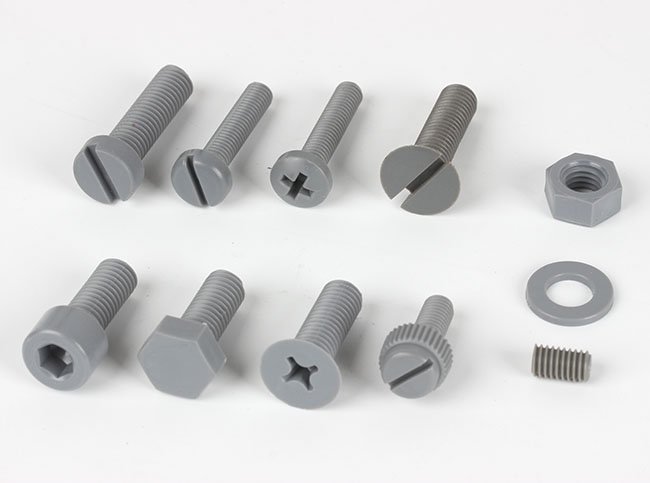
A PVC screw is a screw made from polyvinyl chloride material rather than carbon steel, stainless steel, or other metals. It is designed for fastening needs where the material characteristics of PVC provide functional benefits. These screws can be produced in different head types, thread forms, and dimensions depending on the installation method and application requirements. Common options may include machine screws, slotted screws, pan head screws, countersunk screws, and custom molded designs for specialized products.
The key value of a PVC screw comes from its material behavior. PVC offers useful insulation properties and good resistance to moisture. It can also perform well in certain chemical environments where metal fasteners may corrode, discolor nearby components, or cause compatibility issues with plastic parts. For this reason, PVC screws are frequently used in assemblies where both fastening and material performance must be considered together.
Why PVC Screw Solutions Are Used in Industry
One major reason to use a PVC screw is corrosion resistance. In humid environments, washdown areas, or equipment exposed to water, plastic fasteners can help reduce the risk of rust. Another reason is electrical insulation. For products involving electrical housings, cable management parts, or non-conductive mounting structures, a PVC screw may be a better choice than a conductive metal fastener.
Weight is another important factor. Plastic fasteners are lighter than metal alternatives, which can support easier handling and lower overall assembly weight. This can be useful in devices, enclosures, and equipment that include a high number of small fastening points. A PVC screw can also help maintain material consistency in plastic-to-plastic assemblies, reducing the chance of damaging soft surfaces or creating unwanted reactions between dissimilar materials.
In addition, PVC screws can be manufactured in custom forms for products that need unique dimensions or special installation features. When standard catalog items are not suitable, custom plastic fastener production can help match the exact structure of the finished assembly.
PVC Screw Application Areas
PVC screw products are widely used in water treatment equipment, ventilation systems, plastic panels, cable accessories, electrical enclosures, laboratory fixtures, chemical handling components, and outdoor assemblies where resistance to moisture is important. They are also suitable for some packaging equipment, display structures, and general non-metallic installations that require lightweight fastening.
In equipment that includes plastic tanks, covers, or housings, a PVC screw may help create a more suitable fastening system than standard metal hardware. It is also valuable in situations where magnetic properties must be avoided or where staining from metallic corrosion could affect the appearance or cleanliness of the product. For certain insulated structures, using a non-conductive fastener can support a safer and more functional design.
Still, product selection should be based on actual application needs. A PVC screw is generally more appropriate for light-duty or medium-duty fastening rather than high-load structural connections. Temperature, chemical exposure, required clamping force, and repeated assembly cycles should all be reviewed before final selection.
How to Choose the Right PVC Screw
The first step in choosing a PVC screw is understanding the environment where it will be used. If the application involves regular moisture exposure, contact with mild chemicals, or a need for electrical insulation, PVC may be a strong candidate. The next factor is load requirement. If the joint must hold high mechanical stress or repeated heavy vibration, another material may be more suitable depending on the design.
Thread style should also match the installation method. Machine threads are commonly used with nuts or tapped components, while other thread designs may be better for direct engagement with plastic parts. Head style matters for both function and appearance. Pan head, countersunk head, and other designs are selected according to tool access, surface finish expectations, and assembly space.
Size accuracy is equally important. Poorly controlled dimensions can create installation difficulty, weak fastening, or inconsistent fit. A qualified manufacturer should be able to control tolerances, thread quality, and head dimensions while supporting standard and non-standard specifications.
PVC Screw Manufacturing and Custom Production Considerations
Manufacturing a reliable PVC screw requires more than basic molding. Material quality, mold structure, shrinkage control, thread formation, and inspection procedures all affect the performance of the final fastener. For custom orders, it is important to define requirements clearly, including dimensions, head type, thread form, color, packaging, and intended application environment.
Factories with strong process capability can support custom PVC screw development based on drawings or samples. This is especially valuable for industrial assemblies that use specialized components or require a precise fit with plastic housings, covers, or panels. Stable production procedures also help maintain consistency across volume orders, reducing assembly issues and supporting smoother installation.
In many projects, the success of a plastic fastener depends on how well it matches the application rather than on the fastener alone. A properly specified PVC screw can improve assembly reliability, material compatibility, and product durability when produced under controlled conditions.
The Value of PVC Screw Products in Modern Manufacturing
PVC screw solutions remain important in industries that require non-metallic fastening, resistance to moisture, and dependable insulation properties. While they are not designed for every fastening task, they provide clear benefits when the working environment matches the material strengths of PVC. For manufacturers and product developers, selecting the correct PVC screw means balancing load, environment, design, and production quality.
With the right material choice and a capable manufacturing partner, PVC screws can support efficient assembly and dependable performance in a wide range of industrial applications. From standard parts to custom-engineered designs, they continue to serve as a practical option for plastic fastening systems where corrosion resistance, light weight, and electrical insulation are essential.
Follow Me!