Self-Tapping Threaded Insert
Product Overview
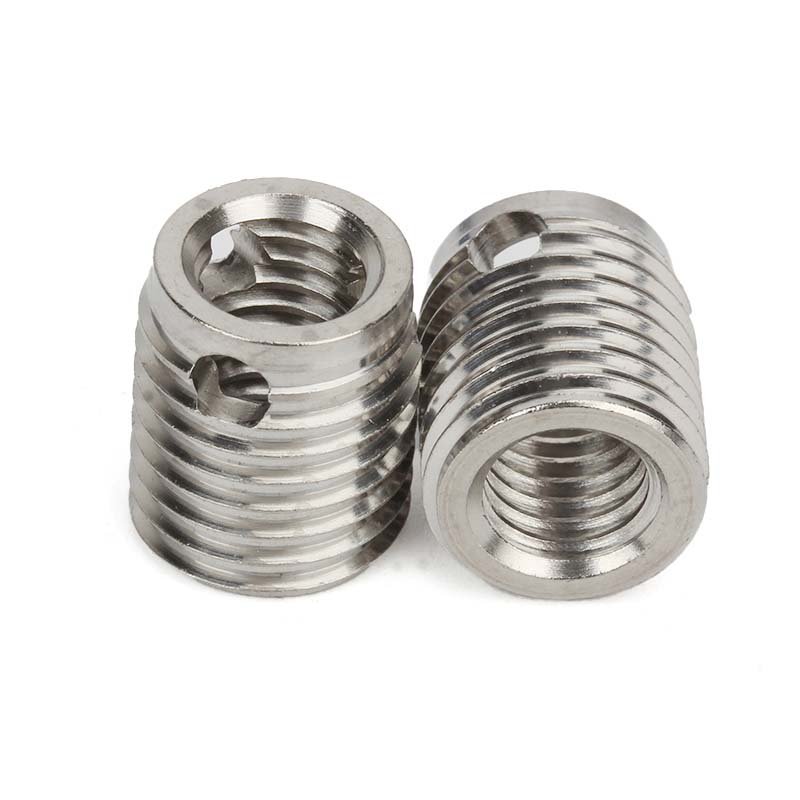
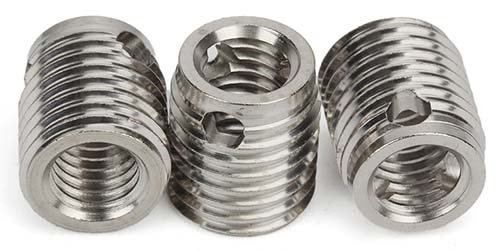
Self-tapping threaded inserts are uniquely designed fasteners that create durable and wear-resistant threads in soft or thin materials such as aluminum, magnesium, wood, or plastic. These inserts eliminate the need for pre-threading the hole, as their cutting edges allow them to tap their own threads during installation. This makes them an ideal choice when seeking strong, reusable threads in lightweight or low-strength materials.
Self-tapping threaded inserts ensure improved load distribution and thread engagement compared to directly threading into a base material. They help reduce internal stresses during assembly and are widely used in various industries that require frequent disassembly or where vibration resistance is critical.
Product Specifications
| Parameter | Specification |
|---|---|
| Size Range | M3 to M24; #6-32 to 5/8-11 |
| Thread Type | External self-tapping thread / Internal machine thread |
| Length Variation | Short, regular, and long body inserts |
| Drive Type | Slotted, hex hole, or external drive |
| Head Type | Flanged, non-flanged |
| Material Thickness Recommendation | 2mm to 12mm depending on thread size |
Technical Parameters
| Parameter | Specification |
|---|---|
| Strength Grade | 8.8, 10.9, 12.9 for steel inserts; A2-70, A4-80 for stainless |
| Surface Treatment | Plain, Zinc plating, Dacromet, Black oxide, Nickel plating |
| Standards | DIN 16903, ISO 9001, IATF 16949, RoHS, CE compliant |
Material and Manufacturing Process
Most self-tapping threaded inserts are manufactured from high-strength alloy steel (e.g., 40Cr, 35CrMo) or corrosion-resistant stainless steel (typically A2-304 or A4-316). Alloy steel inserts offer higher tensile strength, whereas stainless steel versions excel in corrosion-prone environments like marine or outdoor applications.
The standard production process flow is:
Raw Material → Cold Forming or Hot Forging → Heat Treatment → Surface Treatment → Precision Machining → Quality Inspection → Packaging
The thread-cutting section is precisely formed to ensure consistent self-tapping performance during installation. Heat treatment enhances mechanical strength, while advanced surface treatment improves longevity and corrosion resistance.
Typical Applications and Industries
Self-tapping threaded inserts are widely implemented in:
- Automotive plastic components and dashboards
- Aerospace composite structures
- Consumer electronics housings
- Furniture and cabinetry assembly
- Molded enclosures for medical devices
- Marine equipment requiring vibration resistance
These inserts are invaluable in scenarios requiring frequent assembly and disassembly or where strong threads are needed in otherwise non-threadable materials.
Product Advantages and Market Competitiveness
Material Excellence: Selected stainless steel (304/316) and heat-treated alloy steel offer superior durability and environmental resistance.
Precision Engineering: Manufactured with tight tolerances to ensure smooth installation and secure thread engagement.
Advanced Surface Finish: Zinc plating, black oxide, or nickel provides robust protection against corrosion, extending service life in harsh environments.
Customization: Inserts can be tailored to customer-specific designs, thread types, and sizes.
In-stock Availability: Quick delivery due to ample inventory and efficient warehousing practices.
Reliable Support: Excellent after-sales support and professional technical consulting ensure customer peace of mind.
Inspection & Quality Control
At Flybear Fastener, quality is not compromised at any stage. Our quality assurance process includes the following inspections:
- Thread gauge verification
- Pull-out and torsion testing
- Salt-spray corrosion resistance testing
- Optical inspection and sorting
- Spectral composition analysis
- Hardness and coating thickness measurement
- Metallographic examination
All self-tapping threaded inserts are sampled and inspected before shipping, maintaining a defect rate below 0.5%. Certifications such as ISO 9001 and IATF 16949 uphold our commitment to quality excellence.
Choosing the Right Self-Tapping Threaded Insert
When selecting a self-tapping insert, consider the following factors:
- Base material type and thickness
- Required load-carrying capacity
- Thread size compatibility with the mating fastener
- Environmental conditions (e.g., corrosion risks)
- Installation method (manual or automated)
Consulting with a technical advisor can ensure appropriate selection and correct installation techniques. Our team at Flybear Fastener is available for recommendations and tailored support to your project needs.
Conclusion
At Flybear Fastener, we are proud to offer a full range of self-tapping threaded inserts designed to meet the demands of modern engineering. We always adhere to the vision of “Quality First, Customer Foremost” to deliver guaranteed precision and performance on every fastener.
Our comprehensive portfolio of fastener products supports a wide array of industries, backed by complete solutions for your most demanding applications. Please don’t hesitate to contact us for detailed product inquiries, industry-specific solutions, or competitive quotations.
Follow Me!