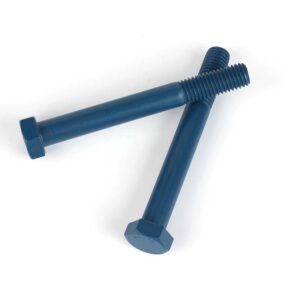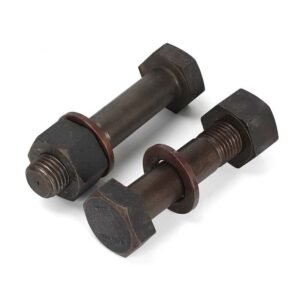
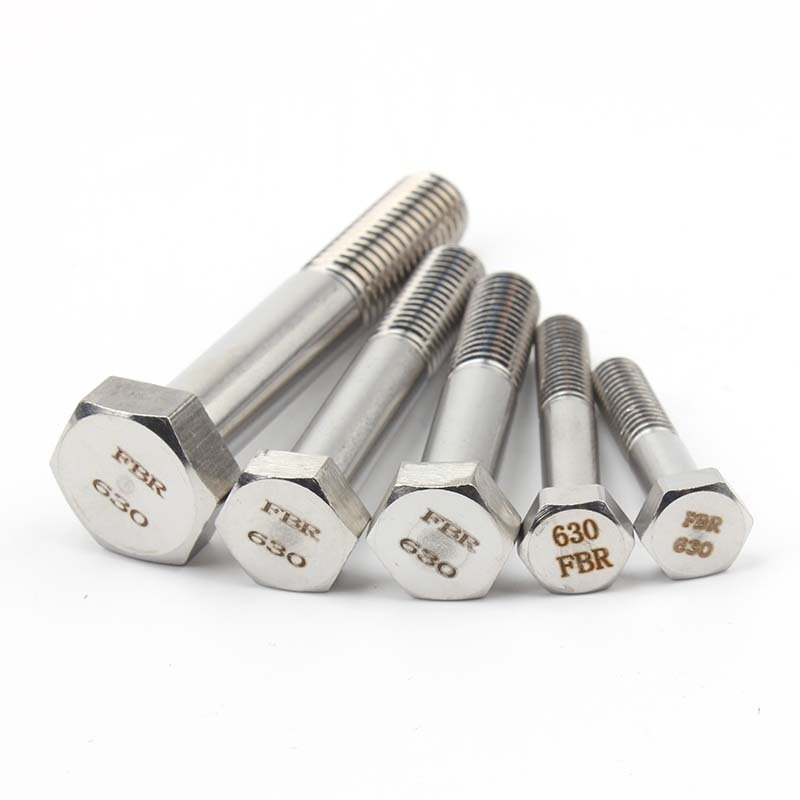
The 630 H1150 stainless steel hex bolt combines precipitation-hardening stainless steel with a partially threaded DIN 931-1 configuration. Also known as 17-4PH or UNS S17400, Type 630 offers a useful combination of mechanical strength and corrosion resistance for industrial fastening applications.
The H1150 condition provides a balance of strength, ductility, and toughness, while the unthreaded shank allows the bolt’s grip section to be matched to the connected components. Its external hexagon head supports installation and removal using conventional sockets and wrenches.
Key Features of 630 H1150 Stainless Steel Hex Bolts
- High-strength stainless steel: Type 630 is an option for assemblies requiring a combination of load-bearing capability and corrosion resistance.
- Balanced mechanical properties: H1150 generally provides greater toughness and ductility than peak-strength H900, with a corresponding reduction in strength and hardness.
- Partially threaded construction: A smooth shank separates the bearing section from the threaded engagement area, allowing the grip length to be selected for the joint.
- Accessible hexagon drive: The external hex head works with standard workshop tools and supports routine assembly and maintenance.
- Clearly defined material condition: Specifying both Type 630 and H1150 helps buyers distinguish the required product from other 17-4PH heat-treatment conditions.
Product Specifications
| Item | Description |
|---|---|
| Product Type | Partially threaded hexagon head bolt |
| Material | Type 630 precipitation-hardening stainless steel |
| Common Material Designation | 17-4PH / UNS S17400 |
| Material Specification | ASTM A564/A564M Type 630 for applicable bar stock |
| Heat-Treatment Condition | H1150 |
| Dimensional Reference | DIN 931-1, subject to the specified edition and approved drawing |
| Head Style | External hexagon |
| Thread Configuration | Metric, partially threaded; diameter and pitch as ordered |
| Length and Thread Length | According to the selected size and confirmed dimensional requirements |
| Surface Condition | Cleaning, passivation, or other finish requirements to be specified |
ASTM A564/A564M addresses the stainless steel material rather than serving as a complete finished-bolt specification. Finished-product dimensions, mechanical acceptance requirements, inspection, and marking should therefore be defined in the order.
DIN 931-1 is a legacy standard that has been superseded through the ISO 4014 series. Where a drawing specifies DIN 931-1, confirm the required dimensions before substituting an ISO 4014 product.
Material Performance and H1150 Condition
Precipitation-Hardening Stainless Steel
Type 630 is a chromium-nickel-copper stainless steel with a martensitic structure. Its mechanical properties are controlled through heat treatment, making the specified condition an essential part of the material designation.
For buyers comparing products, “17-4PH” identifies the alloy, while “H1150” identifies the required aging condition. Ordering by alloy name alone can leave an important performance requirement undefined.
A Balance of Strength and Toughness
H1150 is commonly considered when toughness and ductility are important alongside strength. It should be selected against the joint’s actual loading requirements rather than treated as interchangeable with H900, H1025, or other aging conditions.
Required tensile strength, yield strength, and hardness should be established from the applicable specification and verified through the agreed inspection documents. Published alloy data are useful for material selection but do not replace acceptance results for the supplied product.
Corrosion Resistance for Suitable Environments
Type 630 can provide useful corrosion resistance in atmospheric exposure and suitable industrial media. Surface cleanliness and any specified passivation treatment also influence performance.
Selection for chloride-rich, chemically aggressive, or continuously wet environments requires consideration of the actual medium, temperature, stress, and joint design. Higher mechanical strength does not automatically provide higher resistance to every form of corrosion.
Partially Threaded Design and Assembly Benefits
Hexagon Head
The six-sided head provides tool engagement for tightening and loosening. When designing the assembly, allow sufficient clearance around the head for the selected socket or wrench, including maintenance access after surrounding components are installed.
Smooth Shank
The unthreaded portion can extend through the connected components while the threaded end engages a nut or tapped hole. Where the design requires a shear plane to pass through the plain shank, select the bolt length and thread length accordingly.
The shank is not automatically a precision locating feature. Applications requiring controlled positioning should specify the necessary hole and shank fit or use a separate locating component.
Threaded End
The threaded section provides the engagement needed to develop the specified clamping force. “Partially threaded” does not mean that exactly half of the bolt is threaded; the thread length depends on the selected dimensions and governing requirements.
Check the complete grip stack, washer thickness, nut engagement, and thread runout to ensure the assembly can clamp correctly without interference.
Applications to Consider
This configuration may be considered for industrial assemblies where material strength, environmental resistance, and a defined grip section are relevant:
- Machinery: brackets, housings, and equipment connections requiring a specified high-strength stainless material.
- Pump and valve equipment: mounting and support connections where Type 630 is compatible with the operating environment.
- Automation systems: mechanical assemblies with defined material, dimensional, and maintenance requirements.
- Industrial equipment: connections where the drawing calls for 17-4PH in the H1150 condition.
For pressure-retaining or other code-governed joints, confirm the required bolting specification separately. The alloy designation and head dimensions alone do not establish suitability for those duties.
Inspection and Procurement Requirements
A practical inspection plan connects the specified material condition with the finished bolt’s dimensions and performance. Depending on the order, relevant checks include:
- Material identification and supporting material certificates.
- Heat-treatment records confirming the specified H1150 condition.
- Head dimensions, under-head length, shank diameter, and thread length.
- Thread gauging against the agreed pitch and tolerance.
- Hardness and mechanical testing where required by the acceptance specification.
- Surface condition, identification, and batch traceability.
Flybear’s fastener inspection capabilities include dimensional checks, thread gauging, material analysis, hardness testing, and tensile testing. Confirm the required inspection scope and documentation with the inquiry.
Frequently Asked Questions
Is 630 Stainless Steel the Same Material as 17-4PH?
Type 630 and 17-4PH refer to the same alloy family, commonly identified as UNS S17400. The purchase specification should also state the product form and heat-treatment condition.
Does H1150 Mean the Bolt Can Operate at 1150°F?
No. H1150 identifies an aging condition associated with a treatment temperature of approximately 1150°F, or 621°C. It is not a continuous service-temperature rating.
Can Standard Stainless Steel Nuts Be Used?
The nut must be selected for the bolt’s thread, required load capacity, environment, and assembly method. A matching nominal diameter alone does not establish a suitable bolt-and-nut combination. Washer properties and lubrication should also be reviewed.
Request a Quotation
Browse Flybear’s stainless steel bolt range or send your product inquiry with the diameter, pitch, under-head length, thread length, quantity, and drawing. Specify ASTM A564/A564M Type 630, H1150 condition, the required DIN 931-1 dimensions, surface treatment, mating hardware, and inspection documents so the quotation reflects your assembly requirements.
Follow Me!