How to Choose Non-Metal Fasteners for Corrosion, Insulation, Heat, and Lightweight Applications
Non-metal fasteners are becoming a preferred solution in corrosion-resistant, electrically insulated, high-temperature, weather-exposed, and lightweight applications where traditional metal fasteners may not be the best match. In many engineering projects, metal hardware is still the default choice, but real-world performance often depends more on material compatibility than on habit or convention. When the application involves chemicals, outdoor exposure, electrical insulation, or weight reduction, the wrong material can cause premature failure, unnecessary maintenance, or avoidable design limitations.
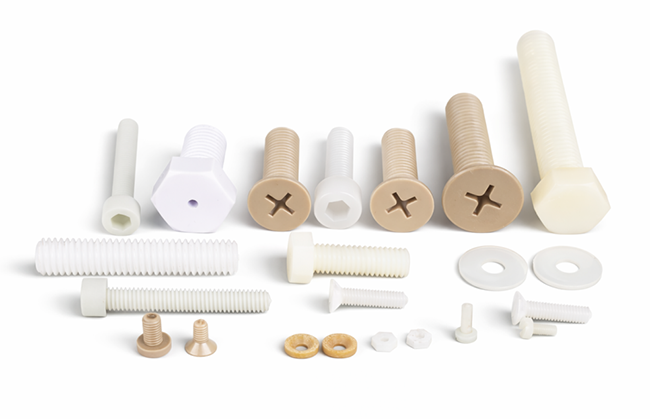
Non-metal fasteners solve application problems that metal fasteners cannot always address
In many cases, fastening problems are not caused by poor product quality. The real issue is that the material was not selected for the actual service environment. Metal fasteners perform well in many standard assemblies, but they are not always the most suitable option when corrosion resistance, dielectric performance, chemical stability, or low weight are essential.
This is why more industries are adopting plastic fasteners, nylon screws, and other non-metal fastening components. The shift is not simply a material substitution. It reflects a broader move from standard-part purchasing to application-based material selection. Engineers and buyers increasingly evaluate fasteners based on working conditions first, then choose the material that best fits the environment, media, temperature range, structural demand, and service life requirements.
Common application challenges that drive the use of plastic and nylon fasteners
Across industrial and technical projects, several recurring problems push buyers toward non-metal fasteners. In corrosive environments, metal parts can rust, degrade, or lose performance over time. In electronic and electrical equipment, insulation is often a clear requirement rather than an added benefit. In lightweight product design, every component matters, and reducing hardware weight can support broader engineering goals. In outdoor installations, better weather resistance and aging performance may be needed. In systems exposed to acids, alkalis, solvents, or other aggressive media, chemical resistance becomes a critical selection factor.
These challenges are especially common in chemical processing, electronics, electrical systems, photovoltaic equipment, semiconductor devices, automotive assemblies, and medical equipment. In such sectors, non-metal fasteners are no longer viewed only as alternatives to steel. They are often the more targeted and more reliable solution for the job.
The core value of non-metal fasteners
Compared with traditional metal fasteners, non-metal fastening materials can offer a more application-specific balance of performance. Their key advantages may include corrosion resistance, electrical insulation, low weight, chemical resistance, low friction, self-lubricating behavior in some materials, and non-magnetic properties. Certain engineering plastics can also provide strong thermal performance for demanding service conditions.
The value of these materials lies in fit-for-purpose selection. A fastener used in a corrosive chemical system does not need the same material profile as one used in a lightweight enclosure or an electrically sensitive device. By matching the fastener material to the operating environment, buyers can improve performance consistency and reduce long-term risk.
9 common non-metal fastener materials and where they fit best
PEEK is a high-performance engineering plastic known for excellent thermal resistance, strong mechanical properties, and high chemical stability. It is often selected for demanding environments where elevated temperature and performance reliability are both important.
PTFE is widely recognized for its outstanding corrosion resistance and extremely low friction. It is commonly used in aggressive chemical environments, sealing-related systems, and clean applications where surface interaction must be minimized.
PVDF combines good chemical resistance with strong weatherability, making it especially suitable for outdoor installations such as photovoltaic systems and exposed industrial equipment.
PPS is a stable engineering plastic that performs well under thermal variation and long service conditions. It is valued for dimensional stability and resistance to deformation in demanding operating environments.
PA66, commonly known as nylon, is one of the most widely used engineering plastics for fasteners. It offers a balanced combination of strength, toughness, and cost efficiency, making it a practical choice for many general industrial applications.
PA66 reinforced with glass fiber provides higher strength and stiffness than standard PA66. It is better suited for structural applications where greater load-bearing capability is required.
PP is a lightweight thermoplastic with good chemical resistance and low density. It is often used in projects where both weight and cost control are important considerations.
PVC is an economical plastic material that can be useful in applications with moderate corrosion requirements, stable environments, and budget-sensitive purchasing priorities.
PC offers high impact resistance, good dimensional stability, and reliable insulation properties. It is also a representative option for applications where transparency or a cleaner visible appearance is part of the design requirement.
How to select non-metal fasteners quickly
A simple selection logic can help narrow down the right material. For high-temperature service, PEEK, PTFE, and PPS are usually the first materials to review. For strongly corrosive environments, PTFE and PVDF are often the priority choices. For high-strength structural needs, PA66 with glass fiber reinforcement is a stronger candidate. For general industrial applications where cost control matters, PA66, PP, and PVC may be more practical. For transparency and impact resistance, PC is often a useful option.
The main principle is straightforward: evaluate the working condition first, then choose the material. Temperature, chemical media, insulation demand, outdoor exposure, weight targets, and mechanical load should all be considered before selecting the fastener type. This approach improves accuracy and helps avoid the common mistake of defaulting to a familiar material that may not fit the application.
Why market demand for non-metal fasteners continues to grow
The growing demand for non-metal fasteners is driven by several broader industry trends. First, operating conditions are becoming more complex, and many applications now require corrosion resistance, insulation, lightweight design, and heat resistance at the same time. Second, industries such as semiconductor, photovoltaic, new energy, medical, and electronics are becoming more specialized, which increases demand for better-defined material performance. Third, product design is placing greater emphasis on lightweight construction and integrated functionality. In this context, fasteners are no longer treated as simple connectors alone. They are increasingly selected as functional material components within a larger engineering solution.
This shift also changes how buyers approach procurement. Instead of treating fasteners as interchangeable standard items, more customers now look for a material solution that matches the real service environment. That is where a manufacturing-oriented partner can add value. A supplier such as Flybear Fastener can support industrial buyers with custom production understanding, material-based selection logic, and more application-focused fastener solutions for specialized environments.
Customers often need a material solution, not just a screw
In many projects, what the customer really needs is not merely a screw, nut, or washer. The real need is a material solution that works under the actual operating conditions. Plastic fasteners are not simply a replacement for metal. In the right scenario, they provide a better-matched, more stable, and more efficient fastening option.
Common material choices for non-metal fasteners include PEEK, PTFE, PVDF, PPS, PA66, PA66 with glass fiber, PP, PVC, and PC. These materials are widely used in electronics, electrical equipment, photovoltaic systems, semiconductor equipment, chemical installations, automotive parts, and medical devices. For buyers and engineers, the most effective selection method is to start with the service condition, define the performance priorities, and choose the fastening material accordingly. That is how non-metal fasteners deliver their real value in modern engineering applications.
Follow Me!