Does PEEK Screw Torque Drop at High Temperature? What Happens to Clamp Load, Creep, and Tightening Strategy
PEEK screw torque at high temperature is a real concern—and the short answer is: the tightening torque you apply at room temperature may not translate into the same long-term clamp load once the joint is exposed to heat. That does not mean PEEK screws are “bad” for hot environments. It means PEEK behaves differently than steel because polymers soften with temperature, and time-dependent deformation (creep and stress relaxation) becomes more significant as temperature rises. If your design relies on stable preload, understanding these effects helps you avoid loose joints, leaks, or electrical failures.
People researching this topic often search phrases like “PEEK fasteners temperature rating,” “PEEK vs stainless screws high temperature,” “polymer screw torque specs,” “creep in PEEK,” and “how to prevent loosening at high temperature.” This article explains what actually changes in a heated joint, why torque can feel different, and what engineers and buyers can do to maintain performance.
Torque Is Not Clamp Load: Why the Question Matters
Torque is only an indirect way to create clamp load (preload). When you tighten a screw, part of the torque becomes useful bolt tension, but most is lost to friction under the head and in the threads. With PEEK, temperature influences both material stiffness and friction behavior. As the joint heats up, a polymer fastener can experience lower modulus (it becomes more compliant), and it can also undergo stress relaxation. The practical result is that the joint may lose preload over time even if the applied torque was correct initially.
Does Torque “Drop” at High Temperature, or Does Preload Drop?
In most real applications, what “drops” is the effective clamp load, not the torque you applied with the tool. After installation, the screw can relax under constant strain, and the joint stack (gaskets, plastics, composites) can also compress further with heat. This is why many engineers talk about “torque retention” but measure “clamp load retention.” If you only track installation torque, you may miss the real behavior that causes loosening.
PEEK Screw Torque at High Temperature: The Role of Creep and Stress Relaxation
PEEK screw torque at high temperature is closely linked to creep and stress relaxation. Creep is time-dependent deformation under load; stress relaxation is the gradual reduction of stress under constant strain. Both become more pronounced for polymers as temperature increases—especially near long-term service limits.
In a bolted joint, this means:
- Clamp load can decrease over time after heating cycles, even without visible rotation.
- Gaskets and joint materials may compress further when warm, adding more preload loss.
- Vibration loosening risk increases if clamp load falls below the threshold needed to maintain friction in the joint.
For high-temperature assemblies, it is more accurate to ask: “Will preload remain adequate after thermal exposure?” rather than “Will my torque number change?”
Thermal Expansion Mismatch: PEEK vs Metal or Ceramic Parts
Another reason heated joints change behavior is thermal expansion mismatch. PEEK generally expands more than metals. In mixed-material joints—such as PEEK screws clamping metal plates, ceramic insulators, or composite housings—temperature can shift load distribution. In some stack-ups, the fastener may see additional strain; in others, the joint may open slightly as components expand differently. This is why “PEEK vs stainless screws high temperature” comparisons should include the entire joint design, not just the fastener material.
What Engineers Do to Maintain Preload in Hot Environments
To reduce preload loss and keep assemblies stable, common strategies include:
- Use washers designed for load distribution: A larger bearing surface can reduce local embedment and compression under the head.
- Consider spring elements where appropriate: Disc springs or compliant elements can help maintain contact force when the joint stack relaxes.
- Optimize tightening procedure: Two-step tightening, controlled torque tools, or torque-angle methods can improve consistency when friction varies.
- Plan for re-torque after thermal soak: In some applications, a controlled re-torque after initial heat exposure can recover clamp load.
- Validate with testing: For critical joints, perform hot torque/tension correlation or clamp load testing rather than relying on room-temperature assumptions.
These steps align with high-intent searches like “how to prevent loosening at high temperature” and “polymer fastener torque specs.”
When PEEK Screws Are the Right Choice (and When They Are Not)
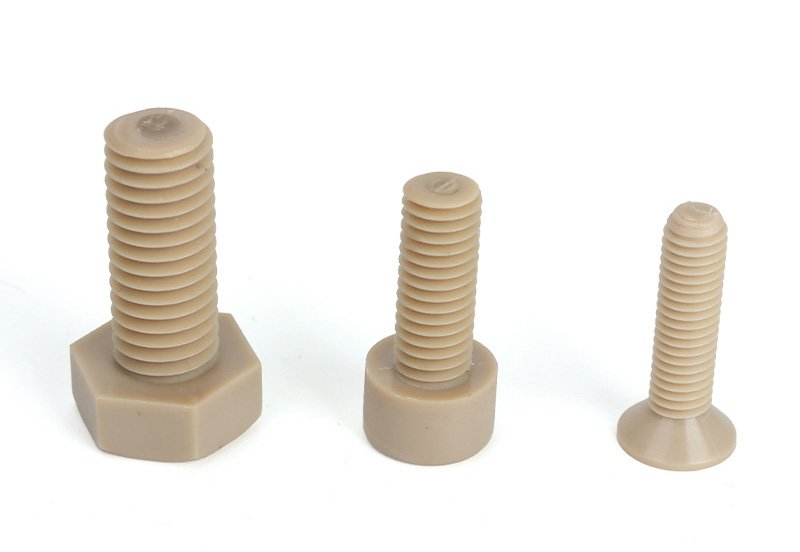
PEEK screws are often selected for applications that need electrical insulation, chemical resistance, low outgassing, weight reduction, or metal-free assemblies. They can be excellent for high-temperature environments when the design accounts for polymer behavior. However, if the joint requires very high and highly stable preload over long periods at elevated temperature, a different material system or a hybrid approach (e.g., metal fastener with insulating sleeves/washers) may be more appropriate.
Instead of a simple “yes/no,” a better selection question is: “What is my required clamp load over time at temperature, and what safety margin do I need?”
Practical Spec Tips for Buyers: How to Ask for the Right PEEK Fastener
If you are sourcing PEEK fasteners, include details that directly affect torque and performance:
- Service temperature and duration: steady-state vs cycling, hours at temperature.
- Joint materials: metal-to-metal, metal-to-plastic, gasketed joints, composites.
- Thread type and head style: these influence friction and seating behavior.
- Installation method: torque-only vs torque-angle; whether re-torque is allowed.
- Acceptance criteria: clamp load retention, leak rate, or electrical insulation performance.
Many buyers also search for “PEEK fasteners temperature rating” because they want a safe operating window. In practice, performance depends on both temperature and load level. A well-designed joint can perform reliably at elevated temperatures, but it must be validated for the specific application.
Work With a Supplier Who Understands High-Temperature Polymer Fasteners
PEEK fasteners are not “drop-in replacements” for steel; they require correct selection and a tightening strategy that protects preload under heat. At Flybear Fastener, we support customers using PEEK screws for demanding environments by helping define specifications, head styles, thread options, and practical installation recommendations aligned with real operating temperatures.
Conclusion
So, does torque drop at high temperature for PEEK screws? The more important effect is that clamp load can drop over time due to polymer creep and stress relaxation, combined with thermal expansion mismatch and joint stack compression. With the right design choices—washers, spring elements, tightening procedure, and validation testing—PEEK screws can still deliver reliable performance in high-temperature applications.
Follow Me!