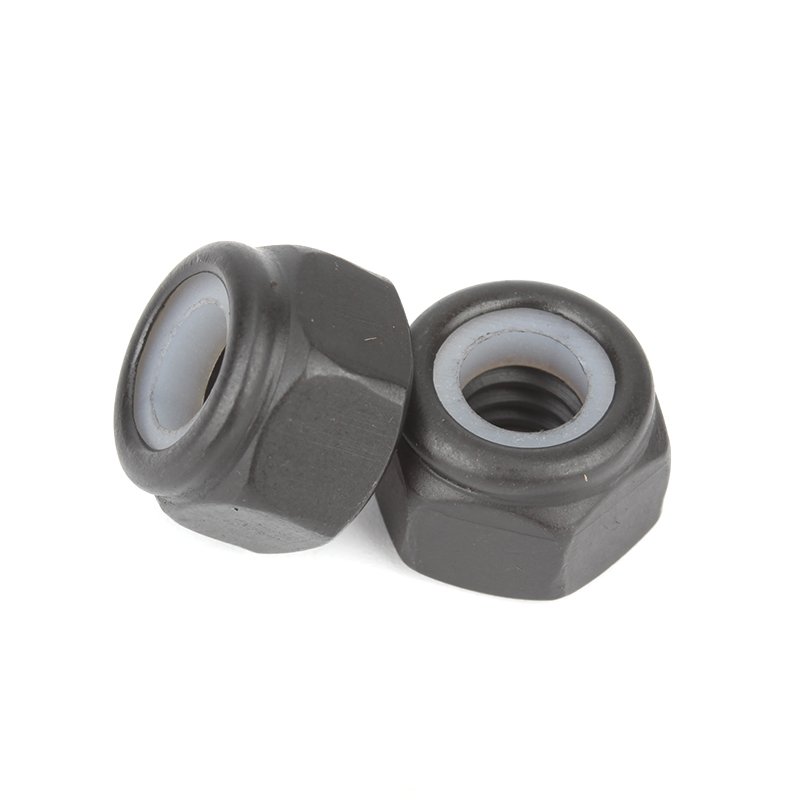
Flybear 304 stainless steel black oxide nylon insert lock nuts combine a corrosion-resistant stainless steel body, a blackened surface, and a nylon insert that provides resistance to thread rotation. They suit assemblies requiring both a dark hardware appearance and a prevailing-torque locking feature, including equipment enclosures, machinery brackets, instrument mounts, and general industrial components.
The external hexagon allows installation with conventional wrench or socket tooling. Inch-series dimensions are referenced to ASME B18.16.6, with the specific nut style, thread designation, and dimensions confirmed against the order drawing.
Key Product Features
- 304 stainless steel body: Provides corrosion resistance for many indoor and mild outdoor environments.
- Blackened finish: Coordinates with black housings, frames, brackets, and other visible assembly hardware.
- Nylon insert locking: Creates prevailing torque as the mating thread engages the insert.
- External hexagon: Supports accessible tightening with standard hex tooling of the correct size.
- Inch-series configuration: Selected to match the required bolt diameter, thread pitch, nut style, and installation space.
Product Specifications
| Item | Description |
|---|---|
| Product Type | Hexagon nylon insert prevailing-torque lock nut |
| Nut Body Material | 304 stainless steel |
| Surface Finish | Black oxide / blackened finish; process and post-treatment specified by order |
| Locking Element | Nylon insert |
| Thread System | Inch series; diameter, threads per inch, and thread fit to be specified |
| Dimensional Reference | ASME B18.16.6, commonly referenced as ANSI/ASME B18.16.6 |
| Nut Style and Dimensions | According to the selected configuration and approved drawing |
| Mechanical and Locking Performance | According to the agreed stainless steel product specification and acceptance requirements |
ASME B18.16.6 includes several lock nut styles. The standard number alone does not identify the nut height or hex dimensions. Its published nylon insert mechanical grades apply to carbon steel products; using its dimensions for a 304 stainless steel nut does not establish compliance with those grades.
304 Stainless Steel for Everyday Industrial Environments
304 is an austenitic chromium-nickel stainless steel widely used for industrial hardware. Its corrosion resistance comes primarily from the protective passive film on the stainless steel surface. This makes it a practical material choice for assemblies exposed to ordinary atmospheric moisture and many mild service environments.
Material selection should still reflect the actual exposure. Chloride deposits, seawater, aggressive cleaners, and moisture trapped in crevices can increase the risk of localized corrosion. For demanding environments, assess the complete joint and cleaning conditions before specifying the material.
The designation “304” identifies the material rather than a finished nut strength grade. Required proof load, mating bolt strength, and acceptance criteria should be defined separately.
Black Finish for Coordinated Equipment Appearance
The blackened surface helps the nut blend with dark equipment panels, frames, and mounting components. This is useful where exposed silver hardware would interrupt the intended appearance of the finished assembly.
Stainless steel blackening requires a process suitable for the substrate. Final shade, gloss, handling characteristics, and corrosion behavior depend on surface preparation, the blackening route, and any sealer or protective post-treatment. For appearance-sensitive assemblies, an approved sample provides a useful reference for production acceptance.
Blackening does not establish a marine-service rating or a guaranteed salt spray performance. Specify any corrosion test requirement separately, together with its method and acceptance criteria. If oily residue or surface transfer would affect the assembly, include the relevant cleanliness requirement when ordering.
How the Nylon Insert Provides Locking Resistance
As the mating bolt or stud passes through the nut, its threads engage and deform the nylon insert. The resulting interference creates prevailing torque: resistance to rotation that exists even before the nut seats against the joint.
The metal threads carry the joint load, while the insert provides additional rotational resistance. This locking action helps resist vibration-related loosening, but does not automatically restore preload lost through joint settling. Correct joint design, thread engagement, and tightening remain necessary.
Typical Application Areas
- Automation equipment: Sensor brackets, guards, and enclosure-mounted accessories requiring compact locking hardware.
- Machinery assemblies: Covers, support brackets, and auxiliary components subject to operational movement.
- Instrument and imaging equipment: Mounts and support structures where dark hardware complements the assembly finish.
- Electrical and electronic enclosures: Mechanical mounting points for panels, brackets, and internal accessories.
Application suitability depends on joint loads, vibration severity, temperature, chemical exposure, and the required maintenance interval. These examples describe potential uses rather than application-specific approvals.
Installation and Tightening Considerations
Confirm the inch thread diameter and pitch before installation. Start the nut from the metal-threaded end, with the nylon insert facing away from the initial entry of the bolt. Select sufficient bolt or stud length for complete engagement through the locking insert.
Use a tightening procedure established for the actual fastener combination. Applied torque must overcome both joint friction and the insert’s rotational resistance, so a torque value intended for a plain nut may not produce the same clamp load.
For stainless steel mating threads, control installation speed and use an approved lubrication strategy where appropriate to reduce galling risk. Lubricants and finish sealers can change friction, so they should be included in the tightening procedure rather than added without review.
Quality Requirements for Procurement
A clear purchase specification helps align appearance, fit, and function. Relevant inspection items include:
- Material identification and agreed traceability documentation.
- Thread fit, overall height, and width across flats.
- Black finish appearance and cleanliness.
- Nylon insert condition and retention.
- Proof load and prevailing-torque testing where required by the order.
Review Flybear’s fastener quality inspection capabilities and confirm the required inspection scope before production. Product-specific reports and acceptance limits should be agreed as part of the order.
Frequently Asked Questions
Can these nuts be used at elevated temperatures?
The nylon insert can limit service temperature well before the stainless steel body does. Confirm the rating for the specified insert, exposure duration, and operating environment before use.
Can a nylon insert lock nut be reused?
Removal and reinstallation can reduce locking resistance. Reuse should follow the equipment manufacturer’s instructions and applicable prevailing-torque acceptance criteria. Replace nuts with damaged inserts or inadequate locking resistance.
Does the black finish increase the nut’s strength?
No. The blackened appearance does not establish a higher mechanical grade. Load capacity must be evaluated from the finished nut specification, geometry, and required test results.
Request a Quote for Your Required Configuration
For a quotation, provide the inch thread designation, nut style or drawing, quantity, black finish requirements, and operating conditions. Include any requirements for insert color, locking performance, material documentation, or inspection reports.
Contact Flybear to confirm the specifications for your 304 stainless steel black oxide nylon insert hex lock nuts.
Follow Me!