Common Problems When Installing Rivet Nuts and How to Prevent Them
rivet nut installation problems often appear during assembly in automotive manufacturing, sheet metal fabrication, industrial machinery, and consumer electronics. Rivet nuts are widely chosen for creating strong threaded connections in thin-walled materials, but improper installation can lead to thread failure, structural loosening, or deformation. Understanding these problems helps engineers improve assembly efficiency and long-term reliability.
What Are Rivet Nuts and Why They Are Used
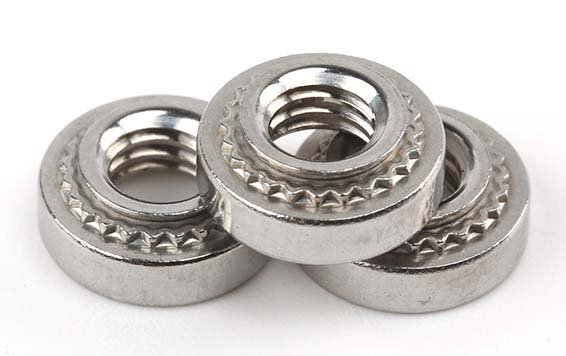
Rivet nuts, also known as threaded inserts, provide secure internal threads where traditional tapping cannot be applied. They are especially useful in thin plates, aluminum panels, tubular structures, and lightweight metal assemblies. Their versatility makes them crucial in automotive chassis assembly, HVAC equipment, metal cabinets, bicycles, and industrial automation.
Common Problems During Rivet Nut Installation
| Problem | Cause | Recommended Fix |
|---|---|---|
| Rivet nut spinning in hole | Over-sized hole or insufficient material grip | Ensure correct hole tolerance and choose appropriate knurled type |
| Thread stripping | Over-torquing during bolt insertion | Use calibrated torque tools and follow manufacturer torque limits |
| Deformation of rivet nut body | Incorrect installation stroke or poor riveter settings | Adjust installation stroke to prevent over-crushing |
| Cracking of rivet nut flange | Material too thin or uneven force applied | Use reinforced flange type for thin materials |
| Insufficient clamping force | Weak material or incorrect hardness selection | Choose high-strength steel or stainless steel version |
Rivet Nut Installation Problems in High-Demand Applications
Industries with constant vibration, such as automotive systems, robotics, rail transport, and heavy machinery, often experience rivet nut loosening after long operation cycles. Google search terms like “rivet nut failure,” “rivet nut spinning,” “thread insert problems,” and “loose rivet nut” show increasing concern among engineers about reliability.
Root Causes Behind Rivet Nut Installation Problems
Three major root causes account for most rivet nut issues:
- Improper hole preparation – inaccurate drilling leads to poor fit and loss of grip.
- Incorrect tool selection – using manual pliers instead of pneumatic tools risks uneven deformation.
- Material mismatch – stainless steel installed on soft aluminum panels may create uneven stress distribution.
When sourcing fastener products, engineers should always confirm the panel thickness, hole diameter, material compatibility, and installation tool capability.
Adhesive-Based Reinforcement vs. Proper Installation
Some users try to reinforce rivet nuts with chemical threadlockers, but this rarely solves the underlying mechanical issue. Proper control of installation stroke, preload, and tool alignment is far more effective than adhesive reinforcement.
Professional Guidance from Flybear Fastener
Flybear Fastener provides a complete range of rivet nuts designed for industrial-grade performance. Available in steel, aluminum, brass, and stainless steel, our rivet nuts are engineered to offer stronger pull-out resistance, improved thread durability, and consistent compression deformation. With precision manufacturing, the company ensures each part meets strict dimensional tolerance standards.
Rivet Nut Installation Problems and Practical Solutions
To solve rivet nut installation problems effectively, professional engineering support is often required. This includes selecting the correct knurled type, choosing an appropriate material grade, and applying the correct installation stroke. For specialized industries such as EV battery systems, metal enclosures, automation frames, and aerospace panels, tailor-made engineering solutions help guarantee long-term performance.
Conclusion and Industry Guidance
Rivet nuts are indispensable in modern manufacturing, but knowing their installation problems can prevent costly rework and structural failures. For additional specifications, custom sizes, or professional engineering analysis, you can explore our full product line or contact us to obtain detailed guidance, technical recommendations, and customized quotations.
Follow Me!