Stainless Steel Fasteners: Material Performance and Applications
Stainless steel fasteners are widely used in industrial assembly because they combine corrosion resistance, mechanical reliability, clean appearance, and long service life in demanding environments. For B2B buyers, engineers, and sourcing managers, choosing the right stainless steel grade is not only a price decision. It affects product safety, maintenance cost, installation stability, and performance under moisture, chemicals, temperature changes, or outdoor exposure.
How Different Stainless Steel Materials Affect Fastener Performance
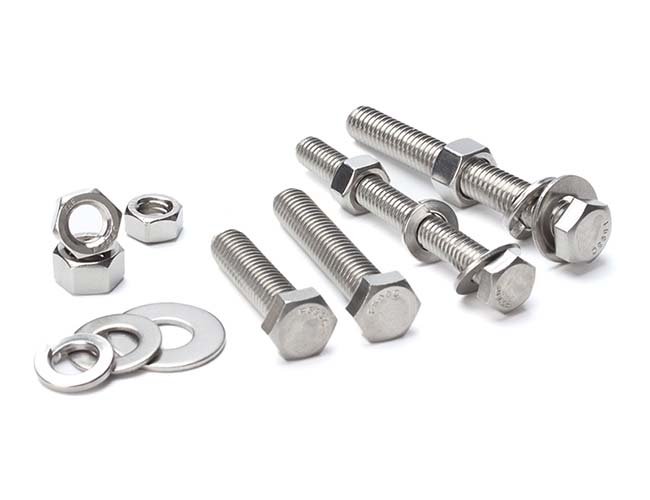
Stainless steel is not a single material. It includes several grade families, each designed for different combinations of corrosion resistance, strength, hardness, formability, and application environment. In fastener procurement, common choices include 304 stainless steel, 316 stainless steel, 410 stainless steel, 321 stainless steel, and duplex stainless steel. Each grade can be used for bolts, screws, nuts, washers, studs, anchors, and custom fastener parts, but the best option depends on the working condition.
Stainless Steel Fasteners by Grade: Key Selection Factors
Before selecting stainless steel fasteners, buyers should evaluate the operating environment, load requirements, assembly method, thread engagement, surface finish, and service life expectations. A fastener used inside a dry machine housing does not need the same corrosion resistance as a bolt installed near seawater or chemical processing equipment. Similarly, a self-tapping screw may require better hardness, while a structural bolt may require more consistent tensile performance.
Important selection factors include material grade, strength class, thread type, standard, surface finish, and dimensional tolerance. International standards such as DIN, ISO, ANSI, ASME, and JIS are often used to define dimensions and mechanical requirements. For custom projects, manufacturers may also adjust head type, drive type, thread length, point style, and special processing based on the assembly design.
304 Stainless Steel Fasteners for General Industrial Use
304 stainless steel is one of the most commonly used stainless steel materials for fasteners. It offers a balanced combination of corrosion resistance, formability, and availability, making it suitable for many general-purpose applications. 304 stainless steel screws, bolts, nuts, and washers are often used in machinery, furniture, electrical equipment, light construction, food equipment, and indoor or mildly corrosive environments.
The main advantage of 304 stainless steel fasteners is versatility. They are easy to source in standard sizes and can be manufactured in many head types and thread forms. For buyers who need stable performance without extreme environmental exposure, 304 is often a practical and cost-effective choice. However, it may not be the best option for chloride-rich environments, marine installations, or applications exposed to stronger chemicals.
316 Stainless Steel Fasteners for Marine and Corrosive Environments
316 stainless steel fasteners provide higher corrosion resistance than 304, especially in environments where moisture, salt, or certain chemicals are present. This makes 316 a preferred material for marine equipment, coastal construction, chemical processing systems, outdoor infrastructure, wastewater facilities, and equipment exposed to harsh cleaning agents.
For sourcing managers, 316 stainless steel bolts, nuts, washers, and screws are often selected when long-term corrosion resistance is more important than the lowest initial cost. In many projects, using 316 can reduce the risk of rust staining, thread seizure, replacement, and maintenance downtime. When the application involves coastal air, saltwater spray, or regular chemical contact, 316 is usually a stronger choice than 304.
410 Stainless Steel Fasteners for Hardness and Wear Resistance
410 stainless steel belongs to the martensitic stainless steel family. Compared with 304 and 316, it can provide better hardness after heat treatment, making it useful for fasteners that require stronger cutting or tapping performance. 410 stainless steel self-drilling screws and self-tapping screws are commonly used in metal sheet assembly, roofing systems, HVAC components, and light steel structures.
The tradeoff is corrosion resistance. 410 stainless steel generally does not offer the same level of corrosion resistance as 304 or 316. For this reason, surface finish and application environment should be considered carefully. In dry or mildly exposed environments, 410 fasteners can perform well when hardness is the priority. In highly corrosive environments, buyers may need to consider alternative stainless grades or protective coatings.
321 Stainless Steel Fasteners for Heat-Related Applications
321 stainless steel is often used where fasteners must maintain stability in elevated-temperature environments. It is suitable for applications such as exhaust systems, heat exchangers, thermal equipment, industrial furnaces, and certain aerospace or energy-related assemblies. In these applications, material stability is important because fasteners may be exposed to heat cycles, vibration, and long-term stress.
When buyers select 321 stainless steel fasteners, they usually focus on thermal performance, oxidation resistance, and structural reliability under heat exposure. This material is not always required for standard assemblies, but it can be valuable when common stainless steel grades may not provide enough stability at higher temperatures.
Duplex Stainless Steel Fasteners for Strength and Corrosion Resistance
Duplex stainless steel fasteners combine high strength with strong corrosion resistance, making them suitable for demanding industrial environments. They are often used in offshore engineering, oil and gas equipment, chemical plants, pressure systems, desalination facilities, and heavy-duty infrastructure. Compared with common austenitic stainless steels, duplex materials can offer a stronger balance between mechanical performance and resistance to stress corrosion in challenging conditions.
Because duplex stainless steel fasteners are typically used in more demanding projects, buyers should pay close attention to standards, material traceability, dimensional accuracy, and production consistency. These fasteners are not always necessary for ordinary applications, but they can provide significant value when failure risk, corrosion exposure, and load requirements are high.
Surface Finish and Manufacturing Considerations
Even when the correct stainless steel grade is selected, manufacturing quality still matters. Thread precision, head forming, surface cleanliness, passivation, polishing, and inspection all influence the final performance of stainless steel fasteners. Poor processing can lead to assembly problems, galling, weak thread engagement, or inconsistent installation torque.
For industrial buyers, it is important to work with a supplier that understands both standard fasteners and custom manufacturing requirements. Flybear Fastener supports B2B customers with stainless steel fastener solutions for industrial applications, including product selection, material matching, and custom production based on application needs.
How to Choose the Right Stainless Steel Fastener Material
For general indoor use, 304 stainless steel is often suitable. For marine, coastal, or chemical environments, 316 stainless steel is usually preferred. For screws that need hardness and drilling ability, 410 stainless steel may be appropriate. For heat-related applications, 321 stainless steel can be considered. For high-strength and highly corrosive industrial conditions, duplex stainless steel may provide better long-term reliability.
Buyers should also confirm the fastener standard, size range, thread type, head style, mechanical requirement, and surface treatment before placing an order. In custom fastener projects, drawings, samples, or technical specifications can help manufacturers evaluate production feasibility and recommend the most suitable stainless steel material.
Conclusion
Different stainless steel materials provide different advantages in fastener performance and application. 304 offers versatility, 316 improves corrosion resistance, 410 provides hardness, 321 supports heat-related use, and duplex stainless steel offers strength for demanding environments. By matching material grade with real working conditions, buyers can improve assembly reliability, reduce maintenance risk, and achieve better long-term value in industrial fastening systems.
Follow Me!