17-4PH H1150 Fasteners: Material Properties, Heat Treatment and Industrial Applications
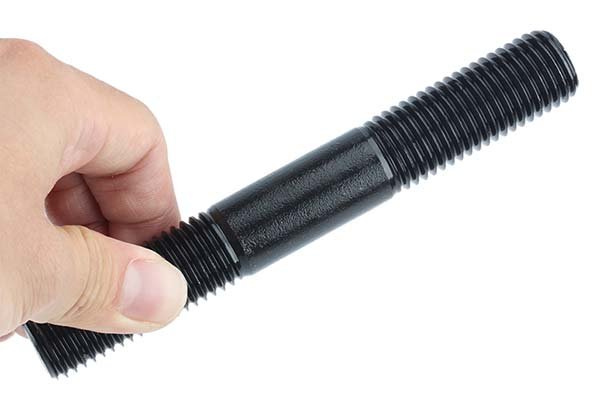
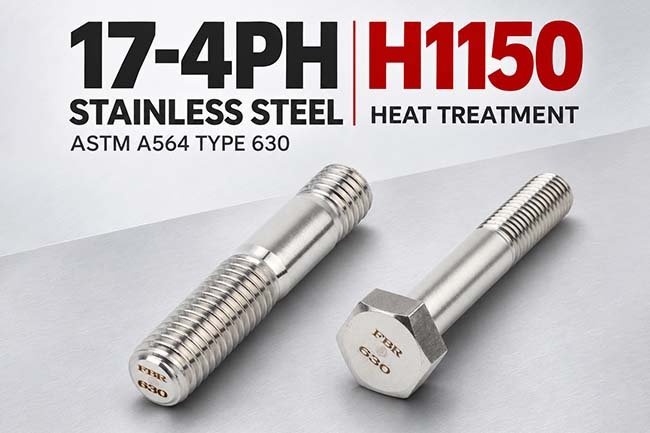
17-4PH H1150 fasteners combine precipitation-hardening stainless steel with an aging condition selected for a balance of strength, toughness, and corrosion resistance. This material and heat-treatment combination can be applied to different component designs, including hexagon bolts, double-end studs, and drawing-specific threaded parts.
The shared technical foundation is the alloy and its metallurgical condition. Product geometry determines how a component fits and transfers load, while material selection and heat treatment establish the properties available to the designer.
For engineers and industrial buyers, understanding the relationship between 17-4PH, Type 630, 05Cr17Ni4Cu4Nb, and H1150 helps turn a general request for “high-strength stainless steel” into a clear purchasing specification.
Understanding the Material and Heat-Treatment Designations
Several names appear in descriptions of this fastener series. They identify different aspects of the material and should be read together.
| Designation | What It Identifies | Purchasing Significance |
|---|---|---|
| 17-4PH / Type 630 | A martensitic precipitation-hardening stainless steel alloy | Identifies the material family, but does not specify its final heat-treatment condition. |
| UNS S17400 | The Unified Numbering System designation associated with 17-4PH | Supports material identification across technical documents. |
| 05Cr17Ni4Cu4Nb | A Chinese grade commonly cross-referenced to Type 630 / UNS S17400 | The governing material standard and its requirements still need to be stated. |
| ASTM A564/A564M | A specification for age-hardening stainless steel bars and shapes | Applies to relevant material forms rather than serving as a complete finished-fastener specification. |
| H1150 | A specified aging condition | Identifies the required heat-treated state of the material. |
Cross-reference names help identify a candidate material. They do not automatically establish compliance with every requirement in another standard. Chemical composition, product form, mechanical properties, testing, and documentation should be checked against the specification named in the order.
What Makes 17-4PH Different?
17-4PH is a chromium-nickel-copper stainless steel whose properties can be adjusted through precipitation hardening. The letters “PH” refer to this heat-treatment mechanism.
During controlled aging, copper-containing precipitates develop within the steel. Their interaction with the surrounding microstructure changes the material’s resistance to deformation. Aging temperature and time influence the resulting combination of strength, hardness, ductility, and toughness.
This gives designers a range of material conditions within the same alloy family. The condition selected for one application may not be appropriate for another, even when both components are described as 630 stainless steel.
The practical implication is straightforward: alloy identity and heat-treatment condition belong together. A drawing that specifies only “17-4PH” leaves an important part of the performance requirement undefined.
What Does H1150 Heat Treatment Mean?
The Aging Condition
H1150 refers to an aging treatment associated with approximately 1150°F, or 621°C. Published schedules commonly describe holding appropriately solution-treated material at this temperature for four hours, followed by air cooling.
The actual production requirements must follow the applicable specification and approved process. Starting condition, treatment tolerances, processing sequence, and verification all matter.
H1150 describes a metallurgical condition. It is separate from surface treatments such as passivation, plating, or lubrication.
The Balance Between Strength and Toughness
Compared with peak-strength H900, H1150 generally provides lower strength and hardness with greater ductility and toughness. This balance can be valuable when a component needs substantial load capacity while also requiring resistance to fracture.
| Consideration | H900 | H1150 |
|---|---|---|
| Strength and Hardness | Generally higher | Generally lower than H900 |
| Ductility and Toughness | Generally lower than H1150 | Generally improved relative to H900 |
| Selection Emphasis | Applications prioritizing higher strength, where other requirements permit | Applications seeking a balance of strength, toughness, and ductility |
This comparison describes a general material trend. Finished-product acceptance values must come from the governing specification and supporting test records.
The number in H1150 is not a strength ranking or a service-temperature rating. A higher aging temperature does not automatically mean a stronger component.
How These Properties Affect Fastener Selection
Strength Supports Load Capacity
Yield strength and tensile strength help establish the material’s response to loading. They are relevant to the assessment of installation loads, service loads, and resistance to permanent deformation or fracture.
However, material strength is only one input. The effective threaded area, thread engagement, mating-component strength, and local geometry also influence the capacity of a finished connection.
For example, a strong threaded component installed into a weaker tapped material may be limited by stripping of the internal thread. Increasing the fastener material strength alone does not remove that limitation.
Toughness and Ductility Add Another Selection Dimension
Toughness and ductility describe aspects of behavior that a tensile-strength value alone cannot capture. Their relevance depends on the loading, temperature, geometry, and consequences of fracture.
When comparing material conditions, review the complete set of required properties. Selecting the highest hardness available is not necessarily the most suitable approach for the application.
Hardness Is Useful for Verification
Hardness testing provides useful information about material condition and processing consistency. It can form part of an inspection plan for H1150 components.
A hardness result does not independently confirm every mechanical property or prove the complete processing history. Where tensile, impact, or other tests are required, those requirements should be specified separately.
Corrosion Resistance: An Alloy Benefit with Application Limits
17-4PH can provide useful corrosion resistance in suitable atmospheric and industrial environments. Its combination of mechanical properties and environmental resistance is a principal reason to consider the alloy for industrial components.
Corrosion behavior still depends on the medium, temperature, deposits, crevices, surface condition, and stress. A higher-strength stainless steel should not automatically be assumed to offer better corrosion resistance than every other stainless grade.
For material selection, describe the actual exposure:
- Whether the component experiences dry air, intermittent moisture, or continuous wetting.
- Which process fluids, cleaning chemicals, or contaminants may contact it.
- Whether chlorides, trapped deposits, or poorly drained crevices are present.
- The operating temperature and relevant temperature changes.
- The materials in electrical contact with the fastener.
Surface cleaning and specified passivation requirements should also be considered. These treatments serve a different purpose from H1150 aging: they address the surface, while aging establishes the required metallurgical condition.
Why Manufacturing Control Matters
Maintain Material and Condition Traceability
A reliable specification connects the starting material to the finished component. Material certificates, processing records, and inspection reports should identify the relevant production lot and required condition.
When reviewing documents, distinguish between the condition of the purchased raw material and the condition certified for the finished part. This is particularly important when subsequent manufacturing operations could affect the material state.
Account for the Manufacturing Sequence
The appropriate sequence depends on the component geometry and manufacturing method. Forming, machining, heat treatment, thread production, and finishing must be coordinated to achieve the specified final requirements.
For a drawing-specific part, it is useful to identify which dimensions are critical after processing. The inspection plan can then address the features that directly affect assembly or service performance.
Allow for Dimensional Changes During Aging
Precipitation hardening can produce small dimensional changes. These should be considered where thread fit, straightness, or close dimensional tolerances are important.
Final acceptance should reflect the delivered condition. Measurements taken before a process that can change dimensions may not be sufficient evidence of the finished component’s conformity.
Industrial Applications for the 17-4PH H1150 Series
The following application areas illustrate where this material and condition may be evaluated. They are selection examples, rather than claims that every H1150 fastener is qualified for every duty within an industry.
| Application Area | Why the Material May Be Considered | What to Review |
|---|---|---|
| Industrial Machinery | Connections requiring a specified combination of strength, toughness, and corrosion resistance | Static and cyclic loads, joint stiffness, preload, and mating-material strength |
| Pump and Valve Equipment | Mounting, support, and equipment connections exposed to mechanical loading and industrial environments | Fluid exposure, temperature, and any pressure-equipment requirements |
| Automation and Mechanical Fixtures | Components requiring a defined heat-treated stainless steel condition | Dimensional accuracy, repeated loading, positioning requirements, and maintenance access |
| Process Equipment | Assemblies where both mechanical performance and environmental compatibility influence selection | Chemical exposure, cleaning procedures, crevices, and applicable equipment specifications |
In machinery with fluctuating loads, fatigue performance depends on the connection as a whole. Appropriate preload, sufficient engagement, and control of joint movement remain important regardless of the alloy selected.
For equipment exposed to heat, evaluate the operating temperature and duration rather than using the aging temperature as an allowable limit. For pressure-retaining connections, confirm the required bolting specification and equipment-code provisions separately.
One Material and Heat Treatment, Multiple Product Forms
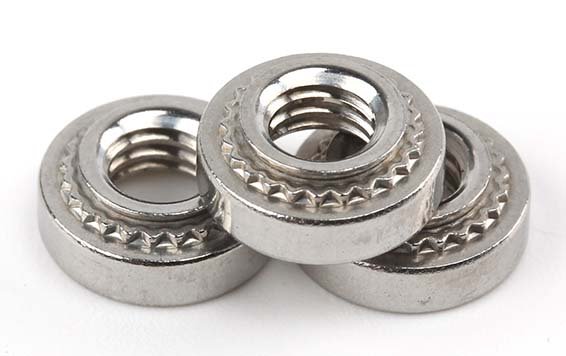
The 17-4PH H1150 approach can support a family of components with different shapes. A hexagon bolt provides an accessible head for tightening, while a double-end stud provides threaded connections at both ends. Other drawing-specific forms can address different installation or geometric requirements.
These forms share a material and heat-treatment basis, but their finished-product requirements remain specific to the design. Head dimensions, threaded lengths, engagement, and inspection criteria should be defined for each item.
Flybear’s stainless steel bolt range and stainless steel studs and threaded rods provide starting points for discussing the required component configuration.
What Buyers Should Specify
A complete inquiry should define the material condition and the finished part together. For a project involving several component forms, use a consistent material requirement while keeping the individual drawings and acceptance requirements clear.
- Material: the specified grade, governing material standard, and any required cross-standard compliance.
- Heat treatment: H1150 and the applicable processing or acceptance requirements.
- Mechanical properties: required strength, hardness, ductility, or toughness criteria where applicable.
- Geometry: drawings, dimensions, thread details, tolerances, and mating components.
- Surface condition: cleaning, passivation, finish, and lubrication requirements.
- Operating conditions: loading, temperature, environment, and maintenance expectations.
- Documentation: material records, heat-treatment evidence, inspection reports, and traceability.
Review the proposed checks against Flybear’s fastener quality inspection capabilities. Material analysis, hardness testing, mechanical testing, dimensional inspection, and thread gauging each answer different questions about the supplied product.
Frequently Asked Questions
Are 17-4PH, Type 630, and 05Cr17Ni4Cu4Nb Interchangeable Names?
They are commonly cross-referenced within the same alloy family. Compliance must still be checked against the particular standard, product form, and delivery requirements specified in the order.
Does H1150 Mean the Highest Available Strength?
No. H1150 generally provides a different balance of properties from peak-strength H900, with lower strength and hardness and improved toughness and ductility.
Are H1150, H1150M, and Double-Aged Conditions the Same?
No. They describe different treatment routes. The exact condition should be stated and verified rather than shortened to a general description such as “heat treated.”
Can All Components in the Series Use the Same Acceptance Criteria?
They can share a material and heat-treatment requirement, but finished-product criteria may differ with geometry, size, function, and the governing specification. A common alloy does not make every component mechanically equivalent.
Discuss Your 17-4PH H1150 Fastener Requirements
For a project requiring strength, toughness, and suitable corrosion resistance across several component forms, define the material and heat-treatment requirements at the start. This helps align drawings, purchasing, manufacturing, and inspection.
Contact Flybear with your component drawings, material specification, H1150 requirements, operating conditions, quantity, and documentation needs. Include both standard and drawing-specific items so the technical requirements can be reviewed consistently across the series.
Follow Me!