
ASTM A193 B7 vs B16 Bolting: Which Grade Fits High-Temperature Service?
ASTM A193 B7 vs B16 is an important comparison for engineers and buyers selecting alloy-steel bolting for high-temperature piping, pressure vessels, valves, flanges, and other pressure-containing equipment. Both grades belong to the ASTM A193 family, but they are not interchangeable by default. The correct choice depends on the project specification, design temperature, mechanical-property requirements, bolting diameter, heat-treatment condition, mating nut grade, coating system, and the governing pressure or piping code.
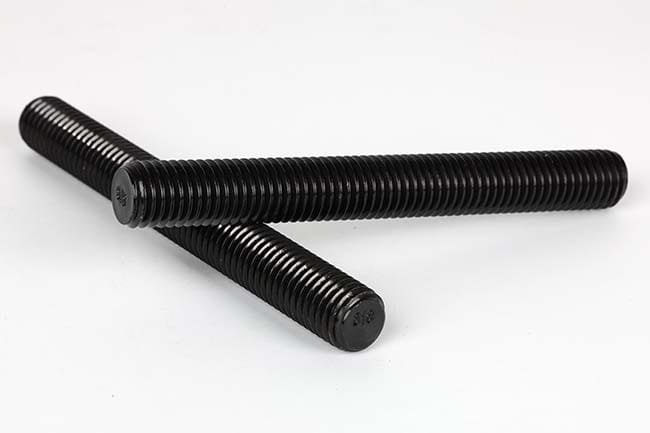
For procurement teams, the key point is simple: do not choose a grade only because it is described as “high temperature.” ASTM A193 covers several bolting grades for demanding service, and each grade has its own chemistry, heat-treatment requirements, mechanical requirements, and application history. A technically sound purchase order should identify the exact grade and edition required by the project, then define dimensions, threads, nuts, finish, testing, inspection, and documentation.
ASTM A193 B7 vs B16: The Main Difference
ASTM A193 Grade B7 is a chromium-molybdenum alloy-steel bolting grade commonly specified for high-pressure and elevated-temperature service. It is widely used for stud bolts, threaded rods, bolts, and related bolting components in petrochemical plants, refineries, power systems, pressure equipment, pumps, valves, and flanged piping.
Grade B16 is also an alloy-steel bolting grade within ASTM A193, but its alloy design includes vanadium in addition to chromium and molybdenum. In practical engineering selection, B16 is often considered when a project requires stronger retention of mechanical performance at elevated temperature or specifically calls for a chromium-molybdenum-vanadium bolting grade. That does not mean B16 is automatically “better” for every high-temperature joint. It may be unnecessary for many applications where B7 already satisfies the design code and project specification.
The most useful way to compare the two grades is therefore not “strong versus weak,” but “which material condition is required for the actual operating envelope?”
| Selection Factor | ASTM A193 B7 | ASTM A193 B16 |
|---|---|---|
| General alloy family | Chromium-molybdenum alloy steel | Chromium-molybdenum-vanadium alloy steel |
| Typical selection logic | Common choice for many high-pressure and elevated-temperature bolted joints | Often specified where project engineering requires improved elevated-temperature strength retention |
| Heat treatment | Heat-treated condition is essential to grade compliance | Heat-treated condition is essential to grade compliance |
| Temperature decision | Must be checked against design code and project requirements | Must be checked against design code and project requirements |
| Nut selection | ASTM A194 nut grade must be specified and verified | ASTM A194 nut grade must be specified and verified |
| Best purchasing practice | Order by exact grade, size, thread, finish, tests, and documentation | Order by exact grade, size, thread, finish, tests, and documentation |
Why Heat Treatment Matters for B7 and B16 Bolting
Heat treatment is central to the performance of ASTM A193 alloy-steel bolting. The material is not defined only by chemical composition. The required final properties depend on the specified grade, the manufacturing route, heat treatment, product size, and subsequent testing.
For both B7 and B16, buyers should confirm that the ordered bolting is supplied in the heat-treated condition required by the applicable standard edition and project documents. This is particularly important for larger diameters or critical pressure joints, where a material designation alone does not provide enough information for acceptance.
Heat-treatment control also affects hardness, tensile properties, microstructure, and consistency from lot to lot. For a manufacturer, this means raw-material identification, furnace process control, test sampling, and traceability need to work together. For a buyer, it means the purchase order should clearly state whether additional inspection, witness points, testing, or documentation is required beyond the base specification.
Do Not Treat Typical Values as Purchase Requirements
Online charts often show typical chemistry, strength, or temperature values for B7 and B16. Those summaries can be useful for preliminary comparison, but they should not replace the current ASTM standard or the project specification. A value that is typical for one diameter, edition, or condition may not be the acceptance criterion for another order.
This is especially important when reviewing high temperature bolting for EPC projects. The correct acceptance basis is the ordered standard edition, grade, dimensions, required mechanical properties, supplementary requirements, and project-specific inspection plan.
What Is the Correct B7 Bolt Temperature?
When buyers ask for a single B7 bolt temperature, the question is usually too broad. ASTM A193 identifies bolting materials intended for high-temperature or high-pressure service, but the standard alone should not be used as a universal maximum service-temperature chart for a complete flange joint.
The allowable operating temperature of a bolted assembly can depend on the governing design code, material allowable stresses, flange rating, gasket selection, preload, thermal cycling, corrosion environment, coating or lubricant stability, and the interaction between the bolt, nut, flange, and gasket. At elevated temperature, stress relaxation and time-dependent deformation can reduce clamping load even when the fastener remains physically intact.
Therefore, the practical selection question is not “What temperature can B7 survive?” It is “Does B7 satisfy the allowable stress, joint integrity, and project requirements at the specified design temperature and pressure?” If the engineering specification calls for B16 at the intended condition, substituting B7 without approval can create a compliance problem even if both grades are available in the same nominal size.
When B16 Stud Bolts May Be Preferred
B16 stud bolts are commonly considered for demanding elevated-temperature applications where the engineering specification requires the B16 grade. These may include high-temperature piping connections, pressure equipment, power-generation systems, valves, or other bolted joints exposed to sustained thermal loading.
The presence of vanadium in the B16 alloy system is one reason the grade is associated with elevated-temperature performance. However, the decision still needs to be made within the complete design context. Bolt grade alone cannot compensate for an unsuitable gasket, inadequate flange rating, incorrect tightening procedure, severe thermal gradients, or an incompatible coating.
For sourcing managers, B16 should be treated as a separate technical requirement rather than a premium version of B7. The purchase order should clearly distinguish the two grades, especially where both may be used on the same project. Material marking, heat identification, certificates, and segregation during packing can help prevent grade mixing.
ASTM A194 Nut Pairing for B7 and B16
A194 nut pairing deserves the same attention as the stud-bolt grade. ASTM A194 covers several carbon, alloy, and stainless-steel nut grades intended for high-pressure or high-temperature service. The nut grade should be selected to match the bolting system required by the current specification and project documents.
It is risky to assume that one nut grade is automatically correct for every B7 or B16 order. Project specifications may define the acceptable nut grade, hardness condition, thread series, dimensions, coating, lubrication, marking, and documentation. Substitution should not be made simply because another nut has the same nominal thread.
For flange bolting, buyers should review the stud and nut as one assembly. The checklist should include:
- ASTM A193 bolting grade and ordered standard edition
- ASTM A194 nut grade and ordered standard edition
- Nominal diameter and length
- UNC, 8UN, metric, or other specified thread series
- Thread fit and dimensional standard
- Nut pattern and dimensions
- Surface finish, coating, or plating
- Lubrication condition if torque-controlled assembly is used
- Mechanical and hardness testing requirements
- Marking, traceability, inspection records, and required certificates
Reviewing these details before production reduces the risk of receiving technically compliant individual parts that do not match the intended bolted-joint specification.
How B7 and B16 Behave in High Temperature Bolting Systems
High temperature bolting is a system problem rather than only a fastener-material problem. As operating temperature increases, several factors can affect joint reliability. Thermal expansion can change bolt load, gaskets can relax, lubricants can degrade, coatings can change friction behavior, and repeated heating and cooling can alter the clamping condition.
In sustained hot service, engineers also consider the ability of the bolting material to retain useful load over time. This is one reason a project may distinguish between B7 and B16 instead of treating all ASTM A193 alloy-steel grades as equivalent. The required choice may also depend on whether the joint is frequently cycled, permanently hot, exposed to vibration, or part of equipment where leakage consequences are significant.
For petrochemical and pressure-equipment projects, fastener selection should therefore be coordinated with the overall joint design. Buyers working on refinery, chemical-processing, or energy projects can review petrochemical fastener solutions when building a sourcing specification around service conditions rather than around a bolt grade alone.
Coating and Surface Finish Considerations
A coating can improve corrosion protection, but it should not be selected independently from service temperature and assembly method. Different coating systems have different temperature capability, friction behavior, chemical resistance, and thickness. A coating that performs well in atmospheric corrosion may not be appropriate for a continuously hot flange connection.
Coating thickness can also affect thread fit. In addition, lubricated and coated fasteners can produce different preload at the same installation torque because friction changes. For critical bolted joints, the torque or tensioning procedure should be based on the specified assembly condition rather than on an unrelated generic torque chart.
When requesting coated B7 or B16 bolting, specify the coating standard, required thickness or process class where applicable, thread allowance requirements, lubrication condition, inspection method, and any project-specific environmental restrictions. If the service involves valves, pumps, or pressure-containing equipment, the pump and valve fastener applications page provides a useful internal reference for related fastener considerations.
Quality Control for ASTM A193 Alloy-Steel Bolting
For critical ASTM A193 bolting, quality control should verify that the manufactured fastener matches the ordered material, dimensions, mechanical requirements, and inspection scope. Depending on the order, relevant controls may include material identification, chemical-composition verification, hardness testing, tensile testing, thread inspection, dimensional inspection, coating-thickness measurement, metallographic examination, magnetic-particle inspection, and sorting methods.
Flybear supports standard and drawing-based custom fastener production for industrial applications. Available inspection activities can be defined according to the product, project requirement, and purchase specification rather than assumed as a universal test package. Buyers who need to understand available inspection methods can review the quality inspection capabilities before finalizing the inspection plan.
Traceability is particularly important when B7 and B16 are used in the same project. Material grade, heat or lot identification, manufacturing records, inspection results, and packing identification should be managed so that the delivered parts can be matched to the required documents. The exact traceability documentation should be agreed during order review.
Custom Manufacturing Factors for B7 and B16 Fasteners
Standard stud bolts cover many flange applications, but industrial projects often require nonstandard lengths, special thread combinations, reduced shanks, custom bolt heads, drawing-defined geometry, special marking, controlled coatings, or project-specific inspection. In these cases, manufacturing feasibility should be reviewed before the purchase order is released.
Important custom-production questions include whether the starting material is available in the required grade and size, whether heat treatment is performed before or after specific machining steps, whether threads are cut or rolled as required by the drawing, and how final dimensions will be verified after coating. The inspection plan should also identify which features are critical and whether the buyer requires additional reports.
For procurement teams comparing suppliers, the ASTM fastener product range can be used as a starting point, but a drawing or detailed specification is still the best basis for custom B7 and B16 quotation review.
B7 vs B16 Selection Checklist for Engineers and Buyers
A practical selection process can prevent most grade-related purchasing errors. Before deciding between ASTM A193 B7 and B16, confirm the following information:
- Design temperature: provide the actual design or operating temperature used by the project engineer.
- Pressure class and equipment standard: identify the flange, valve, vessel, or piping code that governs the joint.
- Specified bolting grade: confirm whether B7, B16, or another A193 grade is explicitly required.
- Diameter and thread: verify nominal size, thread series, pitch, fit, and effective length.
- Nut grade: specify the ASTM A194 grade instead of leaving nut selection open.
- Coating and lubrication: define the required surface system and installation condition.
- Mechanical testing: state any project-specific hardness, tensile, or supplementary test requirements.
- Inspection scope: identify dimensional, material, surface, nondestructive, or coating inspections required by the order.
- Documentation: list the certificates, inspection records, traceability documents, and marking requirements.
- Substitution control: require engineering approval before changing the specified grade, nut, coating, or heat-treatment condition.
This process is especially useful for EPC procurement because it separates material selection from commercial assumptions. Stock status, lead time, minimum order quantity, and price can change, but the technical definition of the required fastener should be established first.
Which Grade Should You Choose?
For many high-pressure and elevated-temperature bolted joints, ASTM A193 B7 remains a widely specified engineering grade. B16 becomes relevant when the project specification or design analysis requires its chromium-molybdenum-vanadium alloy characteristics and elevated-temperature performance. The correct answer is therefore project-specific.
Do not upgrade or downgrade between B7 and B16 based only on a generic temperature table. Verify the current standard edition, service temperature, pressure class, diameter, nut grade, coating, mechanical requirements, and governing code. This is the safest way to avoid an incorrect substitution and to ensure that the complete bolted joint matches the engineering intent.
If you are sourcing ASTM A193 B7 or B16 studs, bolts, matching nuts, or custom drawing-based fasteners, contact the engineering and sourcing team with your operating temperature, pressure class, fastener diameter, thread requirement, coating, ASTM A194 nut grade, drawing, and required certificates. A complete specification allows the manufacturer to review grade suitability, production requirements, and inspection scope before quotation or production.
Follow Me!


Need Fasteners for Your Application?
Share your application, standard or drawing, material or grade, dimensions, finish and quantity. Our team will review your requirements and recommend a suitable solution.