
ASTM A193 B7 vs B7M: Bolting Selection for Sour and Corrosive Service
ASTM A193 B7 vs B7M is a critical comparison for engineers and procurement teams selecting alloy-steel bolting for oil and gas facilities, refineries, sour-gas processing systems, valves, flanges, and pressure piping. Both grades belong to the ASTM A193 family and can be manufactured as studs, stud bolts, bolts, and other externally threaded components, but their heat-treatment and hardness requirements are not the same. That difference becomes especially important when hydrogen sulfide is present and the project includes restrictions intended to reduce the risk of sulfide stress cracking.
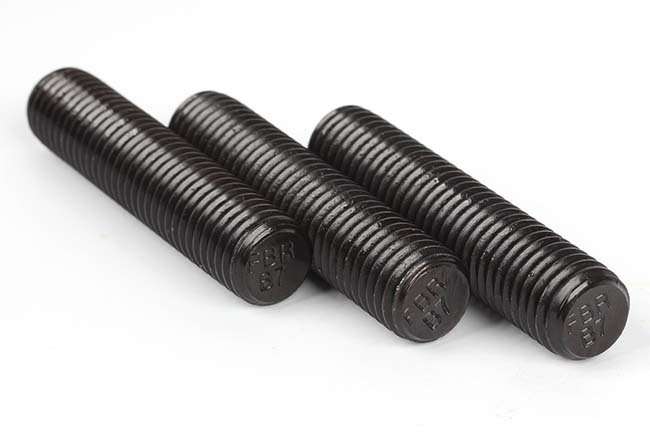
B7M is often associated with sour service because its hardness is more tightly controlled than standard B7. However, specifying B7M by itself does not establish that a complete bolted joint is suitable for every H2S-containing environment. The applicable material standard, environmental limits, nut grade, coating, heat treatment, hardness verification, dimensions, and project-specific sour-service requirements must all be reviewed together.
ASTM A193 B7 vs B7M: What Actually Changes?
ASTM A193 Grade B7 is a chromium-molybdenum alloy-steel bolting grade widely used in high-pressure and elevated-temperature equipment. It is commonly selected for flange joints, valves, pumps, pressure vessels, and piping systems where the engineering specification requires high-strength alloy-steel bolting.
Grade B7M is related to B7 but is supplied under different heat-treatment and hardness-control requirements. In sourcing terms, B7M should not be treated as a simple marking variation of B7. The “M” designation represents a materially different acceptance condition that affects manufacturing, testing, inspection, and the way the fastener is evaluated for service.
| Selection Factor | ASTM A193 B7 | ASTM A193 B7M |
|---|---|---|
| General material family | Chromium-molybdenum alloy steel | Chromium-molybdenum alloy steel with controlled heat-treatment and hardness requirements |
| Primary purchasing focus | Mechanical properties, dimensions, heat treatment, and project specification | Mechanical properties plus tighter hardness control and sour-service requirements where applicable |
| Typical application context | High-pressure and elevated-temperature bolting | Projects that specifically require B7M, including many sour-service specifications |
| Hardness control | Must meet the ordered B7 requirements | Maximum hardness is specifically controlled; verify the exact limit in the ordered standard and project documents |
| Nut selection | Often specified with an appropriate ASTM A194 nut grade | Often specified with a controlled-hardness ASTM A194 nut grade such as 2HM when required by the project |
| Can one replace the other? | No substitution should be made without checking the project specification and obtaining required engineering approval | |
Why B7M Hardness Matters in Sour Service
B7M hardness is one of the main reasons buyers distinguish B7M from conventional B7. In H2S-containing environments, material hardness and strength level can influence susceptibility to hydrogen-related cracking mechanisms. For that reason, many sour-service material specifications place strong emphasis on hardness control, heat-treatment condition, and verification testing.
This does not mean that a lower hardness value alone guarantees safe performance. Sour-service suitability can depend on the material condition, applied stress, H2S partial pressure, pH, chloride content, temperature, exposure conditions, and the specific requirements of the governing standard or end-user specification. The complete service environment must therefore be known before a supplier can meaningfully review a bolting requirement.
For procurement teams, the practical lesson is that a purchase order for B7M should state more than the grade name. It should identify the required ASTM edition, diameter, thread series, nut grade, coating or finish, hardness requirements, inspection scope, marking, documentation, and any additional sour-service standard required by the project.
Do Not Copy a Hardness Number from a Generic Chart
Online technical charts frequently publish typical or historical hardness ranges for B7 and B7M. Those values can help explain the concept, but they should not be copied directly into a purchase order unless they match the edition of ASTM A193 and the project specification being used. Requirements can also be affected by product form, size, test method, and supplementary requirements.
A better procurement practice is to ask the supplier to confirm compliance with the ordered specification and to report the required hardness results on the inspection documentation or material test certificate when specified. This keeps the acceptance basis tied to the contract instead of to an uncontrolled internet reference.
What Does “NACE Bolting” Really Mean?
The phrase NACE bolting is common in oil and gas purchasing, but it can be too vague for manufacturing. NACE MR0175, now used together with ISO 15156, addresses materials for use in H2S-containing environments in oil and gas production. Refinery and downstream sour environments may instead involve other sour-service material requirements, including project references to NACE MR0103 or ISO 17945.
Because these documents serve different application contexts, a purchase order should not simply say “NACE compliant” without identifying the exact standard, edition, service environment, and material restrictions. The buyer should also specify whether the requirement applies only to the stud material or to the complete fastener assembly, including nuts, washers if used, coating, and any post-processing steps.
B7M can be an appropriate starting material choice for some sour-service bolting specifications, but the grade designation alone is not proof that every finished part meets every requirement of a particular sour-service standard. Hardness, heat treatment, chemical composition, manufacturing condition, coating process, and required qualification must be reviewed against the project documents.
Sour Service Bolting Requires Environmental Information
Sour service bolting should be selected from the actual operating conditions, not from the presence of H2S alone. The engineering team may need to define the H2S exposure level, system pressure, temperature, water phase, chloride content, pH, service duration, and whether the bolting is directly exposed to the process environment or located outside the pressure boundary.
This distinction matters because external flange bolting may experience a different environment from internal wetted components. Some joints may be exposed mainly to atmosphere, marine conditions, washdown chemicals, or insulation-related moisture, while others can be affected by process leakage or direct contact with sour fluids. The fastener specification should match the realistic exposure condition.
For oil and gas projects, buyers can review Flybear’s petrochemical fastener solutions when defining bolting requirements for refineries, processing equipment, piping, flanges, and related pressure systems.
B7 vs B7M Heat Treatment and Manufacturing Control
Heat treatment is central to both B7 and B7M because the final mechanical condition is created through controlled thermal processing rather than chemistry alone. For B7M, the relationship between heat treatment and hardness is especially important. A manufacturer must control the process so the finished material meets the specified grade requirements while maintaining the mechanical properties required by the applicable standard.
In practical production, material identification and lot control should begin before machining or threading. The manufacturing route may include cutting, forming or machining, heat treatment as applicable, thread production, dimensional inspection, surface finishing, marking, and final testing. The exact sequence depends on the product, size, drawing, coating, and specification.
When custom dimensions are involved, engineers should also consider whether post-heat-treatment machining or other processing could affect the required final condition. The purchase drawing should identify critical dimensions, thread details, chamfers, end configuration, marking requirements, and any areas where coating thickness or finishing may influence fit.
ASTM A194 Nut Pairing: 2H vs 2HM
Stud selection is only part of the bolted-joint specification. The mating nut must also match the mechanical and sour-service requirements. ASTM A194 covers several nut grades for high-pressure and high-temperature service, and the correct nut grade should be stated on the purchase order rather than left to assumption.
A common industrial pairing is ASTM A193 B7 with an ASTM A194 2H heavy hex nut. For projects specifying B7M, ASTM A194 2HM is often selected because the nut grade also incorporates controlled-hardness requirements. However, this should be treated as a common specification practice rather than a universal substitution rule. The project engineer or governing specification determines the acceptable combination.
Buyers should verify the full assembly details, including:
- ASTM A193 stud or bolt grade and required edition
- ASTM A194 nut grade and required edition
- Nominal diameter and stud length
- UNC, 8UN, metric, or other thread series
- Thread class and dimensional standard
- Heavy hex or other nut configuration
- Required hardness verification
- Coating, plating, or surface treatment
- Lubrication condition where controlled tightening is required
- Marking and heat or lot traceability
- Material test certificate and inspection-document requirements
For buyers sourcing both studs and nuts, the ASTM fastener product range provides a useful starting point for defining the product family before the final technical specification is reviewed.
H2S Fasteners and the Risk of Oversimplified Specifications
The term H2S fasteners is useful for search and general discussion, but it is not a complete material specification. Two fasteners made from the same nominal grade can be unsuitable for the same project if they differ in hardness, heat-treatment condition, coating, dimensions, testing, or traceability.
One common sourcing error is to request “B7M NACE studs” without supplying the actual project standard or environmental data. Another is to specify B7M studs but ordinary nuts without reviewing the assembly requirement. A third is to add a coating late in the purchasing process without checking whether the coating process is permitted for the material condition and sour-service specification.
These issues are particularly relevant for valves and pumps, where bolting may be supplied as part of an equipment package rather than as an independent piping item. Equipment manufacturers can review the pump and valve fastener solutions page when preparing drawing-based or specification-based requirements.
Coating Selection for B7M and Sour Environments
Corrosion protection should not be confused with resistance to sulfide stress cracking. A coating may reduce atmospheric corrosion or provide a specified surface finish, but it does not automatically make a fastener suitable for H2S service. The coating process can also influence thread fit, friction, installation torque, and in some cases hydrogen exposure during processing.
For this reason, coating selection should be coordinated with the project material specification. The purchase order should identify the coating system, applicable coating standard, thickness requirement where relevant, thread allowance, lubrication condition, inspection method, and any restrictions on the coating process.
If a project requires a special finish, the buyer should avoid assuming that the coating used on standard B7 can automatically be applied to B7M. The manufacturer should review the process against the grade requirements and any sour-service restrictions before production.
Inspection and Traceability for B7M Bolting
Because B7M is selected partly for controlled material condition, inspection and traceability are especially important. A quality plan may include verification of raw material identity, chemical composition, heat-treatment records, hardness, tensile properties, dimensions, threads, coating thickness, surface condition, marking, and documentation. The exact inspection scope should be determined by the ordered standard and project requirements.
Flybear supports standard and drawing-based custom fastener manufacturing, including material and grade selection support and inspection activities defined according to the order specification. Depending on the product and agreed inspection plan, applicable capabilities can include thread and dimensional inspection, hardness and tensile testing, torque testing, spectrometer analysis, metallographic examination, coating-thickness measurement, salt-spray testing, magnetic-particle inspection, and optical sorting.
These capabilities should not be interpreted as an automatic test package for every order. Buyers should specify which tests, sampling rules, acceptance criteria, reports, and witness requirements are needed. More information about available methods can be found in Flybear’s quality inspection overview.
What Should Be Shown on the MTC?
Material test certificate requirements vary by project, so the expected document type and reported results should be agreed before production. For critical B7M orders, buyers may request traceability to heat or lot identification together with chemical and mechanical test results required by the applicable specification. If hardness results are important to sour-service acceptance, that requirement should be stated explicitly rather than assumed.
Marking and packaging should also preserve grade identity. Where B7 and B7M are purchased for the same site, segregation and clear package identification can reduce the risk of material mixing during warehouse handling and installation.
Procurement Checklist for ASTM A193 B7 vs B7M
A clear inquiry package allows the manufacturer to review the technical requirement before quotation. For B7 or B7M bolting, procurement teams should provide the following information:
- Service environment: state whether H2S is present and provide the available environmental or process data.
- Applicable sour-service standard: identify the exact NACE, AMPP, ISO, end-user, or project specification.
- ASTM grade: specify B7 or B7M and the required ASTM A193 edition.
- Hardness requirement: identify any project-specific maximum or test requirement in addition to the base material standard.
- Nut grade: state the required ASTM A194 grade, such as 2H or 2HM where specified.
- Size and thread: provide diameter, length, thread series, pitch, class, and any special end configuration.
- Coating: define the exact finish and any restrictions on coating process or thickness.
- Testing: list required mechanical, hardness, chemical, nondestructive, coating, or dimensional inspections.
- Documentation: define MTC, inspection reports, traceability, marking, and third-party requirements.
- Substitution control: state whether any material or nut-grade substitution requires written engineering approval.
This information is more useful than a short inquiry such as “quote NACE B7M studs,” because it gives the manufacturer a defined acceptance basis and reduces the chance of technical assumptions during quotation.
When Should You Choose B7 and When Should You Choose B7M?
Choose B7 when the project specification requires B7 and the service conditions, design code, mechanical requirements, and corrosion-control strategy support that selection. B7 remains a widely used alloy-steel bolting grade for high-pressure and elevated-temperature systems.
Choose B7M when the project specifically requires B7M or when the material selection documents call for the controlled-hardness condition associated with that grade. In sour-service projects, the choice should be checked against the governing H2S material standard and the actual environmental conditions.
Do not change B7 to B7M or B7M to B7 simply because the parts have the same dimensions and threads. A change in grade can affect heat treatment, hardness, strength, nut pairing, inspection requirements, and project compliance. Any substitution should be reviewed and approved through the project’s engineering process.
Final Selection Guidance for Sour-Service Bolting
The safest way to evaluate ASTM A193 B7 vs B7M is to treat the grade as one element of a complete bolting specification. For sour or corrosive service, the buyer should combine the correct material grade with verified hardness, appropriate nuts, suitable coating, controlled manufacturing, documented inspection, and the applicable H2S-service requirements.
B7M’s controlled-hardness condition makes it an important grade for many sour-service specifications, but it should never be marketed or purchased as a universal solution for every H2S environment. The final decision belongs to the project specification and engineering assessment.
For a technical quotation, send the sourcing team your H2S exposure information, project or sour-service standard, required hardness, stud diameter and thread, ASTM A194 nut grade, coating system, drawing if applicable, and MTC or inspection-document requirements. A complete inquiry allows the manufacturing and quality teams to review the requested bolting condition before production.
Follow Me!


Need Fasteners for Your Application?
Share your application, standard or drawing, material or grade, dimensions, finish and quantity. Our team will review your requirements and recommend a suitable solution.