Black Oxide Stainless Steel Fasteners: Materials, Processing and Joint Performance
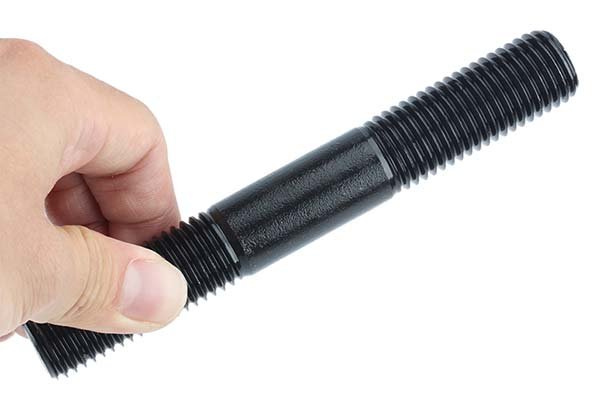
Black oxide stainless steel fasteners combine a stainless steel substrate with a dark surface finish. They are useful in machinery, equipment enclosures, instruments and visible assemblies where bright metallic hardware would interfere with the appearance or create unwanted reflections.
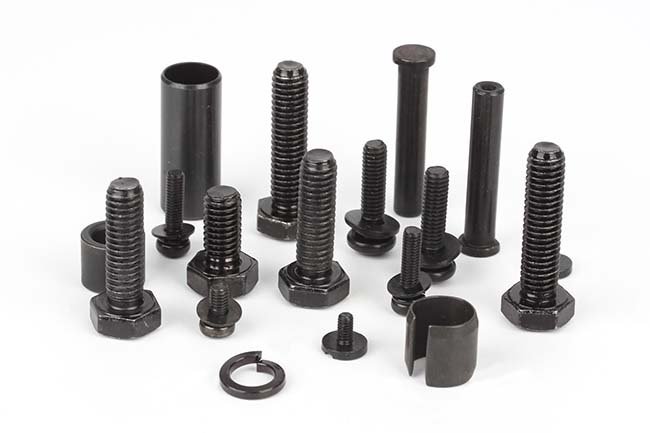
The same finish can be specified across bolts, screws, nuts, studs and washers, creating a coordinated fastening system. However, matching the color is only one part of the engineering task. Material grade, blackening process, supplementary sealer and installation conditions all affect the finished assembly.
Understanding these factors helps engineers and purchasing teams specify parts that look consistent, fit correctly and deliver predictable fastening performance.
What Are Black Oxide Stainless Steel Fasteners?
A black oxide stainless steel fastener has two distinct specifications: the stainless steel beneath the surface and the treatment used to produce the black appearance. The alloy determines the underlying material characteristics, while the finish modifies the surface.
Industrial black oxide processes produce a thin conversion layer through a chemical reaction at the metal surface. Commercial blackening treatments also include processes with different chemistries, so parts described simply as “black stainless steel” are not necessarily equivalent.
Black oxide should also be distinguished from black paint, electrophoretic coating, physical vapor deposition and black plating systems. These finishes can differ in thickness, wear behavior, friction and corrosion performance. Appearance alone cannot identify the treatment.
When comparing fastener surface treatments, start with the required function and then define the process that will provide it.
How Stainless Steel Blackening Works
Surface preparation and activation
Stainless steel derives its corrosion resistance from a thin passive surface film. That film also makes its surface less reactive than ordinary carbon steel, which is why stainless steel requires a compatible blackening process and appropriate preparation.
A typical production sequence includes cleaning, rinsing, controlled activation, blackening, further rinsing and a specified finishing treatment. The exact sequence depends on the alloy, surface condition and selected process.
Oil, machining residue and uneven preparation can interfere with appearance. For production approval, samples should represent the actual manufacturing route rather than a separately polished demonstration part.
Hot, mid-temperature and room-temperature processes
Hot and certain mid-temperature black oxide systems form a black magnetite surface. Room-temperature blackening systems can use different chemistry, including copper and selenium compounds. Similar-looking results therefore do not establish equivalent coating composition or performance.
These routes should be identified in the purchasing specification when process consistency matters. Substituting one blackening method for another should involve a review of appearance, handling durability, corrosion behavior and assembly performance.
Why the final sealer matters
Black oxide is commonly used with an oil, wax or other supplementary sealer. This treatment can influence corrosion protection, surface feel and gloss. Some systems leave an oily film; others produce a dry-to-touch surface.
For equipment that operators handle regularly, or components installed close to sensitive surfaces, residue control may be as important as color. A useful specification identifies the required final condition instead of using “black oxide” as the complete finish description.
The finishing supplier should also understand any cleaning operation that occurs after delivery. Washing or degreasing can change the supplied surface condition and may remove a protective or lubricating treatment.
Selecting the Stainless Steel Beneath the Finish
304 stainless steel
304 is an austenitic chromium-nickel stainless steel commonly considered for general equipment and relatively mild environments. It can be a practical starting point for indoor machine covers, brackets, panels and other assemblies requiring stainless hardware with a dark appearance.
Blackening does not change 304 into a more highly alloyed stainless steel. Its suitability still depends on moisture, contaminants, cleaning chemicals, temperature and joint design.
316 stainless steel
316 contains molybdenum, which improves resistance to localized corrosion in many chloride-containing environments compared with 304. That improvement can be relevant where fasteners encounter coastal deposits or chloride-bearing moisture.
Nevertheless, neither the 316 designation nor a black finish establishes universal suitability for seawater or chemical service. Evaluate the complete exposure conditions, including crevices and whether deposits can accumulate or be washed away.
Material grade and mechanical class are separate requirements
A material description such as “304 stainless steel” does not independently establish a fastener property class such as A2-70. The applicable chemical and mechanical requirements must be satisfied and documented.
ISO 3506-1 addresses specified stainless steel bolts, screws and studs, while ISO 3506-2 addresses nuts. Nut proof-load requirements should not be confused with bolt tensile properties. Blackening itself does not create a higher property class.
What Performance Benefits Does Black Oxide Provide?
The principal reasons to choose this finish are a controlled dark appearance and limited dimensional build. These advantages become useful when translated into clear requirements.
| Characteristic | Practical value | Specification consideration |
|---|---|---|
| Dark appearance | Coordinates visible fasteners with dark housings, brackets and panels. | Approve a reference sample and acceptable color variation. |
| Reduced visible reflection | Can reduce distracting highlights around instruments and exposed equipment. | Define gloss or reflectance requirements where appearance is functional. |
| Thin surface treatment | Offers limited dimensional build compared with many thicker coatings. | Check finished threads, recesses and other critical features. |
| Selectable final surface condition | Allows the post-treatment to be matched to handling and assembly needs. | Identify the sealer, residue limits and lubrication condition. |
Limited dimensional build does not eliminate inspection. Thread fit, drive engagement and bearing surfaces should be accepted in the final supplied condition.
Likewise, a visually black surface is not automatically an optical-grade finish. Precision imaging applications may require measurements over specified wavelengths and viewing angles rather than a visual color check.
Does Black Oxide Improve Corrosion Resistance?
The stainless alloy provides the foundation of corrosion resistance. The blackening process and its supplementary treatment influence the final surface, but black oxide should not be specified as a general corrosion upgrade.
ISO 11408 describes black oxide coatings as providing only very limited corrosion protection under mildly corrosive conditions, even with a supplementary preservative. Its scope includes stainless steel.
For stainless fasteners, localized corrosion deserves particular attention. Moisture containing chlorides can collect around washers, beneath nut flanges or within other narrow gaps. Temperature, chemical conditions and restricted access to oxygen can affect the stability of the passive surface.
The engineering response is to select a suitable alloy, control processing quality and evaluate the actual joint environment. A darker finish does not compensate for an unsuitable material or a connection that traps corrosive deposits.
Where corrosion testing is required, specify the method, exposure duration, sample condition and acceptance criteria. ASTM B117 defines salt spray testing practice; test hours alone should not be converted into an assumed number of outdoor service years.
How the Finish Affects Torque, Preload and Galling
Friction changes the result of tightening
Tightening torque is an indirect way of controlling bolt preload. A simplified relationship is:
T ≈ K × F × d
Here, T is tightening torque, F is preload, d is nominal fastener diameter and K is an empirical nut factor representing the combined effects of friction and geometry. K is not a universal stainless steel constant or a directly interchangeable coefficient of friction.
Changing the sealer or lubricant can change the preload produced by the same torque. A finish substitution may therefore require assembly validation even when dimensions and material remain unchanged.
For joints where clamp load matters, evaluate the actual bolt, nut, washer and bearing surface together. The assembly instruction should identify lubrication, which component is rotated and the approved tightening method.
Blackening does not guarantee freedom from galling
Galling occurs when contacting metal surfaces adhere locally during movement. Stainless steel threads can seize as tightening disrupts their surface films and produces intense local contact.
Appropriate lubrication, correct fit, clean threads and controlled installation help manage the risk. Blackening alone should not be treated as a guaranteed anti-galling treatment, and a storage sealer should not automatically be assumed to be a qualified assembly lubricant.
If a threaded connection becomes unexpectedly difficult to turn, forcing it further can damage both mating parts. Investigate alignment, contamination, thread condition and the approved lubrication procedure.
Applying the Finish Across Different Fastener Types
A blackened fastener series can provide a consistent appearance across an assembly, but each component retains its own mechanical function.
| Fastener type | Primary function | Checks after finishing |
|---|---|---|
| Bolts, machine screws and studs | Create a threaded connection and maintain the required clamp load. | Thread fit, drive condition, mechanical requirements and tightening behavior. |
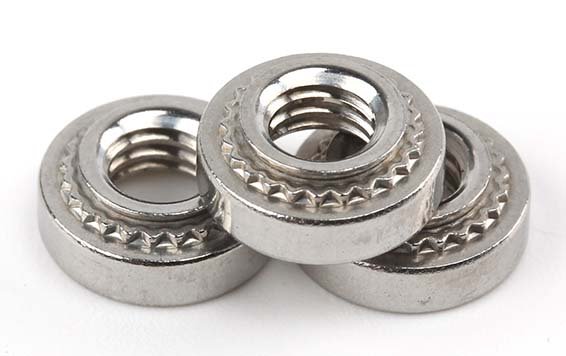
| Hex nuts and flange nuts | Engage the mating thread and transfer load to the bearing surface. | Thread acceptance, proof-load requirements and flange condition. |
| Nylon insert lock nuts | Provide prevailing torque through the nonmetallic insert. | Insert integrity and locking performance in the finished assembly. |
| Flat washers and large-diameter washers | Provide a bearing surface and spread load over a suitable contact area. | Dimensions, flatness, burrs and suitability for the applied bearing load. |
| Self-drilling screws | Drill and form a fastening connection in an approved substrate. | Drill-point construction, substrate compatibility and installation performance. |
Nylon insert nuts require particular process planning. The insert must be protected from incompatible chemicals and temperatures, and the finished nut must retain its specified function. Mechanical-property compliance alone does not establish prevailing-torque performance.
For self-drilling screws, a stainless steel body does not establish drilling capacity. Some designs use a hardened steel point joined to a stainless body. The intended substrate and drilling range must come from the specific screw design and validation.
For washers, larger outside diameter can help distribute bearing load, but thickness and support conditions remain important. A plain black washer does not become a locking or sealing component because of its finish.
Applications Where Blackened Stainless Hardware Makes Sense
Machine covers and automation equipment
Dark fasteners can coordinate removable covers, access panels and brackets with the surrounding equipment. For these assemblies, assess the appearance after installation and servicing, including tool contact on screw heads and nut flats.
Instrumentation and imaging equipment
Blackened hardware can be considered where bright reflections are undesirable. Selection should also address surface residue, cleanliness and any measured reflectance requirement. A sample should be evaluated in the actual lighting arrangement.
Visible enclosures and display assemblies
A consistent finish across screws, nuts and washers helps produce an orderly appearance. Approving the complete hardware set is more useful than approving each part separately, because surface texture and gloss can make nominally black components look different when assembled.
For all these applications, the operating environment remains part of selection. Indoor appearance requirements, repeated condensation and outdoor chloride exposure represent different engineering conditions.
How to Write a Useful Purchasing Specification
A request for “304 black fasteners” leaves several decisions unresolved. A more complete inquiry should include:
- Product definition: Fastener type, drawing, dimensional standard and edition, thread size, length and tolerances.
- Material and properties: Required stainless grade, applicable property class and supporting documentation.
- Finish: Blackening process or governing finish specification, supplementary sealer and final lubrication condition.
- Appearance: Reference sample, acceptable gloss and color variation, significant surfaces and permissible handling marks.
- Service conditions: Moisture, temperature, cleaning chemicals, mating materials and exposure to salts.
- Acceptance: Dimensional, mechanical, corrosion or functional tests, together with sampling and pass criteria.
Identify which requirements apply to individual components and which apply to the assembled joint. For example, a nut can meet dimensional requirements while the connection still needs a separate torque and clamp-load evaluation.
Flybear’s quality inspection overview provides a starting point for discussing an order-specific inspection plan. Required tests and documentation should be agreed during quotation.
Frequently Asked Questions
Will all black oxide stainless steel fasteners have the same shade?
Not necessarily. Material, initial texture, process conditions and post-treatment can influence the visible result. For exposed hardware, approve representative samples and define acceptable variation across the complete fastener set.
Does black oxide make stainless steel fasteners stronger?
No. Mechanical capability depends on the material, manufacturing condition, geometry and applicable product requirements. A black finish does not establish or increase a property class.
Can the same tightening torque be used after changing the finish?
Do not assume so. Changes in finish or lubrication can alter friction and resulting preload. Review the assembly specification and validate the actual combination where clamp-load control is important.
Can salt spray testing establish outdoor service life?
It can support a defined quality or comparative assessment, but it does not independently establish service life. Real exposure includes changing moisture, temperature, contamination and maintenance conditions that a single laboratory test does not reproduce.
Specify a Complete Blackened Stainless Fastener System
A successful specification connects material selection, surface treatment and assembly requirements. Coordinated black hardware should deliver more than a consistent color: it should also fit correctly, retain its required mechanical function and support a repeatable installation process.
To discuss a project, contact Flybear Fastener with your drawing or bill of materials, stainless grade, finish requirements, quantity and operating conditions. Include appearance samples and required inspection documents so the quotation can address the complete assembly.
Follow Me!