ASTM A453 Grade 660 Bolting for High-Temperature Equipment
ASTM A453 Grade 660 bolting is specified for demanding high-temperature equipment where engineers need bolting materials with controlled mechanical properties, specialized heat treatment, and thermal expansion behavior compatible with austenitic stainless-steel systems. Grade 660 bolts, studs, nuts, and related components can be found in pressure equipment, valve flanges, turbines, exhaust systems, petrochemical machinery, and other assemblies exposed to elevated temperatures and repeated thermal cycles.
Grade 660 is often associated with A-286 alloy, which is why buyers may also encounter terms such as A286 fasteners, A286 studs, or A286 bolts during sourcing. However, purchasing material identified only as “A286” does not automatically establish compliance with ASTM A453. The finished fastener must satisfy the grade, class, heat-treatment, mechanical-property, dimensional, testing, and documentation requirements specified for the order.
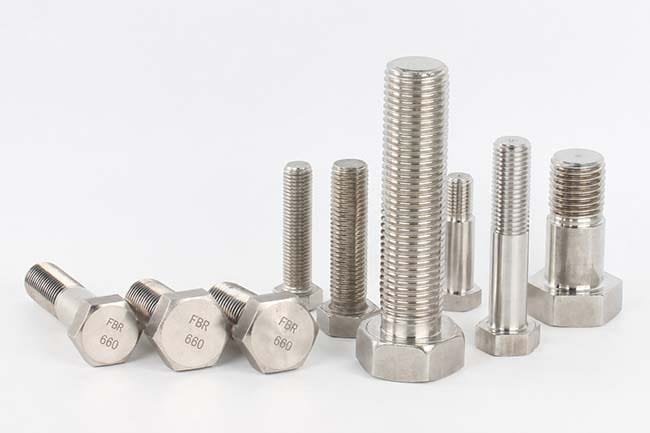
For EPC procurement teams and equipment manufacturers, another important point is that ASTM A453 Grade 660 is divided into Classes A, B, C, and D. The class designation matters. It can affect heat treatment and required mechanical properties, so an RFQ that states only “ASTM A453 Grade 660” may not provide enough information for an accurate manufacturing review.
What Is ASTM A453 Grade 660 Bolting?
ASTM A453/A453M is a specification for high-temperature bolting materials with expansion coefficients comparable to austenitic stainless steels. It covers several material grades and classes intended for specialized bolting applications rather than ordinary general-purpose fastening.
Within the specification, Grade 660 is available in Classes A, B, C, and D. The standard can apply to material and components including bolts, screws, nuts, washers, studs, and stud bolts. It also addresses requirements involving chemistry, mechanical properties, hardness, heat treatment, and applicable testing.
This makes ASTM A453 Grade 660 different from selecting a generic stainless bolt from a catalog. The material condition is an important part of compliance. Buyers should identify the exact grade and class required by the equipment specification, engineering drawing, piping class, or applicable design code.
For sourcing teams comparing different ASTM fastener families, the ASTM fastener product range provides a useful starting point for identifying bolts, studs, nuts, and related products before the final technical requirements are defined.
How Grade 660 Relates to A286 Fasteners
A286 fasteners are commonly discussed together with ASTM A453 Grade 660 because Grade 660 is associated with the A-286 alloy family, commonly identified as UNS S66286. A-286 is an iron-based, nickel-chromium austenitic precipitation-hardening alloy developed for applications that require a useful combination of strength, oxidation resistance, and performance under elevated-temperature conditions.
The terminology can create confusion during international procurement. A buyer may request “A286 bolts,” while an engineering drawing may call for “ASTM A453 Grade 660 Class B.” These descriptions are related, but they are not equally complete purchasing specifications.
The alloy designation identifies the material family, while ASTM A453 adds requirements for the bolting product. A compliant order therefore needs to consider the specified class, heat-treatment condition, mechanical properties, dimensions, tests, marking, and any supplementary project requirements.
Why “A286” Alone May Not Be Enough for an RFQ
If a supplier receives only the description “A286 stud bolt,” several questions remain unanswered. The required ASTM or other material specification may be unclear. The class may not be defined. Thread configuration, dimensions, surface finish, required testing, and documentation may also be missing.
For pressure equipment or high-temperature machinery, it is better to provide the complete designation from the approved drawing or material specification. If ASTM A453 Grade 660 is required, include the class rather than assuming the manufacturer will select one.
ASTM A453 Grade 660 Classes A, B, C and D
One of the most important technical features of Grade 660 bolts is the existence of multiple classes. ASTM A453 Grade 660 includes Classes A, B, C, and D, and the finished bolting requirements are not identical across all four conditions.
The class designation is connected to how the material is processed and the mechanical-property requirements that must be achieved. Different heat-treatment routes can produce different combinations of yield strength, tensile behavior, hardness, ductility, and high-temperature performance characteristics.
| Specification Item | What the Buyer Should Verify |
|---|---|
| Material specification | ASTM A453/A453M and the edition required by the project |
| Grade | Grade 660 |
| Class | Class A, B, C, or D as specified by engineering documents |
| Product form | Bolt, stud, stud bolt, screw, nut, washer, or drawing-based component |
| Heat treatment | Condition required for the specified Grade 660 class |
| Mechanical properties | Verify requirements applicable to the class and product size |
| Threads and dimensions | Applicable dimensional standard or approved drawing |
| Testing | Base specification plus any supplementary project requirements |
| Documentation | Material certificates, inspection reports, and traceability as specified |
Procurement teams should avoid simplifying these classes into a generic ranking such as “A is standard and D is best.” Selection should be based on the exact mechanical and heat-treatment condition required by the design. A class with higher strength requirements is not automatically the correct choice for every high-temperature joint.
Why Heat Treatment Is Critical for Grade 660 Bolts
Heat treatment is central to ASTM A453 Grade 660 performance. Grade 660 belongs to a precipitation-hardening alloy family, meaning that controlled thermal processing is used to develop the intended material condition and mechanical properties.
For this reason, chemical composition alone does not define a finished Grade 660 fastener. Two components made from similar starting alloy chemistry can have different mechanical performance if they have been processed under different heat-treatment conditions.
During sourcing, buyers should confirm that heat treatment will be controlled according to the specified Grade 660 class and applicable standard requirements. If the project has additional heat-treatment documentation or witness requirements, they should be included in the RFQ and purchase order before production.
Post-processing should also be reviewed carefully. Machining, thread production, surface treatment, or other operations must be planned around the required final condition. The manufacturing route should preserve the properties and dimensions required by the applicable specification.
Mechanical Properties Must Be Checked by Class and Size
A common procurement mistake is copying a single tensile or yield-strength value from an online Grade 660 chart and applying it to every bolt diameter and every class. This approach can create specification errors.
ASTM A453 includes mechanical requirements such as yield strength, tensile strength, elongation, reduction of area, and hardness. Testing requirements can also include tension and stress-rupture evaluation as applicable to the specification. The exact acceptance criteria should be taken from the edition named in the purchase order and checked against the required grade, class, product form, and size.
Typical values found in alloy data sheets can be useful for preliminary engineering discussion, but they should not replace the ASTM acceptance requirements. Likewise, typical material properties should not be converted into guaranteed product performance unless the governing specification explicitly establishes those requirements.
Why Grade 660 Is Used for High Temperature Stainless Bolting Applications
Buyers searching for high temperature stainless bolting frequently encounter Grade 660 because it combines an austenitic structure with precipitation-hardening capability and thermal expansion behavior suited to certain elevated-temperature assemblies.
One of the challenges in high-temperature bolted joints is that the bolt does not operate independently. The flange, valve body, casing, gasket, nut, and other components expand and contract as temperature changes. Differences in thermal expansion can influence preload and joint behavior during startup, steady operation, shutdown, and repeated thermal cycling.
ASTM A453 specifically addresses bolting materials with expansion coefficients comparable to austenitic stainless steels. This can make Grade 660 relevant when the surrounding equipment uses materials whose thermal behavior needs to be considered as part of the complete joint design.
However, Grade 660 should not be assigned a universal maximum operating temperature. Actual suitability depends on the specified class, size, design stress, duration of exposure, thermal cycle, surrounding materials, corrosion environment, joint design, and governing equipment code.
Applications for ASTM A453 Grade 660 Bolting
Grade 660 bolting may be specified in industrial equipment where elevated temperature, mechanical loading, and thermal cycling make conventional general-purpose fasteners unsuitable. Common application areas include pressure equipment, valve flanges, turbine assemblies, exhaust systems, and high-temperature machinery.
Pressure Vessels and Process Equipment
Pressure-containing equipment can expose fasteners to simultaneous temperature and mechanical loading. Designers may specify Grade 660 where the required material properties and expansion characteristics match the equipment design. Fastener class, dimensions, joint load, gasket behavior, and applicable pressure-equipment requirements all need to be evaluated together.
Petrochemical and Refining Equipment
Refineries and chemical-processing facilities use many bolted joints around valves, pressure equipment, piping accessories, heat-related equipment, and process machinery. Where Grade 660 is specified, procurement teams should provide operating conditions and the approved material requirement rather than substituting a more familiar grade based only on availability.
For related sourcing considerations, buyers can review petrochemical fastener solutions when defining material, thread, coating, inspection, and documentation requirements for process-industry bolting.
Pumps and Valves
Valve bonnets, bodies, flanges, and related pressure-boundary assemblies may require specialized high-temperature fasteners. The selected bolt or stud needs to work with the mating nut, equipment material, assembly procedure, and service cycle.
Valve and pump manufacturers can review pump and valve fastener applications when preparing specification-based or drawing-based requirements.
Turbines and High-Temperature Machinery
Turbines and other thermally cycled machinery place additional demands on bolted joints because the equipment may repeatedly move between ambient and operating conditions. The engineering team should consider preload retention, thermal expansion, fatigue loading, creep-related design concerns, and maintenance practices when specifying fasteners.
Exhaust and Thermal Systems
Industrial exhaust equipment can combine heat, oxidation, vibration, and repeated temperature changes. Grade 660 may be specified for certain assemblies where its material characteristics fit the design, but actual suitability must be confirmed from the operating cycle and equipment requirements rather than from the general term “high temperature.”
Grade 660 Stud Bolts, Bolts and Nuts
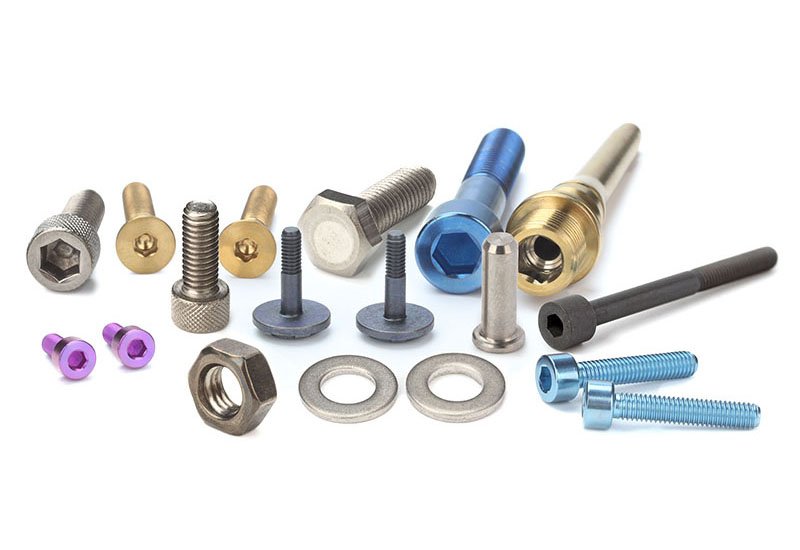
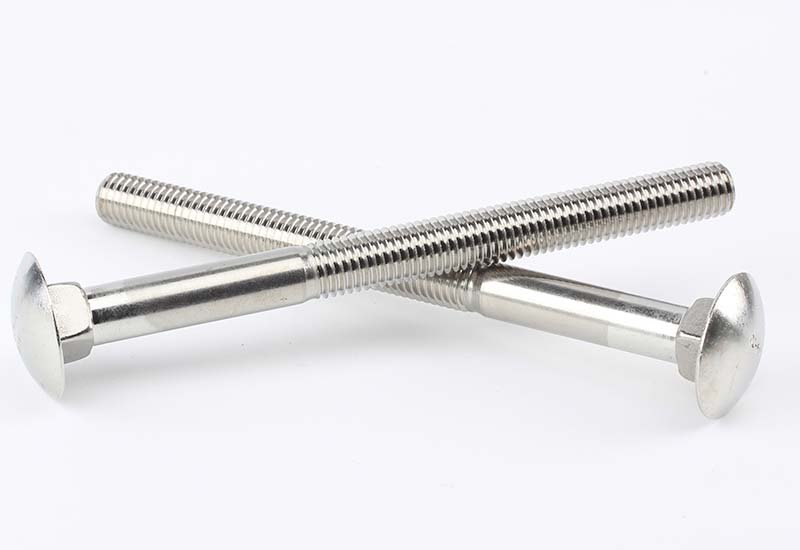
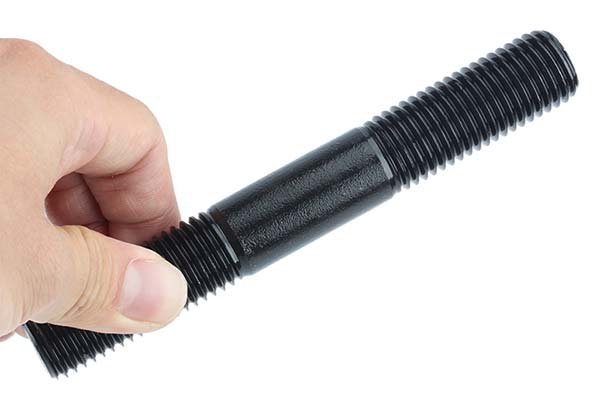
ASTM A453 can apply to several bolting product forms. Depending on the equipment design, a project may require fully threaded studs, double-end studs, headed bolts, screws, nuts, washers, or special drawing-based parts.
The product form influences manufacturing and inspection. A long stud may require different dimensional controls from a headed bolt. A custom part may include reduced shanks, special thread lengths, drilled features, nonstandard ends, or tight geometric tolerances.
Buyers should also specify mating components. A technically correct stud does not guarantee a correct assembly if the nut material, thread, dimensions, or mechanical properties are unsuitable. Nut selection should be based on the equipment specification and governing design requirements.
Thread Standards and Dimensional Control
Material compliance is only one part of Grade 660 fastener quality. A fastener can have the correct chemistry and mechanical properties but still be unusable if the thread or dimensions do not match the equipment.
An RFQ should identify the required dimensional standard or provide a controlled engineering drawing. Important details can include:
- Nominal diameter
- Overall length
- Thread series and pitch
- Thread class or tolerance
- Threaded length
- Full-thread or partial-thread configuration
- Head style where applicable
- Stud end configuration
- Chamfers and radii
- Nut dimensions and engagement
- Special marking requirements
For custom fasteners, drawing revision control is particularly important. The quotation, manufacturing route, inspection plan, and final documentation should all refer to the same approved drawing revision.
Coating and Surface Treatment Considerations
Grade 660 material selection should not be separated from the surface condition required by the application. In some environments, fasteners may be supplied with a specified coating, lubricant, surface treatment, or controlled finish. The correct choice depends on operating temperature, corrosion exposure, friction requirements, mating materials, and project specifications.
A coating that works well on an ambient-temperature bolt is not automatically suitable for high-temperature equipment. Elevated temperatures can change coating behavior, lubrication performance, oxidation resistance, and tightening friction.
Coating thickness can also affect thread fit. If a coated Grade 660 fastener is required, the purchase specification should identify the coating standard, thickness or process class where applicable, thread allowance, lubrication condition, and inspection method.
Do not assume that a coating can establish a specific service life. Real corrosion performance depends on operating conditions, installation, coating damage, maintenance, temperature, chemicals, and the geometry of the assembly.
Quality Inspection for ASTM A453 Grade 660 Bolting
Because Grade 660 relies on controlled material and heat-treatment conditions, quality inspection should be planned around the exact purchase specification. Material identification, heat or lot traceability, mechanical testing, dimensional inspection, thread inspection, and documentation may all form part of the order requirements.
Flybear supports standard and drawing-based custom fastener manufacturing for industrial applications. Depending on the product and agreed inspection plan, applicable capabilities can include thread and dimensional inspection, hardness testing, tensile testing, torque testing, spectrometer analysis, metallographic examination, coating-thickness measurement, salt-spray testing, magnetic-particle inspection, and optical sorting.
These capabilities should not be interpreted as a fixed test package for every Grade 660 order. The inspection method, sample frequency, acceptance criteria, required records, and third-party involvement should be defined according to the purchase specification.
Buyers preparing an inspection and test plan can review the available quality inspection capabilities and state which reports are required before production begins.
Traceability and Material Test Reports
Traceability becomes especially important when several Grade 660 classes or different high-temperature materials are used on the same project. Material identification should be maintained according to the order requirements so that finished parts can be associated with the appropriate production and inspection records.
The RFQ should specify the required material test report and any additional documentation. Depending on the project, buyers may request relevant chemical analysis, mechanical test results, hardness results, heat-treatment records, dimensional reports, coating inspection reports, or other agreed documents.
Custom Manufacturing of A286 and Grade 660 Fasteners
Not every high-temperature assembly can use standard catalog dimensions. Turbine manufacturers, valve producers, pressure-equipment companies, and EPC contractors may require drawing-based Grade 660 fasteners with special dimensions or thread configurations.
Custom production may involve nonstandard stud lengths, special thread lengths, reduced shanks, special heads, precision-machined features, unique end configurations, or controlled marking. Before manufacturing, the supplier should review the drawing together with material, class, heat-treatment, tolerance, surface, and inspection requirements.
Material and class selection should be completed before production planning. Changing the requested Grade 660 class after machining or heat treatment can affect the manufacturing route and may require a new technical review.
How to Specify ASTM A453 Grade 660 Bolting in an RFQ
A complete RFQ helps prevent technical assumptions and allows multiple quotations to be compared on the same basis. For ASTM A453 Grade 660 bolting, buyers should consider providing the following information:
- Specification: identify ASTM A453/A453M and the edition required by the project.
- Grade: specify Grade 660.
- Class: state Class A, B, C, or D according to the approved engineering requirement.
- Product type: define bolt, stud, stud bolt, nut, washer, screw, or custom part.
- Size: provide nominal diameter, length, and other critical dimensions.
- Thread: specify the thread standard, pitch, class, and required thread length.
- Drawing: attach the controlled drawing when the component is nonstandard.
- Operating conditions: provide the relevant temperature range, pressure, equipment type, and operating cycle for engineering review.
- Surface requirement: specify coating, lubrication, or other finish where required.
- Mating components: identify nut, washer, flange, or related material requirements.
- Testing: state required mechanical, hardness, dimensional, material, surface, or supplementary tests.
- Documentation: define material certificates, inspection reports, traceability records, and third-party requirements.
A short description such as “A286 bolts for high temperature” does not provide enough information for many critical equipment orders. Grade, class, dimensions, operating conditions, and required inspection documents make the sourcing requirement much clearer.
Common Procurement Mistakes with Grade 660 Bolts
One common mistake is failing to specify the class. Because ASTM A453 Grade 660 includes Classes A, B, C, and D, the class should be obtained from the project documents rather than selected informally during purchasing.
Another mistake is treating a typical A286 material data sheet as the acceptance standard for finished ASTM A453 bolting. Alloy data sheets can explain material behavior, but the finished fastener still needs to satisfy the ordered bolting specification.
Buyers should also avoid assigning a universal temperature rating to Grade 660. Service suitability depends on equipment design and the governing code, not only on the alloy name.
Finally, testing and documentation requirements should not be added after manufacturing whenever they depend on production traceability or specific sampling. If a project requires particular mechanical tests, inspection records, or third-party witnessing, those conditions should be stated in the RFQ.
Frequently Asked Questions About ASTM A453 Grade 660 Bolting
Is ASTM A453 Grade 660 the same as A286?
Grade 660 is commonly associated with the A-286, UNS S66286 alloy family. However, “A286” describes the alloy, while ASTM A453 Grade 660 establishes requirements for high-temperature bolting. A buyer should use the complete specification, grade, class, and product requirements rather than relying on the alloy name alone.
What classes are available for ASTM A453 Grade 660?
Grade 660 is covered in Classes A, B, C, and D. The required class should be taken from the engineering specification because heat-treatment and mechanical-property requirements differ by class.
Can Grade 660 be used at any high temperature?
No universal temperature guarantee should be applied to every Grade 660 fastener. Suitability depends on class, size, mechanical loading, duration, thermal cycling, joint design, surrounding materials, corrosion environment, and the applicable equipment or piping code.
Can a higher-strength Grade 660 class replace another class?
Not automatically. Higher strength does not make a class universally interchangeable. Any change should be reviewed against the original design requirements and approved through the applicable engineering process.
Can Grade 660 fasteners be custom manufactured?
Drawing-based Grade 660 fasteners can be reviewed for custom production. The inquiry should include the required class, drawing, dimensions, thread standard, surface requirement, inspection scope, and documentation requirements.
Final Selection Guidance
ASTM A453 Grade 660 bolting is a specialized option for high-temperature equipment where material condition, mechanical properties, heat treatment, and thermal behavior are important to joint performance. Its connection with the A286 alloy family makes it useful in demanding industrial applications, but purchasing the material correctly requires more than specifying “A286.”
Engineers and buyers should verify the current ASTM edition required by the project, Grade 660 class, fastener size, thread standard, heat-treatment condition, mechanical requirements, surface system, mating components, and inspection scope. Typical alloy values should be used for reference only and should not replace the contractual acceptance criteria.
For a manufacturing review or quotation, send your Grade 660 fastener requirements including the required class, operating cycle, bolt or stud size, drawing, thread standard, surface requirement, and required test reports. A complete specification allows the manufacturing and quality teams to evaluate the product against the actual application requirements before production.
Follow Me!