DIN 931 vs DIN 933 Hex Bolts: Legacy Drawings and ISO Replacement Issues
DIN 931 vs DIN 933 is primarily a comparison between partially threaded and fully threaded metric hex bolts, but the issue becomes more complicated when older machinery drawings are converted to current ISO standards. DIN 931 is the legacy standard commonly associated with hexagon head bolts with a partially threaded shank, while DIN 933 covers the fully threaded version. Their modern ISO counterparts are generally ISO 4014 and ISO 4017 respectively, but buyers should not assume that replacing a DIN callout with its ISO successor creates one-to-one dimensional interchangeability at every diameter.
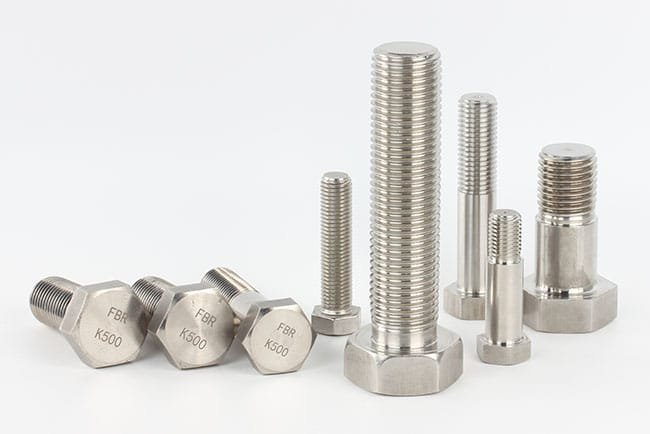
For OEM maintenance, machine rebuilding, European equipment, and MRO procurement, the original drawing should remain the starting point. Thread length, width across flats, available wrench clearance, counterbores, property class, coating, and assembly tooling should all be reviewed before changing DIN 931 to ISO 4014 or DIN 933 to ISO 4017.
DIN 931 vs DIN 933: Quick Comparison
| Selection Point | DIN 931 | DIN 933 |
|---|---|---|
| General product form | Hexagon head bolt with partial thread | Hexagon head screw/bolt with full thread |
| Unthreaded shank | Normally present depending on diameter and length | Normally threaded along essentially the usable body length |
| Common modern ISO reference | ISO 4014 | ISO 4017 |
| Typical selection reason | Control thread location and retain a smooth shank through part of the joint | Provide greater thread-length flexibility for varying or shorter grip conditions |
| Legacy drawing issue | DIN head dimensions are not identical to ISO 4014 at every nominal size | DIN head dimensions are not identical to ISO 4017 at every nominal size |
| Automatic ISO substitution? | No. Verify diameter, head dimensions, thread length, property class, coating, tooling clearance, and project approval before substitution. | |
What Is a DIN 931 Bolt?
DIN 931 bolts are legacy metric hexagon-head fasteners with a partially threaded body. For applicable bolt lengths, a smooth unthreaded shank remains between the underside of the head and the beginning of the threaded section.
This configuration is important in many machine joints because the designer may have intentionally positioned the smooth shank through clearance holes or across loaded interfaces. The unthreaded portion can also keep the thread runout away from a specific shear plane or bearing location.
The amount of threaded and unthreaded length is not arbitrary. It depends on the standard, nominal diameter, and bolt length. Therefore, when replacing an old DIN 931 bolt, buyers should not select a new bolt only by overall diameter and length. The actual grip and original thread length should also be checked.
Flybear supplies metric hex bolts and drawing-based products within its carbon and alloy steel bolt range. For legacy machinery, include the original standard or drawing revision when requesting a quotation.
What Is a DIN 933 Bolt?
DIN 933 bolts are the legacy fully threaded version of the metric hexagon-head fastener family. The external thread extends along essentially the usable body length below the head rather than leaving the substantial smooth shank associated with DIN 931.
A fully threaded fastener can offer greater flexibility where the clamped thickness varies, where the assembly has a relatively short grip, or where the nut needs to engage farther along the fastener body.
However, the presence of threads throughout the joint can change the location of the threaded section relative to loaded holes and shear planes. For this reason, a DIN 933 fastener should not automatically replace DIN 931 solely because it has the same nominal diameter, pitch, and overall length.
Buyers sourcing bolts, screws, nuts, washers, studs, and threaded rods for older European equipment can also review Flybear’s carbon and alloy steel fastener category.
DIN 931 to ISO 4014 and DIN 933 to ISO 4017
For current metric hex-head fastener specifications, ISO 4014 is the international standard commonly associated with partially threaded hexagon head bolts, while ISO 4017 covers fully threaded hexagon head screws. Both current ISO standards cover metric coarse-pitch fasteners in steel and stainless steel within their defined scope.
As a general conversion direction:
- DIN 931 → ISO 4014: partial-thread hexagon head bolt
- DIN 933 → ISO 4017: full-thread hexagon head screw
This relationship is useful for procurement, but the word “replacement” should not be interpreted as “dimensionally identical at every size.” Historical DIN and current ISO dimensions differ in important cases, particularly in width across flats.
The Critical DIN-to-ISO Width Across Flats Differences
The most visible difference in a DIN to ISO hex bolt conversion occurs at several common nominal diameters. Width across flats, often written as dimension s, determines the wrench or socket size and also influences available head clearance.
| Nominal Thread Size | Legacy DIN 931 / DIN 933 Width Across Flats | ISO 4014 / ISO 4017 Width Across Flats | Practical Difference |
|---|---|---|---|
| M10 | 17 mm | 16 mm | ISO uses a smaller hex head across flats |
| M12 | 19 mm | 18 mm | ISO uses a smaller hex head across flats |
| M14 | 22 mm | 21 mm | ISO uses a smaller hex head across flats |
| M22 | 32 mm | 34 mm | ISO uses a larger hex head across flats |
These differences can affect far more than the mechanic’s wrench. A change in hex-head size can influence recessed pockets, counterbores, adjacent component clearance, automated tightening heads, assembly fixtures, tool access, and maintenance kits.
For example, an M12 DIN 931 bolt on a legacy machine may have been designed around a 19 mm socket. A current ISO 4014 M12 fastener uses a different width across flats. The thread may still fit the intended nut, but the existing tooling and drawing-controlled head geometry no longer match exactly.
Why Legacy Drawings Should Not Be Updated Automatically
An old drawing may show “DIN 931 M12 × 80 – 8.8” or a similar callout. It is tempting to replace DIN 931 with ISO 4014 during a drawing update and consider the task complete. That can create unintended design changes.
Before updating the standard, engineering should review:
- Nominal diameter and coarse or fine pitch
- Overall bolt length
- Specified thread length
- Required unthreaded grip length
- Width across flats and across corners
- Head clearance in counterbores or recesses
- Socket and wrench access
- Property class
- Nut and washer specifications
- Surface treatment and coating thickness
- Whether the original DIN geometry is functionally important
Where the original assembly has been in production for many years, tooling and service procedures may also have been built around the DIN head dimensions. An apparently minor standard conversion can therefore affect manufacturing and field maintenance.
Partial Thread vs Full Thread Is a Functional Decision
The difference between DIN 931 and DIN 933 should not be reduced to purchasing preference. Thread placement can influence how the fastener fits and loads the joint.
Why a Smooth Shank May Be Required
In a partially threaded DIN 931-style connection, the smooth shank may pass through the clamped members. This can be desirable where the design wants the full nominal body diameter through a clearance hole or across a shear interface.
It can also keep the thread runout away from a critical location. In cyclic equipment, geometry and local stress concentration may be relevant to the joint design.
Why Full Thread May Be Useful
DIN 933-style fully threaded fasteners provide greater flexibility with shorter or varying grip lengths. The nut can engage at different locations along the body, which can simplify some machinery and maintenance applications.
However, a full-thread bolt should not replace a partial-thread bolt in a drawing-controlled application without checking whether the threaded region moves into a location where the original design required a smooth shank.
DIN 931 and DIN 933 Do Not Define One Strength Class
DIN 931 and DIN 933 are product and dimensional standards, not universal material-strength designations. A bolt ordered to either geometry still requires the appropriate material or property class.
For steel metric fasteners, property classes such as 8.8, 10.9, or another project-approved class may be specified according to the applicable mechanical-property standard. Stainless versions follow a different material and property-class system.
Therefore, changing DIN 931 to ISO 4014 should not automatically change 8.8 to another property class. Likewise, a legacy DIN 933 bolt cannot be assigned an ISO material grade merely because the dimensional standard is being modernized.
The dimensional standard and mechanical property class are separate parts of the fastener specification.
Do Not Convert DIN Fine-Pitch Bolts to ISO 4014 or ISO 4017
DIN 931 and DIN 933 are associated with metric coarse-thread configurations. Legacy drawings using fine-pitch hex bolts can reference other DIN standards, such as DIN 960 or DIN 961 depending on the product configuration.
For current ISO fine-pitch fasteners, the corresponding standards are different from ISO 4014 and ISO 4017. Buyers should therefore verify the thread pitch explicitly rather than assuming that every metric hex bolt belongs to the same ISO replacement pair.
A callout such as M12 is also incomplete when the application is drawing-controlled and a non-default pitch could be involved. Include the actual pitch where ambiguity could affect sourcing or inspection.
Property Class and Material Must Be Preserved During Conversion
A DIN hex bolt conversion should preserve the engineering performance requirements unless the design authority approves a change. Important items include property class, material restrictions, heat-treatment requirements, marking, and applicable testing.
The same caution applies to nuts and washers. Updating only the bolt standard while leaving legacy DIN nut or washer callouts unchanged can result in a mixed standards package. That may be acceptable in a controlled design, but it should be deliberate rather than accidental.
For an equipment modernization project, it can be useful to review the complete fastener set:
- Hex bolt or screw
- Nut
- Flat washer
- Spring or locking element where applicable
- Property class
- Coating system
- Tightening procedure
Coating Requirements Can Complicate DIN-to-ISO Replacement
Legacy machinery may specify zinc plating, hot-dip galvanizing, phosphate, black oxide, or another surface finish. The coating requirement should not be lost when updating the dimensional standard.
Surface treatment can affect thread dimensions, friction, tightening behavior, and corrosion resistance. High-strength fasteners may also require appropriate process control where hydrogen embrittlement is a concern.
If the original drawing simply says “zinc plated,” a modernization project is an opportunity to clarify the actual coating specification, thickness, finish, friction requirement, or other project criteria rather than assuming all zinc systems are interchangeable.
Maintenance and MRO Buyers Should Check the Existing Part
Legacy machinery can remain in service decades after the original DIN standard was superseded. MRO buyers may therefore encounter equipment containing genuine older DIN fasteners alongside later replacement ISO products.
Before placing a replacement order, check:
- The original equipment drawing or BOM
- Head markings where available
- Nominal thread diameter and pitch
- Overall length
- Threaded and unthreaded lengths
- Width across flats
- Property-class marking
- Coating or finish
Measuring only the removed part can be useful, but do not assume the existing component is necessarily the original correct specification. Maintenance history may include earlier substitutions.
Manufacturing Custom Legacy DIN Bolts
In some applications, a buyer may need to preserve the original DIN geometry instead of moving to ISO. This can happen when tooling, counterbores, surrounding clearances, restoration requirements, or customer drawings make the legacy dimensions functionally important.
Depending on size, geometry, quantity, material, and specification, carbon- and alloy-steel fasteners may be manufactured using cold heading, hot forging, CNC machining, and thread rolling where applicable. Heat treatment and surface treatment can then be coordinated according to the ordered property class and finish.
For drawing-based legacy components, buyers should clearly state whether the requirement is:
- Manufacture to the original DIN standard
- Manufacture to a controlled customer drawing based on DIN geometry
- Supply a current ISO replacement
- Quote both DIN-style and ISO alternatives for engineering review
Inspection for DIN and ISO Hex Bolts
Inspection should confirm the characteristics that determine whether the supplied fastener actually matches the purchasing requirement. This is particularly important when DIN and ISO products are both present in the market.
Depending on the order, inspection may include:
- Width across flats
- Head height and other head dimensions
- Overall length
- Thread length
- Unthreaded shank length
- Thread gauging
- Property-class marking
- Hardness or mechanical testing where specified
- Coating thickness and surface condition
Flybear’s fastener quality inspection capabilities include dimensional and tolerance inspection, go/no-go thread gauging, hardness and tensile testing, material analysis, coating-thickness measurement, and other order-defined checks. The required inspection scope should be stated in the RFQ.
Common DIN 931 vs DIN 933 Conversion Mistakes
- Replacing DIN 931 with DIN 933 because the diameter matches: partial-thread and full-thread configurations can affect the joint.
- Replacing DIN 931 with ISO 4014 without checking head size: M10, M12, M14, and M22 require particular attention to width across flats.
- Replacing DIN 933 with ISO 4017 automatically: the ISO successor is not dimensionally identical at every size.
- Changing the dimensional standard and property class together: these are separate specification decisions.
- Ignoring assembly tooling: older sockets, tightening heads, and service kits may match legacy DIN wrench sizes.
- Ignoring counterbores and nearby clearance: an M22 ISO head can require different space from the legacy DIN geometry.
- Assuming the removed maintenance bolt is the original specification: earlier substitutions may already have occurred.
- Using “DIN equivalent” without defining acceptance: state whether exact legacy dimensions or a current ISO product are required.
What to Include in a DIN 931 or DIN 933 RFQ
For accurate quotation and technical review, provide:
- Original DIN standard and drawing edition where known
- Whether DIN geometry must be preserved or ISO substitution is permitted
- Product type: partial-thread or full-thread hex bolt
- Nominal diameter and thread pitch
- Overall length
- Required thread or grip length where critical
- Property class or material grade
- Nut and washer specifications
- Coating, plating, lubrication, or other surface finish
- Any head-clearance or wrench-size restrictions
- Application and operating environment
- Quantity
- Controlled drawing and revision
- Required dimensional, thread, mechanical, coating, and documentation inspection
FAQ: DIN 931 vs DIN 933
What is the main difference between DIN 931 and DIN 933?
DIN 931 is the legacy standard for partially threaded metric hexagon head bolts, while DIN 933 covers fully threaded hexagon head screws or bolts. The correct choice depends on grip length, thread location, shear-plane requirements, and the original equipment specification.
What replaced DIN 931?
ISO 4014 is the current international standard commonly used as the replacement direction for DIN 931 partial-thread hexagon head bolts. However, buyers should verify dimensions before substitution because DIN and ISO geometry is not identical at every nominal size.
What replaced DIN 933?
ISO 4017 is the current international standard commonly used as the replacement direction for DIN 933 fully threaded hexagon head screws. Legacy drawings should still be checked for dimensional differences before changing the callout.
Are DIN 931 and ISO 4014 dimensionally identical?
No. They are closely related product standards, but important width-across-flats differences occur at M10, M12, M14, and M22. Tooling clearance and other drawing dimensions should therefore be reviewed before approving an ISO replacement.
Can ISO 4017 replace DIN 933 on old machinery?
It may be acceptable after engineering review, but it should not be assumed automatically. Confirm head dimensions, wrench clearance, property class, thread, coating, mating hardware, and the requirements of the legacy drawing or equipment manufacturer.
Send the Legacy Drawing Before Approving an ISO Replacement
When requesting DIN 931 or DIN 933 hex bolts, send Flybear the original drawing or standard callout, diameter and length, thread, property class, coating, quantity, and whether substitution with ISO 4014 or ISO 4017 is permitted. Use the Flybear contact page to submit the RFQ. For legacy machinery, identifying the required head dimensions, thread length, grip condition, and tooling restrictions before production helps prevent a technically similar ISO fastener from becoming an unexpected fit or maintenance problem.
Follow Me!