Hastelloy C-276 vs C-22 Fasteners for Chemical Processing
Hastelloy C276 vs C22 fasteners should be selected by comparing the actual process chemistry rather than assuming that one nickel alloy is universally more corrosion resistant. C-276, commonly identified as UNS N10276, and C-22, identified as UNS N06022, are nickel-chromium-molybdenum alloys developed for demanding corrosive environments. Both can be considered for chemical-processing equipment, pollution-control systems, valves, pumps, and other assemblies exposed to aggressive media, but their alloy balance creates different strengths in oxidizing, reducing, mixed-acid, and chloride-containing service.
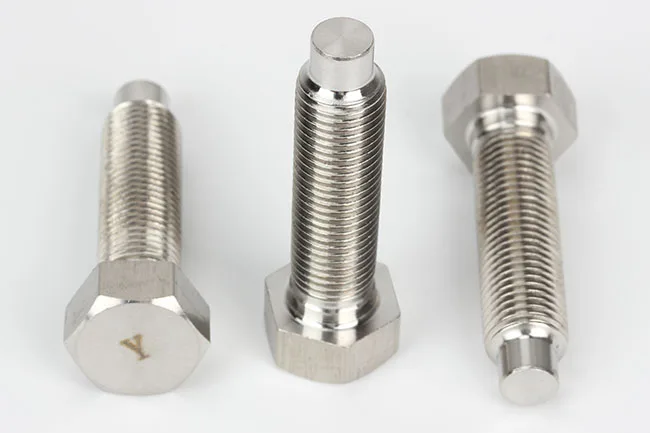
For industrial buyers, the material name is only the beginning. A technically complete fastener order should also define the product standard or drawing, material condition, bolt or nut dimensions, thread, mechanical requirements, temperature, process fluid, concentration, contaminants, inspection, and traceability. A corrosion-resistant bar grade does not automatically define every requirement of the finished bolt or nut.
Hastelloy C276 vs C22 Fasteners: Key Differences
| Selection Factor | C-276 Fasteners | C-22 Fasteners |
|---|---|---|
| Common UNS designation | UNS N10276 | UNS N06022 |
| Alloy family | Nickel-chromium-molybdenum-tungsten alloy | Nickel-chromium-molybdenum-tungsten alloy |
| Alloying direction | High molybdenum with chromium and tungsten for broad resistance in many aggressive chemical environments | Higher chromium than C-276, combined with molybdenum and tungsten |
| Oxidizing environments | Useful resistance depending on chemistry and temperature | Often provides an advantage where oxidizing conditions or oxidizing contaminants are important |
| Reducing environments | Well established for many reducing-acid and mixed chemical environments | Also resistant to many reducing environments; final selection depends on the exact process chemistry |
| Chloride localized corrosion | High resistance to pitting, crevice corrosion, and chloride-related cracking in many services | Particularly strong resistance to chloride-induced pitting and crevice attack in many comparative environments |
| Procurement rule | Do not select from alloy reputation alone. Verify fluid chemistry, concentration, temperature, contaminants, joint geometry, specification, and material condition. | |
Why Alloy Chemistry Changes the Selection
C-276 and C-22 belong to the same broad nickel-chromium-molybdenum corrosion-resistant family, but their chemistry is intentionally different. C-276 combines significant chromium and molybdenum with tungsten and has a long history in chemical-process applications. C-22 uses a higher chromium level while maintaining substantial molybdenum and tungsten.
The higher chromium content of C-22 is one reason it is frequently evaluated where oxidizing chemicals or oxidizing impurities are important. Molybdenum and tungsten contribute strongly to performance in many reducing environments, while the balanced chemistry of both alloys gives them broad chemical resistance compared with conventional stainless steels.
This does not create a simple ranking. A plant handling hydrochloric acid with reducing conditions presents a different selection problem from a process containing ferric ions, chlorine compounds, mixed acids, or other oxidizing species. Buyers should provide the actual chemical composition rather than writing only “acid service” on an RFQ.
When C-276 Fasteners Are Commonly Evaluated
C276 bolts, studs, nuts, and custom threaded components may be considered where equipment must tolerate aggressive chemical exposure while maintaining the mechanical function of the bolted joint. C-276 has extensive use in chemical-processing environments and is recognized for resistance to a broad range of corrosive media.
Applications where engineers may evaluate C-276 include:
- Reactors and chemical-processing vessels
- Pumps, valves, and instrumentation exposed to aggressive process fluids
- Scrubbers and pollution-control equipment
- Acid-handling systems
- Heat-exchanger and process-equipment attachments
- Marine or chloride-bearing equipment where the project specifies N10276
- Custom fasteners used around corrosive piping and chemical skids
Flybear’s nickel-based alloy fastener range currently includes a Hastelloy C-276 bolt product as well as a C-22 nut product, giving buyers a starting point when preparing a nickel-alloy inquiry.
When C-22 Fasteners May Offer an Advantage
C22 nuts, bolts, and custom components are often evaluated when a chemical process combines demanding localized-corrosion conditions with an oxidizing component. Compared with C-276, the higher chromium content of C-22 can provide additional resistance in many oxidizing environments.
C-22 is also known for strong resistance to chloride-induced pitting and crevice attack. This is particularly relevant to fasteners because threaded joints naturally contain locations where process fluid or condensate can become trapped: thread roots, washer interfaces, bolt-head bearing surfaces, gasketed areas, and narrow gaps between components.
A smooth coupon fully exposed to flowing liquid does not necessarily experience the same conditions as a loaded threaded connection. When localized corrosion controls the design, buyers should describe crevices, stagnant conditions, deposits, and wet-dry cycling as well as bulk fluid chemistry.
Oxidizing vs Reducing Service Is a Better Question Than “Which Alloy Is Better?”
Reducing Chemical Environments
Nickel-molybdenum-containing alloys are widely considered for reducing acids and similar aggressive chemical conditions. C-276 is an established option in many such applications because of its alloy balance and broad corrosion-resistance history.
However, acid name alone is insufficient. Hydrochloric or sulfuric acid behavior can change substantially with concentration, temperature, dissolved oxygen, metallic ions, and other contaminants. Laboratory corrosion data should be compared with the actual operating stream before a material is approved.
Oxidizing Chemical Environments
Chromium becomes especially important when the process contains oxidizing species. Because C-22 contains more chromium than C-276, it is frequently preferred when oxidizing conditions or mixed oxidizing/reducing chemistry become a major part of the corrosion assessment.
This does not mean C-22 should automatically replace C-276 in every oxidizing system. Specific acids, oxidants, halides, temperature, concentration, and process contamination can change the result. Use verified corrosion data for the actual medium whenever the fastener is application-critical.
Chlorides, Pitting, and Crevice Corrosion
Both alloys provide much stronger resistance to chloride-related localized corrosion than many conventional stainless steels, but threaded assemblies can create especially severe crevice conditions.
C-22 has demonstrated particularly strong pitting and crevice-corrosion performance in comparative chloride testing, while C-276 also provides high localized-corrosion resistance. The practical purchasing question is whether the additional corrosion margin associated with C-22 is necessary under the project’s actual exposure.
Do not specify a universal chloride concentration or temperature limit for either material. Factors including acidity, oxidizing contaminants, deposits, process temperature, oxygen availability, flow, shutdown conditions, and crevice geometry can change corrosion behavior.
Do Not Confuse Corrosion Resistance with High-Temperature Strength
C-276 and C-22 are corrosion-resistant nickel alloys, but the phrase “nickel alloy” should not be interpreted as an unlimited high-temperature strength rating. Material selection for hot chemical service must consider both corrosion and mechanical performance at the operating temperature.
A fastener may be chemically compatible with the process fluid while still requiring a separate engineering review for retained strength, preload, thermal expansion, creep, or stress relaxation. Similarly, an alloy’s resistance to oxidation in hot gas does not establish its suitability for a highly stressed bolted joint.
Buyers comparing additional special-alloy options can review Flybear’s high-temperature and corrosion-resistant alloy fastener category.
ASTM B574 and Finished Fastener Specifications
ASTM B574 is an important material specification for rod and bar in several low-carbon nickel-chromium-molybdenum alloy grades, including UNS N10276 and UNS N06022. This makes it relevant when rod or bar is used as starting material for machined or otherwise manufactured fasteners.
However, ASTM B574 is a rod-and-bar material specification. It should not automatically be treated as the complete finished-fastener specification. The purchase order may still need to define bolt or nut dimensions, threads, required mechanical properties, manufacturing condition, marking, inspection, and acceptance criteria.
ASTM F468 is another specification that buyers may encounter for nonferrous bolts, cap screws, and studs for general use. Its current alloy listings and scope should be checked for the exact alloy and product being ordered rather than assuming every nickel-chromium-molybdenum grade is covered identically. Nuts likewise require their own applicable requirements.
The safest RFQ format is therefore to state the exact UNS designation and the required material specification, followed by the finished-product standard or controlled drawing.
Fastener Geometry Can Change the Corrosion Risk
Chemical-resistant nickel alloy fasteners should be reviewed as part of the complete joint. Corrosive liquid can collect beneath washers, around counterbores, inside blind tapped holes, or between partially engaged threads. These locations can experience chemistry different from the main process stream.
Buyers should identify:
- Whether the fastener is continuously immersed, splashed, or exposed only during cleaning
- Whether the connection contains blind holes or enclosed threads
- Whether deposits or crystallized chemicals can accumulate
- Whether the connection is gasketed or forms another crevice
- Whether the equipment experiences shutdown condensation
- What materials contact the nickel-alloy bolt or nut
For refinery and chemical-plant applications, Flybear’s petrochemical fastener solutions provide broader application context for preparing the bolting specification.
Manufacturing C-276 and C-22 Fasteners
Special nickel-alloy fasteners can require different production routes according to diameter, geometry, quantity, and specification. Where applicable to the product, manufacturing can include CNC machining, hot forging, and thread-production processes.
For machined bolts and special studs, buyers should control shoulder diameters, thread runout, under-head radii, cross holes, reduced shanks, and other critical drawing dimensions. If the fastener is forged, the manufacturing and thermal-processing sequence should remain compatible with the required alloy condition.
Neither C-276 nor C-22 should be accepted only because the raw stock carries the correct alloy name. Finished dimensions, threads, surface condition, and required mechanical performance still need verification.
Inspection and Traceability for Hastelloy Fasteners
Material mix-up is a significant procurement concern because different nickel alloys can look nearly identical. For controlled chemical-processing orders, the inspection plan may include material certificates, heat or lot traceability, chemical-composition verification, dimensional inspection, thread gauging, and mechanical testing required by the governing specification.
Positive material identification or spectrometer analysis may be specified where confirmation of alloy identity is important. Buyers can review Flybear’s fastener quality inspection page when defining material-verification, dimensional, thread, mechanical, or metallographic inspection requirements.
Inspection requirements should be stated before production. Do not assume that every quotation for a special-alloy fastener includes the same certificate, PMI, mechanical test, or documentation package.
Common Procurement Mistakes with C-276 and C-22 Fasteners
- Ordering only “Hastelloy fasteners”: the exact alloy remains undefined.
- Assuming C-22 is universally better than C-276: alloy selection depends on oxidizing/reducing chemistry, contaminants, temperature, and localized-corrosion conditions.
- Specifying only an acid name: concentration, temperature, oxidizers, metallic ions, and mixed chemicals can change material performance.
- Using ASTM B574 as the entire bolt specification: finished dimensions, threads, mechanical properties, and inspection still need definition.
- Ignoring crevices: threads and washer interfaces can experience more severe localized conditions than open surfaces.
- Assuming nickel alloys have unlimited high-temperature capability: temperature-dependent mechanical requirements must be checked separately.
- Accepting generic material certificates: confirm the exact UNS designation and required traceability.
- Claiming automatic sour-service compliance: H2S service must be checked against the governing project and applicable material requirements.
What to Include in a C-276 or C-22 Fastener RFQ
For an accurate quotation and technical review, provide:
- Exact alloy: UNS N10276/C-276 or UNS N06022/C-22
- Required material specification and condition
- Finished fastener standard or controlled drawing
- Product type: bolt, stud, screw, nut, washer, or custom component
- Diameter, thread system, pitch, length, and thread length
- Required mechanical properties where specified
- Process fluid and chemical composition
- Acid or chloride concentration where available
- Oxidizing or reducing contaminants
- Operating and design temperature
- Continuous, intermittent, splash, immersion, or shutdown exposure
- Mating-component materials
- Quantity and packaging requirements
- Required material certificates, PMI, testing, inspection, and traceability documentation
FAQ: Hastelloy C-276 vs C-22 Fasteners
Is C-22 more corrosion resistant than C-276?
Not in every chemical environment. C-22’s higher chromium content can provide an advantage in many oxidizing and localized chloride-corrosion conditions, while C-276 remains a highly versatile alloy with extensive use across reducing, mixed, and chloride-containing environments. Compare corrosion data for the actual process chemistry.
Can C-276 and C-22 fasteners be interchanged?
They should not be treated as automatic substitutes. They have different UNS designations and alloy chemistry, and a substitution can affect corrosion qualification, material documentation, project approval, availability, and cost. Follow the governing equipment or project specification.
Does ASTM B574 define a complete Hastelloy bolt?
No. ASTM B574 covers applicable nickel-alloy rod and bar materials, including N10276 and N06022, but a finished fastener also needs dimensions, threads, mechanical requirements, inspection, marking, and other requirements defined by the applicable fastener standard or project drawing.
Which alloy is better for chloride service?
Both may be considered for aggressive chloride-containing environments. C-22 can offer additional localized-corrosion resistance in many comparative conditions, but temperature, acidity, oxidizers, crevices, deposits, and process chemistry determine whether that additional margin is required.
Send the Process Chemistry and Exact Alloy for Review
When requesting C-276 or C-22 fasteners, send Flybear the exact alloy designation, fluid chemistry, concentration, operating temperature, product type, dimensions and thread, drawing or product standard, quantity, material condition, and required inspection documentation. Use the Flybear contact page to submit your RFQ. Providing the complete chemical and mechanical requirements allows the fastener specification to be reviewed without relying on a generic Hastelloy C276 vs C22 fasteners ranking.
Follow Me!