SAE Grade 5 vs Grade 8 Bolts: Strength, Material and Application Differences
SAE Grade 5 vs Grade 8 bolts differ in strength, hardness, material processing, and the level of joint control required for their application. Both are inch-series steel fasteners covered by SAE J429, but Grade 8 has higher minimum proof, yield, and tensile strength requirements than Grade 5. That does not mean Grade 8 should automatically replace Grade 5 in every machine, vehicle, or industrial assembly.
Industrial buyers should select the grade from the required clamp load, bolt diameter, thread, female-thread strength, fatigue conditions, coating, installation method, and governing drawing. The bolt must also be matched with an appropriate nut or tapped component. A higher-strength bolt cannot compensate for an undersized nut, weak internal thread, unsuitable coating process, or incorrect tightening procedure.
SAE Grade 5 vs Grade 8 Bolts: Quick Comparison
| Selection Point | SAE Grade 5 | SAE Grade 8 |
|---|---|---|
| Applicable standard | SAE J429 | SAE J429 |
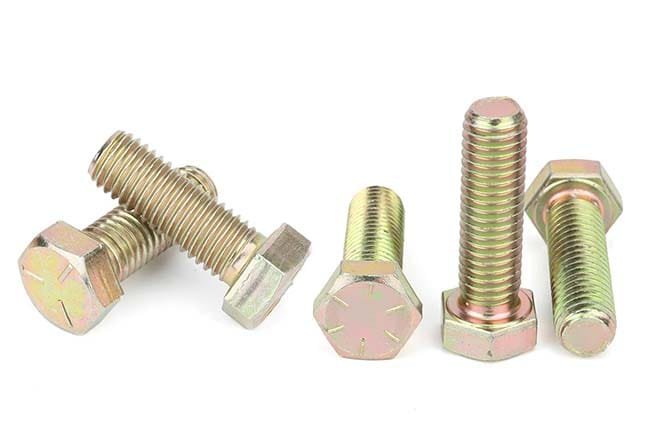
| Common head identification | Three radial lines | Six radial lines |
| 1/4 through 1 in minimum tensile strength | 120 ksi | 150 ksi |
| Over 1 through 1-1/2 in minimum tensile strength | 105 ksi | 150 ksi |
| 1/4 through 1 in proof stress | 85 ksi | 120 ksi |
| 1/4 through 1 in minimum yield strength | 92 ksi | 130 ksi |
| Heat-treatment direction | Quenched and tempered under SAE J429 requirements | Quenched and tempered under SAE J429 requirements with higher hardness and strength requirements |
| Typical selection direction | General high-strength machinery, vehicles, equipment and industrial assemblies | Higher-load joints where the bolt, nut, threads and installation process are designed for the additional strength |
The values above summarize important SAE J429 requirements, but the complete standard should be used for acceptance. Product type, diameter, length, test method, hardness and other requirements can affect the applicable inspection criteria.
What SAE J429 Covers
SAE J429 defines mechanical and material requirements for applicable inch-series steel bolts, screws, studs, sems and certain U-bolts through 1-1/2 in nominal diameter. It establishes grade identification, material and heat-treatment requirements, mechanical properties, hardness and testing requirements.
The standard does not turn the grade number into a complete engineering specification. Fatigue behavior, corrosion resistance and application-specific environmental suitability require separate evaluation. Dimensions and threads also need to be identified through the applicable dimensional standard, drawing and thread specification.
This is why an RFQ should state more than “Grade 8 bolt.” Buyers should provide the product geometry, diameter, threads per inch, length, coating, nut requirement and relevant drawing.
SAE Grade 5 Bolts: Where They Fit
Grade 5 hex bolts are widely used in machinery, automotive equipment, construction equipment and industrial maintenance. SAE J429 requires Grade 5 bolts, screws and applicable studs to be heat treated by austenitizing, quenching and tempering according to the standard.
One important detail is that Grade 5 strength requirements change with diameter. For products from 1/4 through 1 in, the standard specifies a minimum tensile strength of 120 ksi. For sizes over 1 through 1-1/2 in, the minimum tensile strength is lower at 105 ksi, with corresponding changes in proof, yield and hardness requirements.
This diameter effect matters when buyers scale an existing design upward. A Grade 5 designation should not be interpreted as one identical strength value across every diameter covered by the standard.
Grade 5 can be a practical choice where the joint requires substantial strength but does not need the higher mechanical property level of Grade 8. Buyers can review Flybear’s carbon and alloy steel bolt range when sourcing Grade 5 or Grade 8 hex bolts and drawing-based products.
SAE Grade 8 Bolts: Higher Strength with More Demanding Joint Requirements
Grade 8 hex bolts have higher proof, yield and tensile requirements. SAE J429 specifies 150 ksi minimum tensile strength for Grade 8 bolts, screws and applicable studs across the covered 1/4 through 1-1/2 in diameter range.
Grade 8 is therefore commonly considered when higher preload or greater tensile capacity is required without increasing bolt diameter. Automotive powertrain, suspension, machinery and heavy-equipment joints are examples where engineers may specify high-strength inch-series fasteners.
However, higher bolt strength can move the weak point somewhere else. A Grade 8 bolt installed into a lower-strength nut, insufficiently engaged tapped hole, cast component or aluminum housing may cause the internal thread or surrounding component to control the joint capacity.
For vehicle-related assemblies, Flybear’s automotive fastener solutions provide additional context for high-strength bolting, coatings and application-specific assembly requirements.
Material and Heat Treatment: Grade 8 Is Not Simply a Different Steel Name
SAE bolt grade is a finished-fastener requirement, not a single commercial steel grade. SAE J429 permits defined material routes capable of meeting the chemical, hardenability, heat-treatment, hardness and mechanical requirements for the finished product.
Grade 5 and Grade 8 both rely on controlled quenching and tempering, but Grade 8 requires a higher mechanical property and hardness level. The material selected for manufacturing must therefore have sufficient hardenability to achieve the specified properties throughout the relevant fastener section.
Buyers should avoid writing an arbitrary steel grade into the RFQ unless the engineering drawing actually requires that chemistry. Specifying both an unnecessary raw-material grade and an SAE finished-fastener grade can create conflicting requirements.
How to Identify Grade 5 and Grade 8 Bolt Head Markings
SAE J429 fasteners commonly use radial head markings for grade identification. A Grade 5 bolt is identified by three radial lines, while a Grade 8 bolt is identified by six radial lines. Manufacturer identification may also appear on the head.
Head markings are useful during receiving inspection and maintenance, but visual marking alone should not replace order documentation when material or mechanical compliance is important. For OEM or controlled industrial orders, lot traceability and the required inspection documentation should remain linked to the purchased fasteners.
Fasteners with missing, unclear or unfamiliar markings should not be assigned a grade by appearance or color alone.
Grade 5 vs Grade 8 for Machinery and Equipment
The correct grade depends on how the joint carries load. If Grade 5 provides the required preload, tensile capacity and design margin, replacing it with Grade 8 may not improve the joint. The additional strength becomes useful only when the other components and assembly procedure can use it.
Important factors include:
- Static tensile and shear loads
- Required clamp load
- Bolt diameter and thread pitch
- Whether threads or the unthreaded shank cross the shear plane
- Fatigue and vibration loading
- Nut or tapped-hole strength
- Joint stiffness
- Bearing area beneath the head or nut
- Coating and lubricant
- Installation method
For dynamic equipment such as rail vehicles and associated machinery, bolt strength is only one part of the connection design. Buyers can review Flybear’s rail fastener solutions for broader considerations involving vibration, loading and corrosion protection.
Match the Nut to the SAE Bolt Grade
The nut must be capable of supporting the intended bolt load. SAE J995 provides mechanical and material requirements for steel nuts and includes nut grades used with common SAE bolting systems.
Do not assume that an unmarked commercial nut is acceptable simply because it fits the threads of a Grade 5 or Grade 8 bolt. Buyers should specify the required nut grade, style, thread and finish.
Tapped holes require a different review. The female material, engagement length, thread geometry and surrounding wall thickness all influence stripping capacity. This is especially important when high-strength steel bolts are installed in cast iron, aluminum or other lower-strength components.
Torque Is Not Defined by Grade Alone
A Grade 8 bolt can generally support a higher preload than a comparable Grade 5 bolt when the joint is designed accordingly, but this does not create one universal Grade 8 torque value.
Tightening torque depends heavily on friction. Thread condition, zinc plating, phosphate, zinc-flake coatings, oils, waxes, sealers and other lubricants can change the torque required to produce the same bolt tension.
This means buyers should not simply increase the Grade 5 torque by the ratio of tensile strengths when converting a joint to Grade 8. The target preload and torque procedure should be established for the actual bolt, nut, coating, lubricant and bearing surface.
Coating and Hydrogen Embrittlement Require Attention
Grade 5 and particularly Grade 8 bolts often require corrosion protection in automotive, machinery and outdoor applications. Surface treatments may include zinc-based systems, phosphate, black oxide, zinc-flake coatings or other project-defined finishes.
High-strength heat-treated steel requires careful control of manufacturing and coating processes because hydrogen introduced during cleaning, pickling or plating can create embrittlement risk under certain conditions. The coating system, pretreatment, post-treatment and applicable embrittlement-control requirements should therefore be specified and verified rather than selected only by appearance or salt-spray target.
Coating can also change thread fit and friction, so it must be included in the dimensional and tightening review.
SAE Grade 5 and Grade 8 Are Not Structural Bolt Substitutes
A particularly important procurement warning is that similar strength does not mean interchangeable standards. SAE Grade 5 should not automatically replace ASTM F3125 Grade A325 structural bolts, and SAE Grade 8 should not automatically replace ASTM F3125 Grade A490 bolts.
Structural fasteners have different product geometry, dimensional requirements, thread lengths, assembly components and application requirements. A structural drawing calling for an ASTM grade should therefore remain an ASTM order unless an engineering-approved substitution is issued.
Likewise, a Grade 8 bolt should not be described as a “stronger A325” merely because its tensile requirement is higher.
Do Not Convert SAE Grade 5 and Grade 8 Directly to Metric Property Classes
SAE J429 is an inch-series standard. Metric property classes such as 8.8, 10.9 and 12.9 use another designation and specification system.
Approximate mechanical comparisons can be useful during preliminary engineering, but Grade 5 is not simply another name for metric 8.8, and Grade 8 is not automatically equivalent to 10.9. The standards differ in mechanical requirements, dimensions, threads, markings, test rules and product definitions.
A drawing should therefore preserve the original standard and grade rather than converting between SAE and ISO classifications based only on a strength chart.
Inspection Requirements for SAE J429 Bolts
Depending on the purchase specification, inspection may include hardness, tensile or proof testing, dimensional verification, thread gauging, surface inspection and coating checks. Material or metallographic verification may also be specified where required by the project.
Flybear supports carbon- and alloy-steel fasteners using hot forging, cold heading, CNC machining, thread rolling, heat-treatment coordination and surface treatment where applicable to the specified product. Buyers can review Flybear’s fastener quality inspection page when defining hardness, tensile, torque, material, thread, dimensional or coating inspection requirements.
Common SAE Grade 5 vs Grade 8 Purchasing Mistakes
- Choosing Grade 8 only because it is stronger: the joint may already be adequately designed around Grade 5.
- Ignoring Grade 5 diameter-dependent properties: the mechanical requirements change above 1 in diameter.
- Using an undefined nut: internal-thread capacity must match the intended bolt loading.
- Copying torque values between grades: target preload, coating and friction conditions must be considered.
- Identifying grade from plating color: use the required head markings and purchasing documentation.
- Calling SAE Grade 8 equivalent to metric 10.9: cross-standard substitutions require engineering review.
- Replacing ASTM structural bolts with SAE bolts: similar tensile strength does not establish product equivalence.
- Adding a coating after design approval without review: coating can affect hydrogen risk, friction and thread dimensions.
What to Include in a Grade 5 or Grade 8 Bolt RFQ
For an accurate quotation and technical review, provide:
- SAE J429 Grade 5 or Grade 8 requirement
- Product type and dimensional standard or drawing
- Nominal diameter
- UNC, UNF or other required thread series and TPI
- Overall length and thread length
- Head geometry and any special features
- Required nut grade or tapped-hole material
- Application load or target preload where specified
- Coating, plating, finish and lubrication requirements
- Operating environment and temperature
- Quantity
- Required hardness, tensile, torque, coating, dimensional or thread inspection
- Required material certificates and traceability documentation
FAQ: SAE Grade 5 vs Grade 8 Bolts
Is SAE Grade 8 stronger than Grade 5?
Yes. SAE J429 Grade 8 has higher minimum proof, yield and tensile requirements than Grade 5. For example, Grade 8 has a 150 ksi minimum tensile requirement across its covered 1/4 through 1-1/2 in size range, while Grade 5 requirements depend on diameter.
How can I identify Grade 5 and Grade 8 bolts?
Grade 5 bolt heads commonly have three radial grade-identification lines, while Grade 8 heads have six radial lines. Manufacturer identification may also be present. For controlled orders, markings should be supported by the required lot documentation and inspection.
Can Grade 8 replace Grade 5?
Not automatically. A Grade 8 bolt can provide higher mechanical capacity, but the nut, tapped hole, joint components, preload, coating and tightening procedure must all support the change. An engineering-controlled application should approve the substitution before use.
Is SAE Grade 8 the same as metric 10.9?
No. They are defined by different standards and should not be treated as direct equivalents. Similar strength levels may support an engineering comparison, but thread systems, dimensions, markings, mechanical requirements and testing differ.
Send the SAE Grade and Complete Joint Details for Review
When requesting Grade 5 or Grade 8 bolts, send Flybear the SAE grade, diameter and TPI, bolt geometry or drawing, required nut or tapped-hole information, coating and lubrication system, application load, quantity, and required test documentation. Use the Flybear contact page to submit your RFQ. Defining the complete joint allows the correct SAE J429 grade to be reviewed against the actual mechanical, dimensional, coating and installation requirements instead of selecting Grade 8 solely because it has the higher strength designation.
Follow Me!