Why B7 Threaded Rod and 2H Heavy Hex Nuts Matter in Petrochemical Bolting
B7 threaded rod and 2H heavy hex nuts are essential fastening components for petrochemical piping, pressure vessels, heat exchangers, and flange connections where strength, stability, and consistency matter every day. In high-temperature and high-pressure environments, buyers are not only purchasing a product specification. They are also purchasing manufacturing discipline, dimensional accuracy, material control, and reliable lot traceability. That is why the market increasingly focuses on suppliers that can produce these fasteners with stable quality rather than simply offering a low unit price.
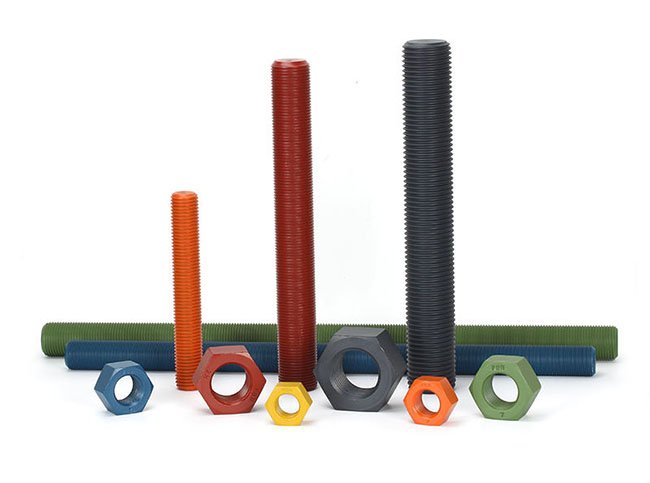
Manufacturing B7 threaded rod and 2H heavy hex nuts for petrochemical service
Petrochemical applications place heavy demands on bolting systems. A stud or threaded rod must maintain clamping force under thermal cycling, vibration, and long operating periods, while the nut must provide dependable engagement and load distribution. In these conditions, a mismatch between material performance, hardness range, thread accuracy, or surface condition can create costly installation issues and long-term maintenance problems. For EPC contractors, refinery maintenance teams, and industrial distributors, the real value of ASTM A193 B7 threaded rod and ASTM A194 2H nuts comes from consistent production and dependable performance across repeated orders.
Unlike general-purpose fasteners, B7 and 2H combinations are commonly specified for critical bolted joints. This makes process control far more important than appearance alone. A reliable manufacturer must understand how raw material quality, heat treatment stability, machining accuracy, and inspection routines all affect the final result. When fasteners are intended for flange packages or project-based deliveries, uniformity from batch to batch becomes especially important because field assembly depends on predictable fit and repeatable torque behavior.
Material selection and heat treatment control
B7 threaded rod is typically selected for demanding industrial service because it offers strong mechanical performance for bolting applications that require dependable load retention. The quality of the finished rod starts with suitable alloy steel selection and continues through controlled heat treatment. If the heat treatment process is inconsistent, the result may be variation in strength, hardness, straightness, or machinability. For petrochemical buyers, these variations can affect installation efficiency and service reliability.
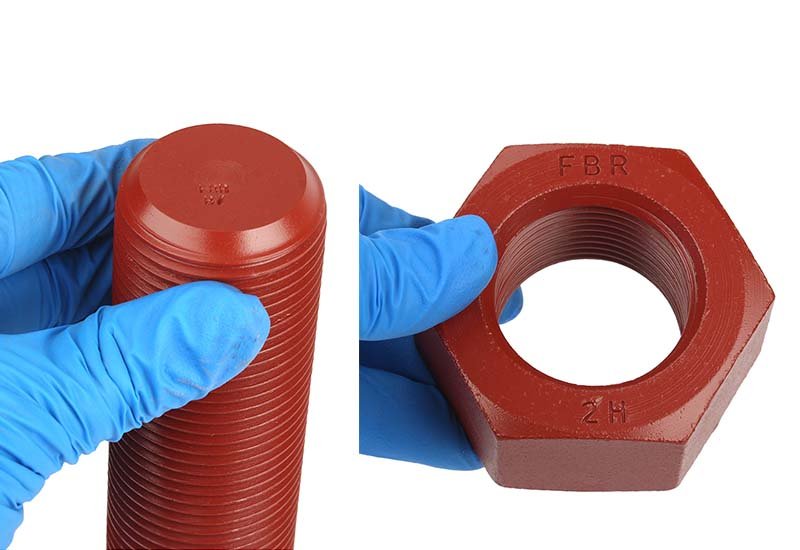
2H heavy hex nuts are designed to pair with high-strength bolting assemblies and must also be produced within the relevant specification requirements. A dependable manufacturing process pays close attention to nut blank quality, thread formation, hardness control, and dimensional inspection. The goal is not only to meet a standard on paper, but to achieve smooth assembly with B7 threaded rod in real operating conditions. Proper pairing reduces the risk of thread binding, installation delay, and uneven load transfer across the joint.
For custom project supply, manufacturers must also manage different diameters, thread forms, and cut lengths without losing process consistency. Petrochemical projects often include mixed-size packages, and production capability matters when buyers need both standard dimensions and special lengths in the same shipment. This is where a factory-oriented supplier brings more value than a simple trader with limited production oversight.
Thread accuracy, fit, and surface condition
Even when material strength is correct, poor thread quality can create field problems. Thread pitch accuracy, crest condition, thread depth, and straightness all influence the final assembly. In petrochemical bolting, installers need nuts to run smoothly without excessive looseness or binding. Poorly formed threads can slow down maintenance work, damage components during tightening, or create uncertainty during torque application.
Surface condition is another practical issue. Depending on project requirements, buyers may request plain finish, black finish, or protective coatings for specific environments. The selected finish should support application needs without compromising fit or thread usability. Clean and consistent thread surfaces also help improve handling and identification during site installation. For long threaded rod lengths, packaging protection becomes important as well, because transportation damage can affect straightness and thread integrity before the material even reaches the jobsite.
Dimensional consistency matters just as much as metallurgy. Uniform rod length, proper chamfering, and correct nut geometry help installers work faster and reduce the likelihood of sorting issues during shutdowns or plant expansions. In project procurement, these details directly influence labor efficiency, especially when multiple flange assemblies must be completed under time pressure.
Traceability, inspection, and custom production support
Petrochemical buyers usually expect more than a box of standard fasteners. They often need clear lot control, inspection support, and confidence that the supplied items match purchase requirements. A manufacturer with strong internal quality procedures can provide better control over raw material batches, in-process inspection, final dimensional checks, and packaging identification. This improves confidence for contractors, stockists, and end users who manage critical applications.
Custom production support is another major advantage. Not every requirement fits an off-the-shelf format. Some projects need special thread lengths, full-thread or double-end configurations, nonstandard cut lengths, or bundled supply aligned with flange package schedules. A manufacturer that understands industrial drawing requirements and production planning can reduce sourcing complexity for the customer. That is especially valuable when project teams want to consolidate supply and reduce coordination across multiple vendors.
Working with a production-focused partner such as Flybear Fastener can help buyers align fastener supply with real application needs, especially when consistency, custom manufacturing, and factory-level quality control are priorities. In petrochemical procurement, that alignment is often the difference between a routine installation and a costly delay.
Why factory capability matters when demand increases
When market demand for B7 threaded rod and 2H heavy hex nuts becomes tighter, many buyers discover that availability alone is not enough. What matters is whether the supplier can maintain specification control while handling larger or more complex orders. Factory capability becomes visible in production planning, inspection discipline, packaging quality, and the ability to support repeat orders without major variation.
For petrochemical service, buyers should evaluate suppliers based on process capability rather than price alone. Stable heat treatment, accurate threading, dependable nut fit, clear identification, and support for custom dimensions all contribute to a more reliable bolting package. In practical terms, better production control helps reduce installation risk, improve procurement efficiency, and support long-term maintenance planning.
As petrochemical projects continue to prioritize safety, uptime, and dependable flange performance, B7 threaded rod and 2H heavy hex nuts will remain a core fastening combination. Suppliers that combine manufacturing strength with application understanding are best positioned to support this demand. For buyers, choosing the right source is not only a purchasing decision. It is a quality decision that affects the entire bolted joint system.
Follow Me!