ASTM A194 2H vs 2HM Heavy Hex Nuts: Compatibility, Hardness and Use
ASTM A194 2H vs 2HM is an important comparison for engineers, EPC buyers, valve manufacturers, and quality teams selecting heavy hex nuts for pressure piping, flanges, valves, and other high-pressure or high-temperature assemblies. Both grades are covered by ASTM A194/A194M, but they are not simply two labels for the same nut. Grade intent, heat-treatment condition, hardness control, mating stud requirements, coating, thread form, and project specifications all influence which nut should be ordered.
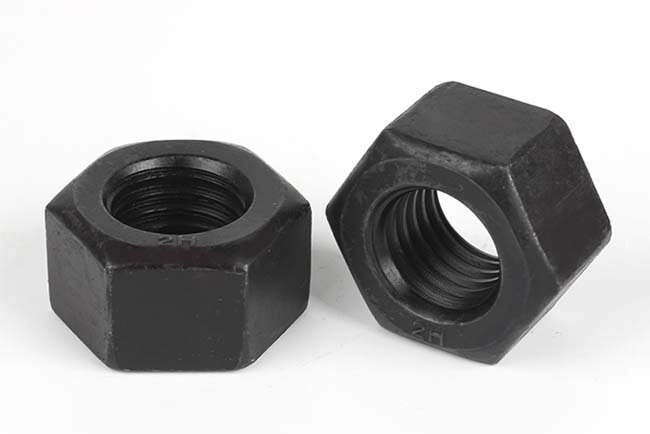
For many industrial applications, Grade 2H is a familiar choice for alloy-steel bolting such as ASTM A193 Grade B7. Grade 2HM is commonly associated with controlled-hardness bolting systems and is often specified with ASTM A193 Grade B7M where sour-service or other project requirements call for a lower-hardness fastener assembly. These pairings are useful procurement references, but they should not be treated as universal rules. The applicable ASTM edition, ASME code, end-user specification, service environment, and engineering approval remain the final basis for compatibility.
What ASTM A194 Covers
ASTM A194/A194M covers several carbon-steel, alloy-steel, and stainless-steel nut grades intended for high-pressure or high-temperature service, or both. The standard addresses material, heat treatment, chemical requirements, mechanical requirements, dimensions, marking, and testing. It also includes hardness and proof-load-related requirements that help verify whether finished nuts meet the specified grade condition.
For procurement, the standard designation alone is not enough. A purchase order should identify the exact nut grade, size, thread series, dimensional pattern, coating or finish, required standard edition, inspection scope, and documentation level. ASTM also states that grade substitutions require purchaser permission, which is especially important when 2H and 2HM nuts may look similar after machining and coating.
ASTM A194 2H vs 2HM: Main Differences
The practical distinction between 2H and 2HM is the material condition and hardness control required for the finished nut. Both can be used in demanding pressure bolting systems, but 2HM is selected when the project requires a more tightly controlled, lower-hardness condition. That difference affects manufacturing and inspection and is one reason 2HM is frequently specified in bolting systems intended for certain H2S-containing or sour-service environments.
| Selection Factor | ASTM A194 Grade 2H | ASTM A194 Grade 2HM |
|---|---|---|
| General role | Heavy-duty nut grade for high-pressure or high-temperature bolting systems | Controlled-hardness nut grade for applications where lower hardness is specifically required |
| Hardness approach | Must meet Grade 2H requirements in the ordered edition | Subject to tighter maximum-hardness control in accordance with Grade 2HM requirements |
| Common stud pairing | Often specified with ASTM A193 B7 | Often specified with ASTM A193 B7M |
| Sour-service context | May be used only where permitted by the applicable project and material requirements | Frequently selected when controlled-hardness bolting is required for sour-service specifications |
| Substitution | Do not substitute one grade for the other without checking the governing specification and obtaining required approval | |
This comparison is intentionally based on selection logic rather than a single hardness number. Exact acceptance values should be taken from the edition of ASTM A194/A194M named in the purchase order and from any project-specific requirements. Generic online tables may be useful for orientation, but they should not replace the governing specification.
Understanding the 2H Nut
A 2H nut is widely used in industrial bolting assemblies where strength, temperature capability, and pressure-service requirements call for an ASTM A194 alloy or carbon-steel nut grade. In piping and flange work, 2H heavy hex nuts are frequently purchased with ASTM A193 B7 studs. This combination is familiar across petrochemical facilities, pipelines, refineries, valves, pressure vessels, and related equipment.
However, the phrase “B7 with 2H” should still be treated as a common engineering pairing rather than an automatic purchasing instruction. The final selection can depend on the piping class, flange standard, design code, temperature, pressure, coating system, service medium, and end-user material specification. If a project drawing or material requisition names another nut grade, the supplier should follow that requirement or request written clarification rather than making an informal substitution.
Size also matters. A nut that has the correct material grade but the wrong dimensional standard, width across flats, height, or thread series may not fit the intended flange assembly. The inquiry should therefore define whether heavy hex dimensions are required and identify the applicable dimensional standard.
Understanding the 2HM Nut
A 2HM nut is selected when the application requires the controlled-hardness condition associated with Grade 2HM. The “M” designation is important because it changes the acceptance condition of the nut; it should not be treated as a packaging code or optional suffix. Production planning must account for the specified heat treatment and hardness requirements, and quality control must verify that the finished parts satisfy the ordered grade.
Grade 2HM is often discussed in connection with sour-service bolting because lower hardness is one factor used to reduce susceptibility to certain hydrogen-assisted cracking mechanisms in H2S-containing environments. Even so, ordering 2HM does not by itself prove that a complete flange joint is suitable for every sour environment. The service conditions and the governing material-selection standard still have to be evaluated.
For oil and gas projects, buyers should provide the actual sour-service specification instead of using a general note such as “NACE nuts.” Requirements can vary depending on whether the equipment is upstream, downstream, directly wetted by process fluid, externally exposed, or governed by a particular end-user standard.
Why Hardness Control Matters
Hardness is more than a report value on a material certificate. It reflects the final material condition produced by chemistry, heat treatment, section size, and manufacturing process. When a project specifies a controlled-hardness nut grade, the supplier must manage these variables so the product meets both the grade requirements and the applicable mechanical acceptance criteria.
This is especially important when comparing 2H and 2HM. A purchaser should not assume that a standard 2H nut can simply be re-marked as 2HM because a spot hardness result appears acceptable. Grade compliance depends on the complete material and manufacturing requirements of the specification. Material identity, heat treatment, testing, marking, and traceability should all correspond to the ordered grade.
Hardness Values Should Come from the Ordered Standard
Technical websites often publish fixed hardness ranges for heavy hex nut grades. Because standard editions and product conditions can change, these numbers should be checked against the edition named in the contract before they are placed on drawings, inspection plans, or purchase orders. This is particularly important for EPC projects where the material requisition may include additional limits that are more restrictive than the base specification.
The safest purchasing language is to specify ASTM A194/A194M Grade 2H or 2HM, identify the required edition, and separately state any project-specific hardness limit, testing frequency, witness requirement, or reporting requirement.
B7 Nut Pairing: Why B7 and 2H Are Commonly Specified Together
B7 nut pairing is a frequent sourcing topic because ASTM A193 Grade B7 studs are widely used in high-pressure and elevated-temperature flange assemblies. Grade 2H heavy hex nuts are commonly specified with B7 studs because the combination is established in many industrial material specifications and piping classes.
Yet stud-and-nut compatibility involves more than grade names. The nut must have the correct thread series and dimensional fit for the stud. Many larger pressure bolting assemblies use thread series that differ from general-purpose coarse threads, and project drawings may impose specific thread classes, allowances, or gauging requirements. Coating can further affect fit because plated or coated threads add thickness and change friction.
For this reason, a supplier quoting B7 studs and 2H nuts should review the assembly as a matched system. Buyers can use the ASTM fastener product range as a starting point for defining stud, bolt, and nut requirements before confirming the final combination against the project specification.
B7M and 2HM: A Common Controlled-Hardness Pairing
ASTM A193 B7M studs are commonly paired with ASTM A194 2HM nuts in projects that require controlled-hardness alloy-steel bolting. This pairing is frequently encountered in sour-service specifications, but the word “common” is important. Exact compatibility must still be confirmed from the current ASTM requirements, the applicable ASME code, the project material specification, and the defined service environment.
If a purchase order specifies B7M studs but only says “2H nuts,” or specifies 2HM nuts with ordinary B7 studs, the supplier should not guess the designer’s intention. The mismatch may be deliberate, or it may be a documentation error. Clarification before manufacturing is safer than assuming that a familiar pairing can override the written purchase requirement.
For petrochemical and pressure-processing applications, the petrochemical fastener solutions page provides additional context for defining fasteners according to operating conditions, material requirements, and equipment type.
Heavy Hex Nut Grades and Dimensional Requirements
Heavy hex nut grades describe material and mechanical requirements, while heavy hex dimensions describe the physical geometry of the nut. These are related in procurement but they are not the same specification. A complete order should therefore identify both the ASTM material grade and the dimensional standard required by the assembly.
Important dimensional checks can include nominal thread size, thread pitch or series, thread class, nut height, width across flats, chamfer geometry, bearing face condition, and thread gauging. For coated nuts, inspection should also consider whether the final coating thickness and thread allowance maintain acceptable engagement with the mating stud.
Valve and pump manufacturers often need nonstandard combinations because equipment drawings may define special stud lengths, confined wrench clearances, specific nut patterns, or controlled coatings. The pump and valve fastener solutions page can help buyers organize these requirements before requesting a drawing-based quotation.
How Coating Affects 2H and 2HM Nut Selection
Surface coating is often specified for corrosion protection, but it can influence several aspects of a bolted assembly. Coating thickness changes thread geometry, while coating and lubricant condition can significantly affect friction during tightening. The same installation torque can therefore produce different bolt tension when the surface system changes.
A procurement specification should identify the coating type, applicable coating standard, thickness or process class where relevant, lubricant condition, thread allowance, and required inspection. The coating process should also be reviewed for compatibility with the base material and any sour-service restrictions.
Buyers should avoid the assumption that the coating normally applied to a 2H nut can automatically be transferred to a 2HM order without review. Where hydrogen-assisted cracking, elevated temperature, chemical exposure, or strict friction control is a concern, the complete coating and assembly procedure may require project approval.
Quality Inspection for ASTM A194 Heavy Hex Nuts
Quality control for ASTM A194 nuts should begin with material and grade identification and continue through heat treatment, machining, threading, coating, testing, marking, and packing. The exact inspection route depends on the grade, size, manufacturing method, drawing, and project specification.
Flybear supports standard and drawing-based custom fastener manufacturing for industrial applications. Depending on the agreed order requirements, applicable inspection capabilities can include thread and dimensional inspection, hardness testing, tensile-related testing, torque testing, spectrometer analysis, metallographic examination, coating-thickness measurement, salt-spray testing, magnetic-particle inspection, and optical sorting. These capabilities should be specified according to the product and inspection plan rather than assumed to apply automatically to every order.
For buyers preparing an inspection and test plan, the quality inspection capabilities page provides a practical overview of available methods. Critical orders should define sampling, acceptance criteria, certificate level, third-party involvement, and witness or hold points before production begins.
Traceability Is Especially Important for 2H and 2HM
Because 2H and 2HM can be dimensionally identical, clear traceability helps prevent grade mixing. The manufacturer should maintain identification appropriate to the order through production and final packing. When both grades are supplied for the same EPC package, separate labeling and lot control can reduce the risk of warehouse or installation errors.
The buyer should state the required certificate type and any heat or lot traceability expectations at the inquiry stage. If hardness results, chemical analysis, mechanical tests, coating records, or dimensional reports must appear in the documentation package, those requirements should be included in the purchase specification.
Common Procurement Mistakes with 2H and 2HM Nuts
Several avoidable mistakes can create delays or nonconforming deliveries. One is ordering only “A194 nuts” without a grade. Another is specifying 2HM because it sounds more corrosion resistant than 2H. Grade 2HM is primarily about a controlled material condition; it should not be interpreted as a universal corrosion-resistant upgrade.
A third mistake is selecting the nut independently from the stud. The bolting assembly should be reviewed together because stud grade, nut grade, thread series, coating, lubrication, and installation method interact. A fourth mistake is copying a hardness value from a supplier catalog without checking the current standard or project specification.
Finally, buyers sometimes add certificate or third-party inspection requirements after manufacturing is complete. Some documentation can only be generated correctly if the required tests and traceability controls were planned before production. Stating the certificate level and inspection scope with the RFQ helps avoid this problem.
Procurement Checklist for ASTM A194 2H vs 2HM
Before placing an order for 2H or 2HM heavy hex nuts, provide enough information for the manufacturer to review both material compliance and assembly compatibility:
- Stud grade: identify the mating ASTM A193 or other bolting grade, such as B7 or B7M.
- Nut grade: state ASTM A194 Grade 2H or Grade 2HM.
- Standard edition: identify the ASTM edition required by the project or contract.
- Nut size: provide nominal diameter and any special dimensional requirements.
- Thread series: specify UNC, 8UN, metric, or another required thread form and class.
- Dimensional standard: confirm heavy hex geometry and any drawing-specific dimensions.
- Service environment: state temperature, pressure, process exposure, H2S conditions, or other relevant environmental factors.
- Coating and lubrication: define the complete surface condition rather than only a color or generic finish name.
- Inspection: identify required hardness, dimensional, thread, coating, material, or nondestructive checks.
- Documentation: state certificate level, traceability, inspection reports, and any third-party requirements.
- Substitution control: require written approval before changing the specified grade or material condition.
This information allows engineering, manufacturing, and quality teams to evaluate the same requirement. It also reduces the chance that price quotations from different suppliers are based on different technical assumptions.
Which Grade Should You Specify?
Specify Grade 2H when the project calls for 2H and the mating stud, operating conditions, and governing code support that selection. It is a common choice with ASTM A193 B7 bolting in many high-pressure and high-temperature systems.
Specify Grade 2HM when the project requires the controlled-hardness condition of 2HM, commonly in combination with B7M or in another bolting system where the material specification specifically calls for 2HM. Do not select 2HM simply because the service is corrosive, and do not assume that 2H can replace 2HM because the nuts share the same thread and dimensions.
For both grades, compatibility should be confirmed using the ordered ASTM edition, the relevant ASME or equipment standard, project material specifications, and the actual stud-and-nut assembly. ASME flange standards also address flange bolting as part of the broader flange-joint system, reinforcing the need to evaluate the nut together with the stud, gasket, flange, coating, and assembly method.
Final Guidance for EPC and Industrial Buyers
The most useful way to compare ASTM A194 2H vs 2HM is to focus on grade intent and the complete bolting system. Grade 2H is a widely used pressure-bolting nut grade and is commonly associated with B7 studs. Grade 2HM provides a controlled-hardness condition and is commonly associated with B7M studs where project requirements demand that material condition. Neither pairing should override the governing engineering documents.
Before production, verify the nut grade, stud grade, standard edition, thread, dimensions, coating, service environment, hardness requirements, inspection plan, and traceability documents. Doing so is far more reliable than selecting a nut from a generic comparison chart.
For a technical quotation, send your bolting requirements with the stud grade, nut size, thread series, coating, service environment, applicable ASTM or ASME specification, and required certificate level. A complete inquiry gives the manufacturer enough information to review material selection, custom production, inspection, and documentation requirements before the order is released.
Follow Me!


Need Fasteners for Your Application?
Share your application, standard or drawing, material or grade, dimensions, finish and quantity. Our team will review your requirements and recommend a suitable solution.