ASTM A193 B8 Class 1 vs Class 2 Stainless Steel Bolting
ASTM A193 B8 Class 1 vs Class 2 is an important comparison for engineers and procurement teams selecting stainless steel bolts, studs, and threaded bolting for pressure vessels, valves, flanges, fittings, and process equipment. Both classes belong to ASTM A193 Grade B8, but their processing condition and resulting mechanical properties are different. Class 1 is supplied in the solution-treated condition, while Class 2 is solution treated and then strain hardened to achieve higher strength requirements.
This difference makes the class designation a critical part of the purchase specification. Ordering only “ASTM A193 B8” may not provide enough information when the application requires a specific strength level. Diameter must also be considered because the mechanical requirements for Class 2 can vary with fastener size. Buyers should therefore confirm the current ASTM edition, required class, diameter, thread, operating conditions, matching nut specification, coating or surface condition, and inspection requirements before production.
ASTM A193 B8 Class 1 vs Class 2: Key Differences
The primary distinction between the two classes is not the basic stainless steel grade family but the condition in which the bolting material is supplied. Grade B8 is an austenitic stainless steel bolting grade commonly associated with Type 304 stainless steel. Class 1 uses the solution-treated condition, while Class 2 adds strain hardening after solution treatment.
Strain hardening changes the mechanical behavior of the material and allows Class 2 bolting to meet higher strength requirements. It does not mean that Class 2 is automatically the correct choice for every pressure or temperature condition. The specified class should come from the engineering design, piping class, equipment specification, or approved material requirement.
| Selection Factor | ASTM A193 B8 Class 1 | ASTM A193 B8 Class 2 |
|---|---|---|
| Stainless steel family | Austenitic stainless steel | Austenitic stainless steel |
| Processing condition | Solution treated | Solution treated and strain hardened |
| General strength level | Lower than Class 2 | Higher strength obtained through strain hardening |
| Diameter consideration | Verify requirements from the ordered ASTM edition | Especially important because mechanical requirements can vary by diameter |
| Typical selection basis | Specified where the solution-treated B8 condition meets project requirements | Specified where higher-strength B8 bolting is required |
| Substitution | Do not substitute between classes without checking the engineering specification and obtaining required approval. | |
What Is ASTM A193 Grade B8 Bolting?
ASTM A193 covers alloy-steel and stainless steel bolting intended for high-temperature or high-pressure service and other special-purpose applications. The specification is widely referenced for bolting used with pressure vessels, valves, flanges, fittings, and related industrial equipment.
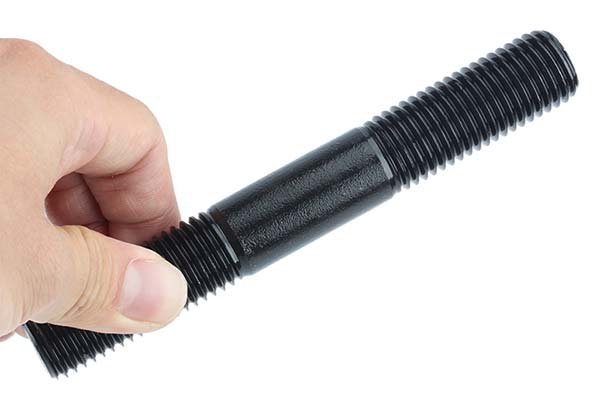
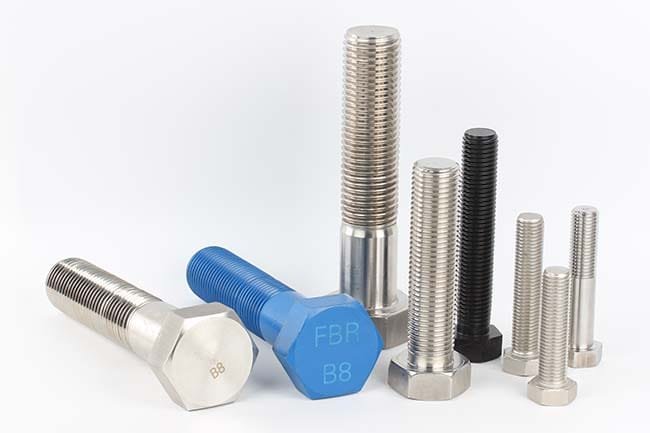
A193 stainless bolting can include bolts, threaded studs, stud bolts, and other externally threaded products that meet the applicable material, processing, mechanical, dimensional, testing, and marking requirements. Grade B8 is one of the austenitic stainless steel grades within the specification.
In practical procurement, ASTM A193 should not be treated as a complete dimensional description. The purchase order must still identify the product form, nominal diameter, length, thread series, required class, dimensional standard or drawing, and any additional project requirements.
Buyers evaluating standard and special products can review the ASTM fastener product range when preparing an inquiry for stainless steel bolts, threaded studs, matching nuts, or drawing-based fasteners.
How B8 Class 1 Bolting Is Produced
B8 Class 1 is supplied in a solution-treated condition. Solution treatment is used to establish the required austenitic stainless steel condition before the finished bolting is evaluated against the applicable specification requirements.
For purchasing purposes, the important point is that Class 1 describes a defined material condition rather than simply a lower-cost version of Class 2. If a project specifies Class 1, replacing it with Class 2 should not be done automatically. The engineering specification may have selected the class based on strength, fabrication condition, design assumptions, equipment requirements, or compatibility with other components.
The material certificate and inspection documentation should correspond to the ordered grade and class. If additional testing, traceability, or inspection reports are required, those requirements should be stated before production rather than added after the fasteners have been completed.
What Are B8 Class 2 Bolts?
B8 Class 2 bolts are ASTM A193 Grade B8 fasteners supplied in a solution-treated and strain-hardened condition. Strain hardening increases the strength of austenitic stainless steel through controlled deformation rather than through the type of quench-and-temper heat treatment commonly associated with some alloy-steel bolting grades.
This distinction is important for engineers comparing stainless and alloy-steel fasteners. The “Class 2” designation should not be interpreted as a different chemical grade. Instead, it identifies a different processing and mechanical-property condition within Grade B8.
Because Class 2 strength requirements depend on the applicable product size range, procurement teams should avoid copying a single tensile or yield value from a general-purpose online chart into every purchase order. The correct values must be checked against the current ASTM A193/A193M edition for the diameter being ordered.
Why Diameter Matters for Class 2
Diameter is a major part of a Class 2 purchasing specification. The mechanical requirements for strain-hardened B8 bolting are not necessarily represented by one universal strength value for every fastener size. A value shown for a smaller-diameter stud should therefore not be assumed to apply to a larger diameter.
This also means an RFQ should never state only “B8 Class 2 stud bolt” when engineering performance is important. The manufacturer needs the diameter, thread, length, required standard edition, and any project-specific mechanical requirements to review the order correctly.
For large or critical strain hardened stainless studs, the buyer may also define additional inspection or documentation requirements to verify that the finished material corresponds to the ordered condition.
Class 1 vs Class 2: Does Class 2 Always Perform Better?
No. Class 2 provides a higher-strength material condition, but higher strength does not automatically make it the better engineering choice for every bolted joint. Material selection should be based on the complete design requirement rather than a simple ranking of strength.
A Class 1 fastener can be entirely appropriate when its specified mechanical properties satisfy the joint design. In that situation, specifying Class 2 without an engineering reason may change the intended material condition without providing a meaningful application benefit.
Conversely, if a project specifically requires Class 2, supplying Class 1 can result in a fastener that does not meet the required mechanical condition. The visual appearance of the two products may be very similar, so markings, certificates, lot identification, and traceability become important controls.
The safest rule for purchasing is straightforward: order the grade and class shown on the approved drawing, piping specification, material requisition, or engineering document, and require approval before any substitution.
Corrosion Resistance of B8 Class 1 and Class 2
Because both classes belong to the same B8 stainless steel family, the main reason for choosing Class 2 is normally mechanical condition rather than a fundamental change in stainless alloy family. Buyers should therefore avoid assuming that Class 2 automatically offers greater corrosion resistance simply because it has higher strength.
Actual corrosion performance depends on the environment, temperature, chemical exposure, chloride level, surface condition, crevices, deposits, cleaning procedures, and interaction with mating materials. For more aggressive chloride-containing environments, another ASTM A193 stainless grade may be specified instead of B8.
If corrosion resistance is a key design requirement, procurement teams should provide available process information rather than asking the manufacturer to select a grade from the words “corrosive service” alone. Fluid chemistry, operating temperature, pressure, external atmosphere, cleaning chemicals, and exposure conditions can all affect the engineering decision.
Temperature and Pressure Considerations
ASTM A193 is widely used for pressure and temperature-related bolting applications, but the grade designation should not be treated as a universal temperature rating for a complete bolted joint. The allowable operating condition of an assembly can depend on the governing design code, material allowable stresses, flange rating, gasket, nut, preload, thermal cycling, and equipment design.
This is especially important when comparing Class 1 and Class 2. The question should not simply be, “Which class can withstand a higher temperature?” Instead, engineers should determine which class satisfies the required mechanical properties and applicable design rules at the actual operating condition.
Petrochemical and EPC buyers defining fasteners for pressure systems can review petrochemical fastener applications when organizing bolting requirements around equipment type, operating environment, and project specifications.
Matching Nuts for ASTM A193 B8 Bolting
A threaded stud cannot be evaluated independently from its mating nut. The nut material, grade, thread, dimensions, surface condition, and mechanical properties must be compatible with the specified bolting assembly.
ASTM A194 stainless steel nuts are frequently used in pressure-bolting systems, but the exact nut grade should come from the project specification. Buyers should avoid assuming that one nut grade is automatically correct for every B8 Class 1 or Class 2 application.
A complete inquiry should identify:
- ASTM A193 Grade B8
- Required Class 1 or Class 2
- Stud or bolt diameter
- Length
- Thread series and pitch
- Applicable dimensional requirement
- Matching nut specification and grade
- Surface condition or coating
- Operating temperature
- Pressure or equipment class where applicable
- Required inspection and documentation
These details allow the stud and nut to be reviewed as a bolting system instead of as two unrelated components.
B8 Bolting for Pump and Valve Applications
Pumps and valves frequently use stainless bolting where pressure containment, corrosion exposure, maintenance access, and equipment specifications must be considered together. Depending on the equipment design, B8 bolts or studs may be used on body joints, covers, flanges, glands, or other bolted connections.
The correct class should follow the equipment drawing or approved material specification. A valve manufacturer that requires Class 2 for a particular joint should state the class clearly in the RFQ and drawing instead of relying on the supplier to infer it from the application.
Special equipment can also require nonstandard stud lengths, reduced shanks, special end configurations, controlled thread engagement, or drawing-specific dimensions. Buyers sourcing these parts can review pump and valve fastener solutions for related manufacturing considerations.
Thread and Dimensional Inspection
Material compliance alone does not make a usable pressure bolting component. Threads and dimensions must also match the assembly. A correct B8 Class 2 material with an incorrect thread pitch or stud length can still create a nonconforming installation.
Important dimensional controls can include nominal diameter, thread pitch, thread fit, threaded length, overall length, chamfers, end configuration, straightness, and other drawing-defined dimensions. For custom fasteners, inspection should focus on the critical characteristics identified by the buyer or equipment manufacturer.
Thread gauging becomes particularly important when studs and nuts come from different supply sources. Defining the same thread standard and fit requirements for both components reduces assembly problems during installation.
Surface Finish and Coating Considerations
Stainless steel bolting is often used without the protective coatings commonly applied to carbon or alloy steel, but project-specific surface treatments, lubricants, or coatings may still be requested. Any finish should be reviewed for compatibility with the service condition and installation method.
Surface condition can influence friction during tightening. Changing from an uncoated fastener to a lubricated or coated fastener can change the relationship between installation torque and achieved preload. For critical joints, tightening procedures should therefore reflect the actual surface condition of the supplied bolt-and-nut assembly.
If coating thickness is controlled by the project, the buyer should state the coating specification and inspection method. Thread fit should also be considered after surface treatment.
Quality Control for ASTM A193 B8 Class 1 and Class 2
The difference between the two classes makes material identification and traceability an important part of quality control. Finished Class 1 and Class 2 stainless fasteners can appear similar, so visual appearance alone cannot reliably establish their material condition.
Flybear supports standard and drawing-based custom fastener manufacturing for industrial applications. Depending on the order specification and product, applicable inspection capabilities can include material verification, spectrometer analysis, thread and dimensional inspection, hardness testing, tensile testing, torque testing, metallographic examination, coating-thickness measurement, magnetic-particle inspection, salt-spray testing, and optical sorting where relevant.
These capabilities should not be interpreted as an automatic inspection package for every ASTM A193 B8 order. The required tests, sampling plan, acceptance criteria, documentation, and traceability should be agreed before manufacturing. Buyers can review the available quality inspection capabilities when preparing an inspection and test plan.
What Documentation Should Buyers Request?
Documentation requirements depend on the project. A buyer may require material certificates, chemical and mechanical test results, dimensional reports, hardness results, inspection records, heat or lot traceability, coating records, or third-party inspection documentation.
For Class 2 bolting, the certificate and inspection requirements should clearly correspond to the specified class and diameter. If particular mechanical results must be reported, they should be included in the RFQ or purchase order.
Custom Manufacturing of B8 Stainless Bolting
Not every pressure-system fastener is a standard catalog item. EPC projects, valve manufacturers, pressure-equipment companies, and maintenance teams may require nonstandard diameters, unusual lengths, special thread combinations, drawing-specific geometry, or project-specific marking and inspection.
For custom production, the manufacturer should receive a controlled drawing or complete technical description. Relevant information can include the base material, ASTM grade and class, dimensions, tolerances, thread specification, surface treatment, marking, inspection, packing, and documentation requirements.
Manufacturing planning is particularly important for Class 2 because the strain-hardened condition is part of the material requirement. The production route must be selected so the finished product can meet the applicable mechanical requirements for the ordered diameter and configuration.
Common Purchasing Mistakes with A193 Stainless Bolting
One common mistake is ordering “B8 stainless studs” without identifying Class 1 or Class 2. If the engineering design requires a particular class, leaving it unspecified can create unnecessary clarification or an incorrect purchase.
Another mistake is assuming that Class 2 simply means a better version of Class 1. Class 2 is a different mechanical condition and should be selected because the design requires it, not because higher strength sounds preferable.
A third mistake is copying mechanical values from an old chart without checking diameter or the ASTM edition named by the project. For Class 2, diameter-specific requirements make this particularly risky.
Additional sourcing errors include failing to define the matching nut, omitting thread details, adding inspection requirements after production, and allowing material substitutions without engineering review.
Procurement Checklist for ASTM A193 B8 Class 1 vs Class 2
Before requesting a quotation for B8 bolts or studs, procurement teams should provide the following information:
- ASTM edition: identify the version required by the contract or project specification.
- Grade: specify ASTM A193 Grade B8.
- Class: clearly identify Class 1 or Class 2.
- Product type: state bolt, stud, stud bolt, threaded rod, or drawing-based special fastener.
- Diameter: provide the exact nominal size because Class 2 mechanical requirements can depend on diameter.
- Length: define overall and threaded lengths where applicable.
- Thread: specify thread series, pitch, class, and any special thread requirement.
- Operating conditions: provide temperature, pressure, process environment, and other relevant service data.
- Matching nut: state the required nut material, grade, dimensions, and standard.
- Surface condition: identify coating, lubricant, passivation, or other finish if required.
- Inspection: define mechanical, dimensional, material, surface, or additional testing.
- Documentation: state certificate, traceability, inspection-report, and third-party requirements.
A detailed specification helps suppliers quote the same technical requirement and reduces assumptions during order review.
Which B8 Class Should You Choose?
Choose B8 Class 1 when the project specification calls for the solution-treated condition and its mechanical properties meet the bolted-joint design. Choose B8 Class 2 when the engineering specification requires the higher-strength, strain-hardened condition.
Do not select between the classes only by comparing a generic tensile-strength number. The decision should account for fastener diameter, applicable standard edition, mechanical-property requirements, operating conditions, mating nuts, dimensions, and project documentation.
The distinction is especially important for pressure equipment and EPC packages because substituting one class for the other can change the material condition on which the engineering design is based. Written approval should be obtained before changing the specified class.
Final Guidance for Engineers and Procurement Teams
Understanding ASTM A193 B8 Class 1 vs Class 2 begins with the manufacturing condition. Class 1 is solution treated, while Class 2 is solution treated and strain hardened to meet higher mechanical requirements. For Class 2, diameter is an essential part of verifying the correct mechanical criteria.
For reliable sourcing, specify the complete assembly rather than only “B8 stainless.” Confirm the ASTM edition, class, diameter, thread, length, operating temperature, mating nut, surface condition, inspection plan, and documentation before releasing the order.
For standard or custom B8 stainless steel bolting, send your technical requirements including diameter, thread, required class, operating temperature, matching nut specification, drawing if applicable, and required inspection documents. A complete inquiry allows manufacturing and quality teams to evaluate the requested fastener condition before production.
Follow Me!