ISO 4014 vs ISO 4017 Hex Bolts: Partial Thread vs Full Thread Selection
ISO 4014 vs ISO 4017 is primarily a choice between partially threaded and fully threaded metric hex fasteners. ISO 4014:2022 specifies hexagon head bolts with a defined unthreaded shank for applicable lengths, while ISO 4017:2022 specifies hexagon head screws with threads extending essentially along the usable length beneath the head. Both standards cover steel and stainless-steel fasteners with metric coarse-pitch threads from M1.6 to M64 and product grades A and B.
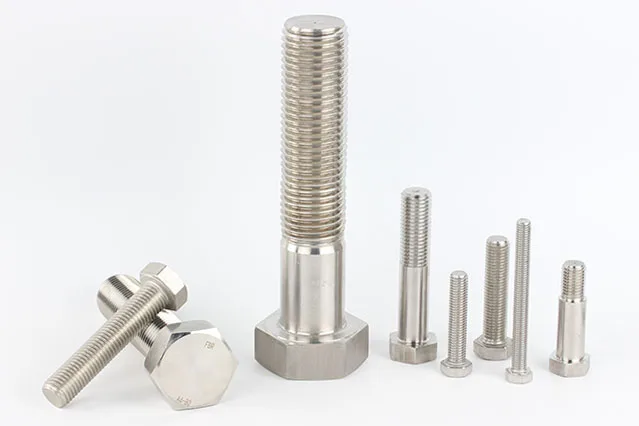
For industrial buyers, the difference is more important than terminology. Thread length determines where the smooth shank, threads, and thread runout fall within the joint. That can influence shear-plane location, bearing against clearance holes, available nut engagement, grip-length flexibility, installation, and replacement compatibility. Buyers should therefore specify the exact ISO standard rather than ordering a generic “metric hex bolt.”
ISO 4014 vs ISO 4017: Quick Comparison
| Selection Point | ISO 4014 | ISO 4017 |
|---|---|---|
| Current published edition | ISO 4014:2022 | ISO 4017:2022 |
| ISO product terminology | Hexagon head bolt | Hexagon head screw |
| Thread configuration | Normally partially threaded, with a defined unthreaded shank depending on nominal length | Fully threaded along the applicable usable length beneath the head |
| Thread system | Metric coarse pitch | Metric coarse pitch |
| Nominal thread-size range in the standard | M1.6 to M64 | M1.6 to M64 |
| Product grades | A and B | A and B |
| Typical selection reason | Use an unthreaded shank through part of the clamped joint or control the location of threads | Require threading through most of the bolt length, especially for variable or short grip conditions |
| Interchangeability | Do not treat them as automatically interchangeable. Verify grip, thread engagement, shear-plane location, dimensions, property class, coating, and drawing requirements. | |
Both standards define dimensional fastener characteristics; they do not by themselves establish one universal strength level. Steel property classes should be specified through the applicable mechanical-property requirements such as ISO 898-1, while stainless-steel grades and property classes should be selected through the applicable ISO 3506 requirements.
What Is an ISO 4014 Hex Bolt?
ISO 4014 covers metric coarse-thread hexagon head bolts of product grades A and B. The defining procurement feature is the partially threaded configuration: depending on the nominal bolt length and diameter, part of the body remains as an unthreaded shank.
This smooth shank can be useful when the designer wants the unthreaded body to extend through one or more clamped components. In machinery, frames, brackets, and equipment assemblies, the shank may provide a bearing interface with clearance holes and can allow the designer to control whether a transverse shear plane passes through the smooth body or through the threaded portion.
However, buyers should not assume that every ISO 4014 length provides the same amount of unthreaded shank. The thread length is defined by the standard and varies with diameter and nominal length. If the grip geometry is important, check the current ISO 4014 dimensional requirements before releasing the drawing or purchase order.
Flybear supplies standard and drawing-based products within its carbon and alloy steel bolt range. The RFQ should identify ISO 4014 explicitly when a partial-thread configuration is required.
What Is an ISO 4017 Hex Screw?
ISO 4017 covers metric coarse-thread hexagon head screws of product grades A and B. In normal industrial purchasing language, these are frequently described as fully threaded hex bolts because the external thread extends along essentially the full usable body length beneath the head.
A fully threaded configuration can be useful where the clamped stack is thin, where grip length varies between assemblies, or where the nut position needs greater flexibility. It can also simplify purchasing in some equipment families because one fully threaded length can accommodate a broader range of clamped thicknesses, provided the final installation satisfies the joint design.
The tradeoff is that threads may pass through locations where an ISO 4014 bolt would provide a smooth shank. If the connection carries transverse load and the shear plane falls through the threaded region, the designer should evaluate that geometry rather than assuming a fully threaded fastener behaves identically to a smooth-shank bolt.
For broader sourcing across bolts, screws, nuts, washers, studs, and threaded rods, buyers can review Flybear’s carbon and alloy steel fastener category.
Partial Thread vs Full Thread: Why Grip Length Matters
Partially threaded hex bolts and fully threaded hex bolts can have the same nominal diameter, length, head dimensions, material, and property class while behaving differently in the assembled joint because of the thread location.
Define the Grip Length First
Grip length is the total thickness of the components being clamped between the bolt head and the nut or other threaded component, excluding portions that do not contribute to the clamped stack as defined by the joint design.
For an ISO 4014 bolt, the designer should check whether the unthreaded shank fits appropriately within this grip. An unsuitable length can place the thread runout inside a hole or prevent the nut from achieving the required engagement before the joint is clamped.
For ISO 4017, the continuous thread provides more flexibility with different grip lengths, but the presence of threads throughout the clamped stack must be acceptable to the design.
Do Not Let the Nut Bottom Out on the Unthreaded Shank
A common mistake with partially threaded bolts is selecting a length that leaves insufficient threaded length for the actual stack-up. The nut can reach the end of the thread before the parts are correctly clamped.
This problem cannot be solved simply by applying more torque. The bolt length and thread length must be compatible with the grip, washers, nut height, and required thread engagement.
Allow for Washers and Tolerance Stack-Up
When calculating the required bolt length, include washers, locking devices, brackets, coatings, and dimensional tolerances that affect the assembled stack. A nominal CAD dimension alone may not represent the worst-case production grip.
Shear Plane Location Can Influence the Standard Selection
One reason engineers choose ISO 4014 is the ability to place a smooth shank through a loaded interface. In a joint subject to transverse shear, the effective cross-section and bearing conditions can differ depending on whether the shear plane crosses the full-diameter shank or the threaded portion.
That does not mean an ISO 4014 bolt automatically has a higher joint shear capacity than ISO 4017. Actual performance depends on the number of shear planes, preload, friction between clamped members, hole clearances, material strengths, thread location, bolt diameter, joint category, and applicable design method.
For preloaded friction-type joints, the intended load path may differ substantially from a bearing-type connection. For machinery joints, fatigue and repeated slip may also matter. Buyers should therefore preserve the standard specified by engineering instead of substituting a fully threaded product solely because the diameter and overall length match.
ISO 4014 and ISO 4017 Do Not Define the Strength Class
Another common procurement error is treating the dimensional standard as the material or strength grade. ISO 4014 and ISO 4017 define characteristics of the hex fastener form. The property class or stainless grade must be specified separately.
A purchase description might therefore include information such as:
- ISO 4014 or ISO 4017
- Nominal diameter and length
- Metric coarse thread designation
- Steel property class where applicable
- Stainless-steel grade and property class where applicable
- Coating or surface finish
- Quantity
- Required inspection or documentation
For example, changing from property class 8.8 to 10.9 is a mechanical-property change. Changing from ISO 4014 to ISO 4017 is primarily a dimensional and thread-length change. These are separate engineering decisions.
Coarse Pitch vs Fine Pitch: Do Not Use ISO 4014 or 4017 for the Wrong Thread Series
ISO 4014 and ISO 4017 are coarse-pitch metric standards. If the engineering drawing requires a metric fine-pitch thread, buyers should not simply add a fine pitch to an ISO 4014 or ISO 4017 callout.
The corresponding current ISO standards for fine-pitch hex fasteners are ISO 8765:2022 for hexagon head bolts and ISO 8676:2022 for hexagon head screws within their respective scopes.
This distinction matters because a callout should identify a standard whose dimensional and thread requirements actually match the product. Writing an incompatible combination of standard and pitch can create ambiguity between the drawing, quotation, production traveler, and inspection report.
Head Dimensions Alone Are Not Enough to Establish Interchangeability
Because ISO 4014 and ISO 4017 belong to the same metric hex-head family, buyers may find products that appear almost identical when viewed only from the head. That does not establish functional interchangeability.
The buyer should compare:
- Nominal diameter
- Overall length
- Thread pitch
- Thread length
- Unthreaded shank length
- Thread runout location
- Product grade
- Property class or material grade
- Head and bearing dimensions
- Coating or plating thickness
ISO 4014:2022 and ISO 4017:2022 also reference dimensional options from standards including ISO 888 and ISO 4753 for cases requiring other dimensional specifications. The controlling drawing and project standard should therefore remain the final purchasing basis.
When ISO 4014 Is Usually the Better Starting Point
ISO 4014 may be the more appropriate starting point when engineering specifically wants an unthreaded body through part of the connection.
Typical reasons include:
- Keeping threads away from one or more shear planes
- Providing a smooth shank through clearance holes
- Using the shank as part of the intended bearing interface
- Reducing threaded length where full threading is unnecessary
- Following an existing machine or equipment drawing that controls grip geometry
The actual nominal length must still be checked carefully. Choosing ISO 4014 does not guarantee that the smooth shank will land exactly where the designer wants it.
When ISO 4017 Is Usually the Better Starting Point
ISO 4017 may be preferred when full thread coverage provides useful assembly flexibility.
Typical reasons include:
- Thin clamped stacks
- Variable grip lengths across similar assemblies
- Adjustment along a greater portion of the fastener body
- Short bolts where an extended threaded region is required
- Maintenance inventories where a fully threaded configuration has been approved for multiple compatible joint thicknesses
Again, the choice should follow engineering. A fully threaded fastener should not be introduced into a joint specifically designed around a smooth shank without checking shear, bearing, fatigue, and alignment requirements.
Coatings and Surface Treatments Do Not Change the Basic Standard Choice
Carbon- and alloy-steel ISO hex bolts often require a surface treatment for corrosion protection or friction control. Depending on the application, specifications may call for zinc-based finishes, zinc-flake coatings, hot-dip galvanizing where dimensionally and technically appropriate, phosphate systems, or other treatments.
The coating should be specified separately from ISO 4014 or ISO 4017. It can affect thread fit, installation friction, torque-preload behavior, corrosion protection, and dimensional acceptance.
Higher-strength property classes may also require additional control of surface-treatment processes where hydrogen embrittlement is a concern. Buyers should therefore provide the coating standard and property class together instead of requesting only “ISO 4014 galvanized” or “ISO 4017 zinc plated.”
Inspection Should Verify Thread Length as Well as Diameter
Receiving inspection of ISO hex bolts should not stop after confirming nominal diameter and overall length. For partial-thread products in particular, thread length and the transition to the unthreaded shank can be functionally important.
Depending on the order, inspection may include:
- Overall length
- Thread length
- Shank diameter
- Head dimensions
- Thread gauging
- Property-class or material marking
- Hardness or mechanical testing where specified
- Coating thickness and surface condition
Flybear’s fastener quality inspection capabilities include dimensional and tolerance inspection, go/no-go thread gauging, hardness and tensile testing, material analysis, coating-thickness measurement, and other order-defined inspection methods. The exact acceptance plan should follow the purchase specification.
Common ISO 4014 vs ISO 4017 Purchasing Mistakes
- Ordering only “hex bolt”: the supplier cannot know whether a partial- or full-thread configuration is required.
- Assuming the same diameter and length make the two standards interchangeable: thread and shank locations can affect the joint.
- Ignoring grip length: an ISO 4014 nut may run out of thread before the joint is clamped if the selected length is unsuitable.
- Using ISO 4017 where the drawing requires a smooth shank through a shear plane: the load path and effective section can change.
- Using ISO 4014/4017 for a fine-pitch thread: verify ISO 8765 or ISO 8676 where the fine-pitch standard applies.
- Treating the ISO number as a strength class: property class or stainless grade must be stated separately.
- Ignoring coating thickness and friction: surface treatment can affect fit and tightening behavior.
- Using an old drawing without checking the stated edition: confirm the applicable project standard and current replacement before changing the callout.
What to Include in an ISO Hex Bolt RFQ
For an accurate quotation and technical review, provide:
- ISO 4014 or ISO 4017
- Required standard edition if controlled by the project
- Nominal diameter
- Nominal length
- Thread pitch
- Steel property class or stainless-steel grade/property class
- Required grip or unthreaded-shank condition where critical
- Nut and washer requirements
- Coating, plating, lubrication, or other surface finish
- Application and operating environment
- Quantity
- Drawing and revision for controlled assemblies
- Required dimensional, thread, mechanical, coating, and documentation inspection
FAQ: ISO 4014 vs ISO 4017
What is the main difference between ISO 4014 and ISO 4017?
ISO 4014 specifies hexagon head bolts that normally include an unthreaded shank for applicable lengths, while ISO 4017 specifies fully threaded hexagon head screws. The selection should therefore be based on required thread length and joint grip as well as diameter and overall length.
Are ISO 4014 and ISO 4017 bolts interchangeable?
Not automatically. Verify the location of threads and smooth shank within the joint, required nut engagement, shear planes, product grade, property class or material, coating, and drawing requirements before approving a substitution.
Does ISO 4014 mean property class 8.8?
No. ISO 4014 is a dimensional/product standard and does not mean one specific strength class. Property class must be specified separately according to the applicable mechanical-property standard. The same principle applies to ISO 4017.
Which standard should I use for a fully threaded metric hex bolt?
For a coarse-pitch metric hex fastener within the applicable scope, ISO 4017 is the fully threaded standard. If a fine-pitch thread is required, check ISO 8676 instead of assuming ISO 4017 applies.
Which standard should I use when I need a smooth shank through the joint?
ISO 4014 is normally the starting point because it provides a partial-thread configuration. The exact diameter and nominal length must still be checked to confirm that the defined thread length places the smooth shank correctly within the actual grip.
Send the Grip Length and Exact ISO Standard for Review
When requesting ISO metric hex bolts, send Flybear the required ISO 4014 or ISO 4017 standard, diameter, nominal length, property class or material grade, thread pitch, joint grip, coating, nut and washer requirements, quantity, drawing, and required inspection documentation. Use the Flybear contact page to submit your RFQ. Flybear can review standard and drawing-based carbon- and alloy-steel fasteners, with hot forging, cold heading, CNC machining, thread rolling, heat-treatment coordination, surface treatment, and inspection considered where applicable to the specified product and order.
Follow Me!