ASME B18.2.2 Hex Jam Nuts Guide: Standards, Materials and Applications
ASME B18.2.2 hex jam nuts are thin hexagonal nuts designed for locking purposes and fine adjustment in threaded assemblies. Unlike standard full-height hex nuts, jam nuts have reduced thickness, making them ideal for applications requiring secondary locking or restricted space. These nuts are widely used in industrial, automotive, and machinery sectors.
At Flybear Fastener, we provide high-quality ASME B18.2.2 hex jam nuts in various grades and materials suitable for a wide range of engineering applications.
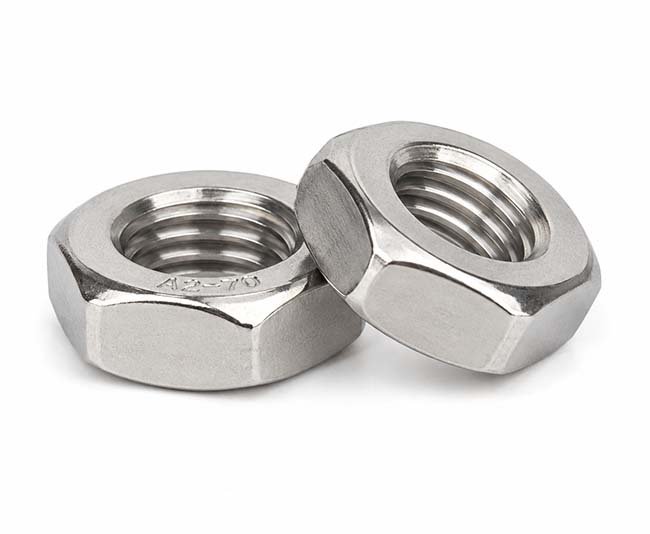
Understanding ASME B18.2.2 Hex Jam Nuts
ASME B18.2.2 is the standard governing inch-series hex nuts, including jam nuts. These nuts are typically used in combination with a standard full-height nut. When installed together, the jam nut prevents loosening due to vibration or dynamic loads by creating a locking effect through friction between the two nuts.
Hex jam nuts are often installed on bolts, threaded rods, or studs, especially in applications where precise tensioning is required.
Materials Used in Hex Jam Nuts
The material of a hex jam nut directly affects its strength, corrosion resistance, and durability. Common materials include:
- Carbon Steel – cost-effective and widely used for general industrial applications
- Alloy Steel – provides higher strength for heavy-duty applications
- Stainless Steel (304 / 316) – suitable for corrosive environments and outdoor applications
Choosing the appropriate material ensures optimal performance under expected mechanical and environmental conditions.
Hex Jam Nuts Sizes and Standards
Hex jam nuts are manufactured according to ASME B18.2.2 specifications, with dimensions and tolerances ensuring compatibility with standard UNC and UNF bolts. Typical sizes range from 1/4″ to 1″, with common thread types including:
- UNC (Unified Coarse Thread)
- UNF (Unified Fine Thread)
Thin nut design allows installation in tight spaces while maintaining a secure locking effect.
Applications of ASME B18.2.2 Hex Jam Nuts
ASME B18.2.2 hex jam nuts are used in a variety of industries and applications:
- Mechanical assemblies requiring secondary locking
- Automotive adjustment components
- Industrial machinery and equipment
- Railway and heavy equipment fasteners
- Electrical panels and construction applications
Their reduced height makes them particularly suitable for assemblies where space constraints prevent the use of full-height hex nuts.
Advantages of Hex Jam Nuts
Hex jam nuts offer several benefits over standard hex nuts:
- Reduced profile for limited-space applications
- Enhanced locking capability when paired with a standard nut
- Lightweight design
- Compatibility with multiple materials and surface finishes
These advantages make jam nuts a preferred choice for precision fastening and high-vibration environments.
Surface Finishes and Corrosion Protection
Hex jam nuts can be treated with various surface finishes to improve corrosion resistance:
- Zinc Plated (Blue White Zinc)
- Black Oxide
- Hot-Dip Galvanized
- Stainless Steel (plain or passivated)
Proper selection of surface finish ensures longevity in challenging environmental conditions.
Selection Guide for Hex Jam Nuts
When selecting ASME B18.2.2 hex jam nuts, consider:
- Thread size and compatibility with mating bolt or stud
- Mechanical load and vibration conditions
- Material and corrosion resistance requirements
- Space constraints in assembly
By carefully evaluating these factors, engineers can ensure a secure and reliable locking system.
Conclusion
ASME B18.2.2 hex jam nuts are essential components for high-precision and vibration-resistant applications. Their thin design, combined with proper material selection, makes them ideal for secondary locking in industrial, automotive, and heavy equipment assemblies. Understanding their standards, materials, and applications helps buyers and engineers optimize fastener performance and assembly reliability.
Follow Me!