ASTM A193 B8 vs B8M: Choosing Stainless Bolting for Corrosive Flanges
ASTM A193 B8 vs B8M is an important comparison for engineers, EPC procurement teams, valve manufacturers, and industrial buyers selecting stainless steel bolting for corrosive flanges. Both grades belong to the austenitic stainless steel group covered by ASTM A193/A193M, but their alloy families and corrosion behavior are different. B8 is commonly associated with Type 304 stainless steel, while B8M is associated with Type 316 stainless steel. The addition of molybdenum in the B8M material family generally improves resistance to localized corrosion in many chloride-containing environments.
That does not mean B8M should automatically replace B8 whenever water, salt, or chemicals are present. Fluid chemistry, chloride concentration, temperature, pressure class, crevice conditions, cleaning chemicals, external atmosphere, fastener diameter, strength class, manufacturing condition, mating nuts, and project specifications all affect the final selection. For critical pressure joints, the correct grade should be established from the governing engineering documents rather than from a simple 304-versus-316 comparison.
ASTM A193 B8 vs B8M: Key Differences
The practical difference between B8 and B8M starts with their alloy families. B8 is generally based on the 304 austenitic stainless family, while B8M is based on the 316 family. Both provide corrosion resistance and can be used for pressure bolting applications, but B8M is commonly selected when the service environment creates a greater risk of pitting or crevice corrosion.
| Selection Factor | ASTM A193 B8 | ASTM A193 B8M |
|---|---|---|
| General stainless family | Commonly associated with Type 304 | Associated with Type 316 |
| Alloy characteristic | Chromium-nickel austenitic stainless steel | Chromium-nickel-molybdenum austenitic stainless steel |
| General corrosion selection | Suitable for many industrial and chemical environments when specified | Often selected for more demanding chloride-containing or corrosive environments |
| Class options | Class must be confirmed from the purchase specification | Class must be confirmed from the purchase specification |
| Strength consideration | Mechanical requirements depend on class and applicable size range | Mechanical requirements depend on class and applicable size range |
| Typical applications | Pressure equipment, chemical processing, valves, pumps and general corrosion-resistant bolting | Chemical processing, water treatment, valves, pumps and chloride-exposed installations |
| Automatic substitution? | No. Engineering approval should be obtained before changing the specified grade. | |
The comparison should therefore be based on both corrosion conditions and mechanical requirements. Choosing B8M solely because it is considered a more corrosion-resistant material can create unnecessary cost, while selecting B8 solely because it is adequate in a general atmosphere may be inappropriate for a more aggressive process environment.
What Does ASTM A193 Cover?
ASTM A193/A193M covers alloy-steel and stainless steel bolting intended for high-temperature, high-pressure, and other special-purpose applications. The specification includes several ferritic and austenitic grades and establishes requirements related to material condition, mechanical properties, testing, marking, and other manufacturing controls.
For buyers, it is important to understand that “ASTM A193 stainless steel” is not a complete purchase description. The order should identify the exact grade, class, nominal diameter, length, thread specification, product configuration, surface condition, mating nut requirements, inspection plan, and required standard edition.
Buyers sourcing studs and bolts for industrial pressure connections can review the ASTM fastener product range as a starting point before confirming the exact material and dimensional requirements of the project.
304 vs 316 ASTM Bolts: How B8 and B8M Relate
304 vs 316 ASTM bolts is a useful commercial comparison, but procurement teams should use the terminology carefully. ASTM A193 B8 and B8M are fastener material grades governed by a bolting specification. A general request for “304 bolts” or “316 bolts” may not communicate the required class, heat-treatment or strain-hardening condition, mechanical properties, testing, marking, or documentation.
B8 is commonly associated with the 304 stainless family. B8M is associated with the 316 stainless family, which includes molybdenum as an alloying element. Molybdenum can improve resistance to localized corrosion, particularly pitting, in many chloride-containing environments. This is a major reason B8M is frequently considered for water-treatment equipment, chemical plants, pumps, valves, and installations influenced by salt or chloride exposure.
However, neither 304-type nor 316-type stainless steel should be described as universally resistant to seawater or all chloride environments. Corrosion behavior changes with temperature, chloride concentration, oxygen level, pH, deposits, crevices, flow conditions, stress, and exposure duration. More highly alloyed stainless or nickel-based materials may be required where B8M does not provide sufficient corrosion resistance.
Why Chloride Exposure Changes the Selection
Chloride corrosion bolting requires particular attention because stainless steel can experience localized forms of corrosion even when the general surface appears resistant. Threads, flange gaps, washers, recessed areas, deposits, and other shielded locations can create crevice conditions where local chemistry differs from the surrounding environment.
A flange installed near a coastline may therefore require a different material review from an identical flange installed in a clean indoor plant. Likewise, a water-treatment system handling chloride-containing water should not be evaluated only by comparing whether the fluid is classified as “water.” Concentration, temperature, treatment chemicals, cleaning procedures, and operating cycles can materially change the environment around the bolting.
For petrochemical installations, buyers can review petrochemical fastener solutions when preparing a fastener specification based on process conditions, pressure equipment, piping systems, and corrosion exposure.
B8 and B8M Class Selection Matters
Material grade is only one part of the ASTM A193 stainless bolting specification. The required class also influences the mechanical condition of the finished fastener. Austenitic stainless steel can be supplied in a solution-treated condition or in a condition that includes strain hardening when required by the specified class.
This distinction is especially important because a buyer may correctly specify B8 or B8M but still receive the wrong mechanical condition if the required class is omitted from the purchase order. Two studs made from the same general stainless alloy family can have substantially different mechanical requirements depending on their class and size.
Solution-Treated and Strain-Hardened Conditions
In simplified terms, one class represents a solution-treated austenitic stainless condition, while another commonly specified condition uses additional strain hardening to develop higher strength. Strain hardening changes the mechanical properties through controlled deformation rather than by treating the material like a conventional quenched-and-tempered alloy steel.
Because the manufacturing route affects compliance, a Class 2 requirement should be communicated before production starts. A supplier cannot safely assume that an available Class 1 fastener can be converted into the required condition after all manufacturing operations are complete.
When a drawing calls for a particular class, the manufacturer should review the raw material, manufacturing sequence, cold-working process, dimensions, testing requirements, and final inspection together.
Fastener Size Can Affect Mechanical Requirements
Diameter is particularly important when specifying strain-hardened ASTM A193 stainless steel bolting. Mechanical requirements for Class 2 B8 and B8M are not necessarily represented by one universal strength value across every diameter.
This is why generic online statements such as “B8 Class 2 has a specific fixed tensile strength” can be misleading when they omit the size range. Engineers and buyers should verify the requirements applicable to the actual diameter and standard edition named in the project.
For procurement, the RFQ should always include nominal diameter together with grade and class. If a project includes multiple stud diameters, each size should be reviewed against the applicable mechanical requirements rather than assuming that the smallest and largest studs have identical acceptance criteria.
Stainless Stud Bolts for Corrosive Flanges
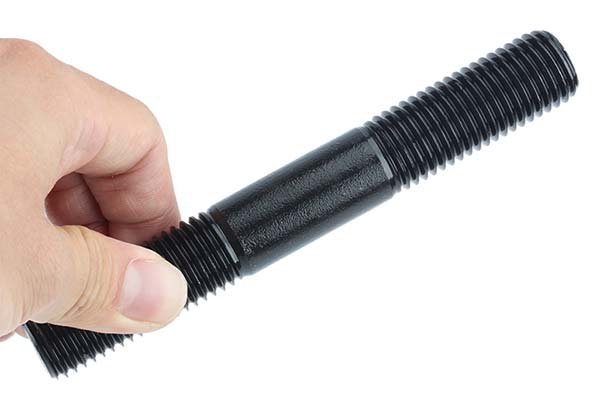
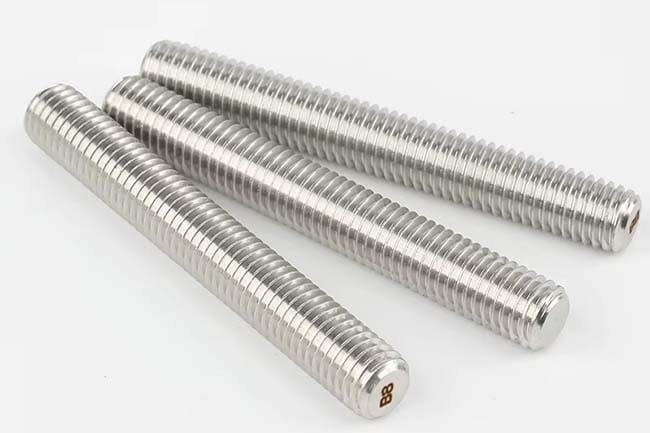
Stainless stud bolts are commonly used on flanges where corrosion resistance is required in addition to pressure-joint performance. Typical applications can include chemical-process piping, water-treatment systems, pumps, valves, pressure vessels, and equipment installed in corrosive industrial atmospheres.
The bolting material should still be evaluated as part of the complete flange joint. Flange metallurgy, gasket type, nut material, washer use, surface finish, installation method, preload, operating temperature, pressure cycles, and external corrosion conditions can all influence joint performance.
For pumps and valves, this system approach is particularly useful because bolting may connect several different materials within one assembly. Buyers can review pump and valve fastener applications when preparing specifications for equipment manufacturers or replacement programs.
Do Not Assume B8M Is a Universal Marine Bolting Grade
One of the most common oversimplifications in stainless fastener selection is the statement that “316 stainless is marine grade.” Although the B8M material family generally offers improved resistance to many chloride-containing environments compared with the B8 family, this does not make B8M universally suitable for continuous seawater exposure.
Warm seawater, stagnant water, deposits, tight crevices, high chloride concentration, chemical additions, and restricted oxygen conditions can create severe localized corrosion. Applications involving direct seawater immersion should therefore be evaluated from actual engineering data rather than a generic material nickname.
This distinction also matters for marine-adjacent equipment. A bolt exposed to coastal air is operating in a different environment from a fastener submerged in seawater, and both differ from a bolt inside a chemical system containing concentrated chlorides. The phrase “marine environment” alone is not precise enough for critical material selection.
Matching Nuts and Complete Bolting Assemblies
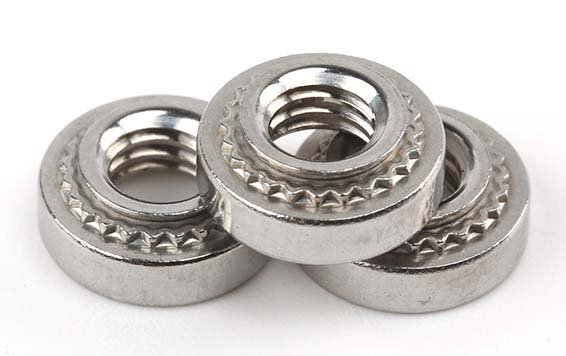
The mating nut should be specified together with the ASTM A193 stud. Stainless stud bolts are normally purchased as part of an assembly, and the nut must meet the material, mechanical, dimensional, thread, and project requirements applicable to that assembly.
Buyers should avoid assuming that any stainless nut of the correct diameter is automatically compatible with B8 or B8M studs. Nut grade, dimensional standard, thread series, proof requirements, surface condition, and marking should be confirmed from the project documents.
The specification should also identify whether washers are required. When different metals are combined, the complete material combination should be reviewed for corrosion behavior rather than considering the stud in isolation.
Thread Galling and Installation of Austenitic Stainless Bolting
Austenitic stainless steel threaded assemblies can be susceptible to galling during tightening. Galling can damage mating thread surfaces and can interfere with achieving the intended assembly condition. The risk depends on material combination, thread quality, surface condition, lubrication, installation speed, and tightening procedure.
For this reason, lubrication and surface treatment should not be added casually after a torque procedure has been established. Changing the lubricant or coating can change friction, which can change the relationship between applied torque and resulting bolt preload.
Critical flange assemblies should use an installation procedure that reflects the actual stud, nut, coating, and lubricant condition. Generic torque tables from unrelated fastener conditions should not automatically be applied to a stainless steel assembly.
Surface Condition, Passivation and Coatings
Stainless steel is often selected specifically to avoid relying on a sacrificial corrosion-protection coating, but surface condition can still matter. Manufacturing contamination, handling, machining, cleaning, and finishing can affect the final condition of the fastener surface.
If passivation, cleaning, a low-friction coating, or another surface process is required, the process and applicable specification should be stated in the purchase order. Buyers should also confirm whether the surface process changes thread fit or assembly friction.
Salt-spray testing may be specified for particular coatings or quality plans, but a laboratory salt-spray result should not be presented as a direct prediction of service life for B8 or B8M bolting. Real flange environments can differ substantially from accelerated laboratory conditions.
Manufacturing Control for B8 and B8M Fasteners
Manufacturing control begins with correct raw material identification. Because B8 and B8M stainless fasteners can look similar after production, material traceability is more dependable than visual identification.
A typical manufacturing route may include raw material verification, cutting, forming or machining, solution treatment or controlled strain-hardening operations where applicable, threading, cleaning or surface processing, marking, dimensional inspection, mechanical testing, and final packaging. The exact sequence depends on grade, class, fastener design, diameter, and project requirements.
For custom studs, bolts, or drawing-based components, manufacturing feasibility should be reviewed before production. Features such as reduced shanks, special thread lengths, nonstandard diameters, cross-drilled holes, machined ends, special marking, or unusual tolerances can influence the production and inspection route.
Quality Inspection for ASTM A193 B8 and B8M
Quality inspection should verify the requirements that actually apply to the ordered fastener. Depending on the project, this may include material identification, chemical analysis, tensile testing, hardness testing, thread inspection, dimensional inspection, surface verification, metallographic examination, coating-thickness measurement, nondestructive inspection, and traceability records.
Flybear supports standard and drawing-based custom fastener manufacturing for industrial applications. Depending on the order specification, applicable capabilities can include material and grade selection support, thread and dimensional inspection, hardness and tensile testing, torque testing, spectrometer analysis, metallographic examination, coating-thickness measurement, salt-spray testing, magnetic-particle inspection, optical sorting, and preparation of specified inspection and traceability documentation.
These capabilities should not be interpreted as a mandatory test package for every B8 or B8M order. Testing methods, sampling frequency, acceptance criteria, reporting requirements, and third-party inspection should be defined by the applicable standard and purchase specification.
Buyers preparing an inspection plan can review the available fastener quality inspection capabilities before defining the required inspection and documentation package.
Material Certificates and Traceability
When material grade or class is critical, buyers should define the required certificate and traceability level in the RFQ. The documentation package may need to identify heat or lot information and report the chemical or mechanical results required by the project.
This is particularly important when B8 and B8M, or multiple classes of the same grade, are supplied to one project. Clear marking, segregation, and packaging identification help reduce the risk of material mixing during warehouse handling or installation.
B8 vs B8M Selection by Application
| Application | Selection Consideration |
|---|---|
| General chemical equipment | Review process chemistry before selecting B8 or B8M |
| Water-treatment systems | Evaluate chloride concentration, treatment chemicals and temperature |
| Pumps and valves | Consider process fluid, external atmosphere, pressure, class and mating materials |
| Coastal installations | B8M may be considered where improved chloride resistance is required, subject to actual exposure |
| Direct seawater exposure | Requires specific engineering review; B8M should not be assumed universally suitable |
| High-strength flange requirements | Verify class and size-dependent mechanical requirements in addition to corrosion resistance |
| Custom pressure equipment | Confirm drawing, grade, class, thread, dimensions, inspection and documentation |
Common Purchasing Mistakes
A common mistake is specifying only “316 stainless stud bolts” when the engineering requirement is ASTM A193 B8M with a particular class. This leaves important mechanical and manufacturing requirements undefined.
Another mistake is treating B8M as an automatic upgrade from B8. A substitution may change material cost, availability, compatibility with other components, and project compliance. Any grade change should be reviewed through the appropriate engineering approval process.
Buyers also sometimes omit class and diameter when requesting Class 2 material. Because work hardening and applicable mechanical requirements are related to product condition and size, these details should be part of the initial inquiry.
Finally, corrosion decisions should not be made from industry names alone. “Chemical,” “marine,” and “water service” describe extremely broad environments. Fluid composition and actual operating conditions provide a better basis for material review.
Procurement Checklist for ASTM A193 B8 vs B8M
A complete inquiry allows the manufacturer to evaluate the requested fastener without making unnecessary assumptions. For B8 or B8M bolting, provide:
- ASTM grade: specify B8 or B8M.
- Class: state the required class rather than ordering by alloy family alone.
- Standard edition: identify the ASTM A193/A193M edition required by the contract.
- Diameter and length: provide exact stud or bolt dimensions.
- Thread specification: identify thread series, pitch, class, thread length, and any drawing-specific requirements.
- Operating fluid: provide relevant fluid chemistry instead of only the industry name.
- Chloride exposure: identify known chloride conditions and whether exposure is internal, external, intermittent, or continuous.
- Temperature and pressure: provide the design conditions or applicable piping class.
- Mating nuts: specify the required nut material, grade, dimensions, and thread.
- Surface condition: identify passivation, coating, lubrication, or special cleaning requirements.
- Inspection: define required mechanical, material, dimensional, thread, surface, or nondestructive inspection.
- Certificates: state MTC, traceability, inspection report, and third-party requirements.
- Custom requirements: provide a drawing when dimensions or features differ from standard products.
Frequently Asked Questions About ASTM A193 B8 vs B8M
Is ASTM A193 B8 the same as 304 stainless steel?
B8 is commonly associated with the Type 304 austenitic stainless steel family, but buyers should order using the exact ASTM grade and class required by the project. A generic 304 material description does not communicate every finished-fastener requirement of ASTM A193.
Is B8M the same as 316 stainless steel?
B8M is associated with the Type 316 stainless steel family. The ASTM A193 designation also defines requirements for bolting products, so “316 stainless” should not automatically replace a B8M grade and class designation on a technical purchase order.
Is B8M always more corrosion resistant than B8?
B8M is commonly selected for improved resistance in many chloride-containing environments because of its alloy composition. Actual corrosion performance still depends on the specific chemical and operating environment, so no universal service-life or corrosion-resistance guarantee should be assumed.
Can B8M be used in seawater?
Suitability must be evaluated for the actual seawater conditions. B8M should not be described as universally suitable for continuous seawater exposure because temperature, chloride content, deposits, crevices, flow, and other factors can affect localized corrosion.
Why is the class important for B8 and B8M studs?
The class identifies an important part of the required material and mechanical condition. Strain-hardened material has different mechanical requirements from solution-treated material, and applicable properties may also depend on fastener size.
Can B8 replace B8M or B8M replace B8?
Not automatically. The specified material should be maintained unless the governing project procedure permits substitution and the change has been technically reviewed.
Final Selection Guidance
The best way to evaluate ASTM A193 B8 vs B8M is to separate corrosion requirements from mechanical requirements and then review them together. B8 is commonly associated with the 304 stainless family and can serve many corrosion-resistant pressure-bolting applications. B8M is associated with the 316 family and is frequently considered when improved resistance to chloride-related localized corrosion is required.
The alloy family alone is not enough to release an order. Buyers should also verify class, diameter, strain-hardened or solution-treated condition, thread, mating nuts, surface treatment, fluid chemistry, chloride exposure, temperature, pressure class, inspection scope, and documentation requirements.
For a technical quotation, send your fastener requirements with the fluid chemistry, chloride exposure, operating temperature, pressure class, B8 or B8M grade and class, fastener size, thread specification, drawing if applicable, and required certificate level. A complete inquiry allows the manufacturing and quality teams to review material selection, production requirements, and inspection scope before production.
Follow Me!