Understanding DIN EN 14399 Preloaded Structural Bolting Assemblies
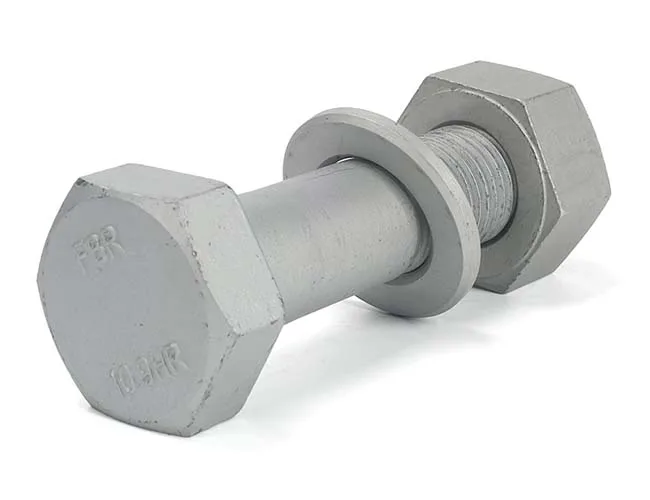
DIN EN 14399 high-strength structural bolts are designed as part of matched bolt, nut, and washer assemblies for preloaded joints in steel and other metallic structures. Unlike ordinary structural fasteners, their performance depends not only on the strength of each component but also on the behavior of the complete assembly during tightening. For engineers, steel fabricators, contractors, and sourcing managers, this makes correct system selection, controlled manufacturing, and reliable assembly testing essential.
What DIN EN 14399 Covers
DIN EN 14399 is a multi-part European standard series for high-strength structural bolting assemblies suitable for preloading. Part 1 establishes the general requirements, while Part 2 addresses suitability for preloading and the functional testing used to confirm that the required preload can be achieved with an appropriate tightening procedure. Other parts define specific bolt systems, washers, countersunk assemblies, direct tension indicators, and calibrated preload products.
The standard treats the fasteners as an assembly rather than as unrelated individual parts. This is important because thread geometry, surface finish, lubrication, coating thickness, nut behavior, washer hardness, and production tolerances all influence the relationship between applied tightening effort and the preload developed in the bolt. A bolt with the correct property class may still produce unreliable field results when combined with an unsuitable nut, washer, finish, or lubrication condition.
DIN EN 14399 High-Strength Structural Bolts: HR, HV, and HRC
The DIN EN 14399 series includes several recognized assembly systems. System HR hexagon bolt and nut assemblies are covered by Part 3, while System HV hexagon bolt and nut assemblies are covered by Part 4. Both are established solutions for preloaded structural joints, but they use different approaches to achieve the required assembly ductility.
System HR assemblies are available in thread sizes from M12 to M36 and may use property class combinations including 8.8/8, 8.8/10, and 10.9/10, depending on the applicable specification. Their ductility is obtained mainly through plastic elongation of the bolt. System HV assemblies are generally specified in property class 10.9/10 within the same M12 to M36 size range, with ductility obtained mainly through controlled deformation of the engaged threads.
HR and HV components should not be treated as automatically interchangeable. Bolt length, nut geometry, grip requirements, tightening behavior, and project specifications may differ between the two systems.
Part 10 covers System HRC bolt and nut assemblies with calibrated preload. HRC assemblies are specified in property class 10.9/10 for thread sizes from M12 to M36. The most suitable system depends on the structural design, approved installation procedure, site equipment, inspection plan, and regional project requirements.
Related Washers, Countersunk Bolts, and Tension Indicators
Washers are functional components in a preloaded bolting assembly. DIN EN 14399-5 covers plain washers, while DIN EN 14399-6 covers plain chamfered washers. Correct washer selection provides the intended bearing condition under the rotating component and supports consistent tightening behavior.
Part 7 covers countersunk head bolt and nut assemblies for System HR, which may be selected where a flush surface is required. Part 8 addresses System HV fit bolt assemblies for applications requiring the corresponding fit-bolt configuration.
Part 9 covers direct tension indicators and related face washers for HR or HV assemblies. Direct tension indicators, sometimes called load-indicating washers, use compressible protrusions to provide a mechanical indication that the required preload has been reached. These options allow designers and contractors to match the assembly configuration to joint geometry, access limitations, installation equipment, and inspection requirements.
Why Preload Performance Depends on Manufacturing Control
Preloaded structural bolts must develop sufficient and repeatable clamp force without premature failure or unacceptable overtightening. Variations in heat treatment, thread dimensions, surface roughness, coating, lubrication, or nut friction can significantly change tightening behavior. Procurement should therefore focus on verified assembly performance rather than purchasing bolts, nuts, and washers only by nominal size and property class.
A controlled manufacturing route should address raw material identification, forging or forming, heat treatment, thread production, dimensional tolerances, mechanical properties, surface treatment, and final assembly condition. Each production stage can affect whether the complete assembly performs as intended during installation.
When coatings are required, the supplier must consider their effect on thread fit and friction. Hot-dip galvanized and other coated assemblies should be evaluated as complete systems, using compatible bolts, nuts, and washers with tightening characteristics appropriate to the delivered surface condition.
Key Quality Checks for DIN EN 14399 Assemblies
Quality control for DIN EN 14399 assemblies should include dimensional inspection, thread gauging, verification of mechanical properties, hardness checks where applicable, surface and coating inspection, component marking review, and assembly-level suitability testing.
The suitability test described in Part 2 is especially important because it evaluates whether the complete assembly can achieve the required preload while maintaining an adequate margin against overtightening and failure. Testing only the tensile strength of the bolt does not fully demonstrate the functional behavior of the bolt, nut, washer, coating, and lubrication combination.
Packaging and labeling are also important. They help preserve the identity and condition of matched components during transport, storage, and installation. Buyers should request documentation that clearly identifies the assembly system, property class, dimensions, finish, production lot, and declared tightening information required by the project.
Components from different suppliers, production lots, coatings, or lubrication conditions should not be assumed to provide the same tightening result unless their compatibility and assembly performance have been confirmed.
Applications in Steel Construction
DIN EN 14399 preloaded bolting assemblies are used in steel bridges, industrial buildings, stadiums, towers, energy structures, heavy equipment frames, and other critical steelwork. They are particularly relevant where the connection design requires controlled clamping force, resistance to slip at the faying surfaces, reliable behavior under fluctuating loads, or improved performance in joints exposed to vibration.
The fastener standard alone does not define the complete joint design or installation process. Engineers and contractors must also follow the project drawings, structural design rules, execution specification, approved tightening method, and inspection requirements.
Grip length, bolt length, hole type, contact surface condition, washer arrangement, tightening access, and installation sequence should all be reviewed before an order is released. The selected assembly must be compatible with both the structural design and the practical conditions at the construction site.
Procurement Checklist for Structural Bolting Projects
A clear purchasing inquiry should identify the required system as HR, HV, HRC, countersunk, fit bolt, or an assembly using direct tension indicators. It should also state the bolt diameter and length, property class combination, grip range, head style, nut type, washer arrangement, finish or coating, quantity, marking requirements, inspection documents, packaging method, and applicable edition of each standard.
Sourcing managers should also confirm whether the project requires particular tightening characteristics, installation instructions, traceability records, inspection certificates, or special packaging. Providing these requirements at the quotation stage allows the manufacturer to review feasibility and avoid misunderstandings after production begins.
For custom or project-specific requirements, technical drawings should define all nonstandard dimensions and acceptance criteria. Buyers can contact Flybear Fastener to review structural bolting specifications, manufacturing feasibility, component matching, finish requirements, and quality-control expectations before production.
Building Reliable Preloaded Structural Joints
Successful use of DIN EN 14399 products begins with selecting the correct assembly system and continues through controlled production, suitable testing, protected delivery, proper storage, and disciplined site installation. The main purchasing lesson is simple: a preloaded structural bolt is not an isolated commodity. It is one part of a performance-based assembly whose components must work together.
By specifying the complete assembly, confirming its tightening characteristics, and aligning the order with the structural design and execution requirements, buyers can obtain more predictable preload and reduce installation uncertainty. For critical steelwork, this assembly-focused approach supports clearer inspection, more reliable procurement, and more consistent structural connection performance.
Follow Me!