Incoloy 909 Fasteners for Low-Expansion High-Temperature Assemblies
Incoloy 909 fasteners are designed for applications where high mechanical strength must be combined with controlled thermal expansion. Also identified as Alloy 909 or UNS N19909, this nickel-iron-cobalt alloy is precipitation hardenable and is used in specialized thermal assemblies where dimensional stability during heating and cooling can be as important as room-temperature bolt strength.
For high-temperature machinery, turbine-related equipment, precision housings, and thermally cycled joints, however, low expansion does not automatically guarantee stable bolt preload. Buyers must consider the temperature range, heat-treatment condition, bolt and nut dimensions, clamped materials, thermal gradients, oxidation environment, joint stiffness, and governing equipment specification. An RFQ that says only “Incoloy 909 bolt” leaves several critical engineering variables undefined.
What Are Incoloy 909 Fasteners?
Incoloy 909, designated UNS N19909, is a nickel-iron-cobalt alloy developed to combine relatively low thermal expansion with high strength. Niobium and titanium additions allow the alloy to be strengthened through precipitation-hardening heat treatment.
This distinguishes Alloy 909 from conventional stainless steels and from many nickel-chromium alloys selected primarily for corrosion or oxidation resistance. Its main engineering value is the combination of controlled thermal expansion and mechanical performance in applications where changes in component dimensions can affect clearances, alignment, or joint loading.
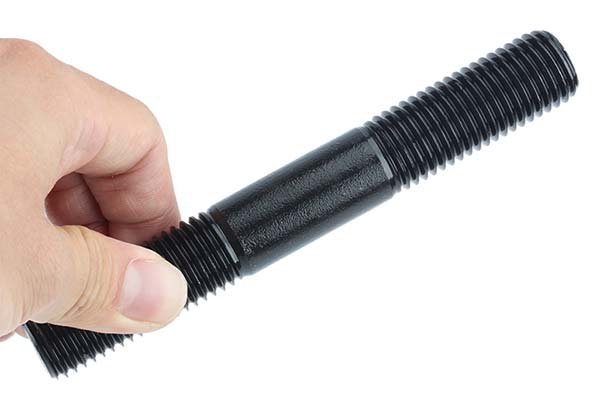
Fastener forms can include bolts, flange bolts, nuts, studs, and drawing-based threaded components. Flybear currently lists Incoloy 909 bolts and nuts within its nickel-based alloy fastener range.
Why Low Expansion Matters in a Bolted Joint
All metallic components change dimensions as temperature changes. In a bolted assembly, what matters is not only the expansion of the bolt but also the expansion of the components being clamped.
If the fastener and joint materials have significantly different thermal-expansion behavior, heating can change bolt tension and joint compression. Depending on the material combination and geometry, preload may rise or fall. Cooling creates another change, and repeated cycles can contribute to variations in clamp load over the life of the assembly.
A low expansion alloy fastener can therefore be useful when the joint has been designed around controlled thermal growth. Potential benefits include more predictable dimensional relationships and reduced differential thermal movement compared with a higher-expansion fastener material in the same engineered assembly.
That does not mean Incoloy 909 automatically produces constant preload. The designer must still evaluate:
- Fastener and clamped-component thermal expansion
- Operating and design temperature range
- Effective bolt grip length
- Bolt and joint stiffness
- Temperature gradients across the assembly
- Initial preload
- Heating and cooling frequency
- Long-duration stress relaxation or creep where applicable
Incoloy 909 Bolts Depend on Precipitation Hardening
Incoloy 909 bolts should not be specified by alloy name alone because heat-treatment condition is fundamental to their mechanical performance. The alloy obtains high strength through a controlled precipitation-hardening process involving its niobium- and titanium-containing metallurgy.
Manufacturing sequence therefore matters. Depending on product geometry and the governing specification, operations such as forging, machining, thread production, solution treatment, aging, and final dimensional inspection must be coordinated to deliver the specified finished condition.
Changing heat treatment can affect strength, hardness, ductility, dimensional stability, and other properties. Buyers should not copy a tensile or hardness figure from a generic alloy datasheet and use it as the acceptance requirement for every bolt size or manufacturing route.
The purchase specification should identify the required material specification and condition together with any required mechanical tests or heat-treatment documentation.
Low Thermal Expansion Does Not Mean Zero Thermal Expansion
The phrase “low expansion alloy” can be misleading if interpreted too literally. Incoloy 909 still changes dimensions when temperature changes, and its thermal-expansion behavior is not represented by one constant number across every possible temperature range.
For precision thermal assemblies, engineers should use material data applicable to the actual operating interval rather than a single room-temperature coefficient taken from a comparison chart. The expansion behavior of the mating structure must be evaluated over the same interval.
This becomes especially important when a fastener passes through several different materials. A bolt may clamp a nickel-alloy housing to carbon steel, stainless steel, titanium, or another high-temperature alloy. Each component can respond differently during heating.
Where Incoloy 909 Fasteners May Be Considered
High-Temperature Machinery
Machinery containing close clearances or dimensionally sensitive components may benefit from a low-expansion fastening material. The fastener can be evaluated together with the casing, flange, shaft support, or structural component to manage thermal movement.
Thermally Cycled Assemblies
Repeated startup and shutdown cycles can make differential expansion an important design consideration. Alloy 909 may be evaluated where limiting thermal dimensional changes helps the engineered joint maintain alignment or loading behavior.
Turbine and Specialized Rotating Equipment
Alloy 909 has been used in applications associated with turbine casings, shrouds, vanes, shafts, and related high-strength components. Fasteners in similar equipment may be considered when the applicable material specification and thermal design call for UNS N19909.
Specialized Flange Connections
High temperature flange bolts sometimes require both mechanical strength and controlled thermal growth. However, an Incoloy 909 flange bolt should never be selected solely because a flange operates at elevated temperature. Pressure class, governing code, flange material, gasket system, allowable bolting materials, temperature-dependent properties, and project specifications remain controlling.
For industrial pressure and thermal applications, buyers can also review Flybear’s petrochemical fastener solutions.
Oxidation Resistance Requires Separate Attention
Incoloy 909 should not be treated like a conventional chromium-rich high-temperature corrosion-resistant alloy. Its alloy design prioritizes low thermal expansion and high strength, and it contains very little chromium compared with many familiar heat-resistant nickel alloys.
This means oxidation behavior must be evaluated independently. A fastener that performs well mechanically and dimensionally may still require environmental control, a specified protective surface system, or another material strategy when prolonged exposure to a strongly oxidizing high-temperature atmosphere is expected.
The gas environment also matters. Air, combustion products, reducing atmospheres, sulfur-containing environments, and other process conditions can produce different material behavior.
For buyers comparing alternative special alloys, Flybear’s high-temperature and corrosion-resistant alloy fastener category provides a broader view of available fastener material families.
Incoloy 909 Is Not a Universal Corrosion-Resistant Nickel Alloy
The Incoloy name covers multiple alloy families with very different chemistries and intended uses. Buyers should therefore avoid assuming that Alloy 909 provides the same aqueous corrosion behavior as chromium-bearing nickel alloys developed specifically for aggressive chemical or marine environments.
If the assembly is exposed to acids, chlorides, seawater, H2S, condensates, or other corrosive media, corrosion compatibility needs its own engineering review. Low thermal expansion does not establish resistance to those environments.
Likewise, do not claim sour-service compliance from the UNS N19909 designation alone. Material condition, hardness, environmental limits, governing sour-service standard, and project-specific acceptance requirements must all be checked.
Bolts and Incoloy 909 Nuts Must Be Reviewed Together
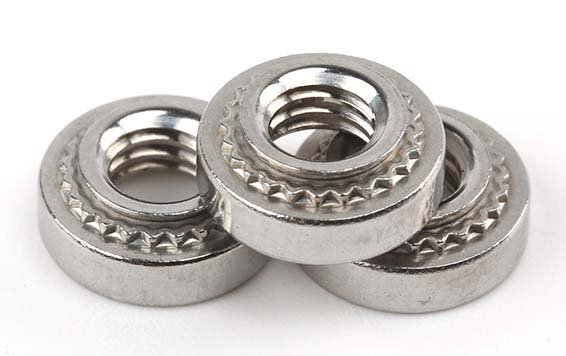
Incoloy 909 nuts can be used where the joint specification requires compatible low-expansion alloy components, but the material designation is only one part of compatibility.
The complete bolting package should define:
- Bolt or stud material and condition
- Nut material and condition
- Nominal diameter
- Thread series and pitch
- Thread tolerance or class of fit
- Required thread engagement
- Washer material where applicable
- Mechanical requirements
- Operating temperature range
- Surface treatment or lubricant
A nut that physically threads onto an Alloy 909 bolt is not necessarily a mechanically or thermally compatible choice. The nut must support the required thread loading and remain suitable under the same service conditions.
Surface Treatment and Lubrication Need Temperature Review
A surface treatment that works at room temperature may not remain suitable throughout a high-temperature operating cycle. Lubricants, anti-seize compounds, plating systems, and other coatings can have their own temperature and atmospheric limitations.
This is particularly important for threaded assemblies because lubricant directly influences friction. Changing the lubrication system can change the preload generated by a given installation torque.
For controlled joints, buyers should specify the actual surface condition and installation procedure rather than requesting “coated Incoloy 909 bolts” without defining the coating system.
Manufacturing Considerations for Incoloy 909 Fasteners
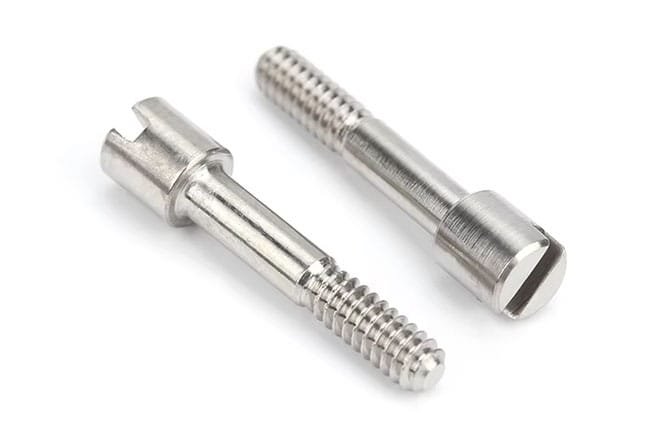
Depending on geometry, quantity, size, and specification, Alloy 909 fasteners may require hot forging, CNC machining, and appropriate thread-production processes. Custom flange bolts, special nuts, studs, reduced-shank bolts, and drawing-controlled components should be reviewed for manufacturability before material processing begins.
Critical drawing features can include:
- Under-head geometry
- Flange diameter and thickness
- Shoulder dimensions
- Thread runout
- Grip length
- Concentricity
- Special radii
- Surface-finish requirements
The manufacturing route must remain consistent with the required final material condition. A machining or thermal-processing change should not be made without considering its effect on the specified properties.
Inspection and Traceability for UNS N19909 Fasteners
Special-alloy fasteners should be verified through controlled documentation and inspection rather than appearance. Depending on the purchase specification, an Incoloy 909 order may require material certification, heat or lot traceability, chemical verification, mechanical testing, dimensional inspection, thread gauging, and heat-treatment records.
For drawing-based components, dimensional verification is particularly important because the low-expansion alloy cannot compensate for an incorrectly manufactured grip length, flange geometry, thread, or tolerance.
Flybear’s fastener quality inspection capabilities include dimensional and thread inspection, material verification, hardness and tensile testing, metallographic examination, and other order-defined checks where applicable. The required inspection scope should be agreed before production.
Common Incoloy 909 Fastener Procurement Mistakes
- Ordering only “Incoloy 909 bolts”: material condition, mechanical requirements, dimensions, and thread specifications remain incomplete.
- Assuming low expansion means constant preload: the complete joint and all clamped materials determine thermal-load changes.
- Using one thermal-expansion value for every temperature: use material data applicable to the actual operating range.
- Treating 909 as a conventional corrosion-resistant Incoloy grade: oxidation and chemical-corrosion suitability require separate verification.
- Ignoring precipitation-hardening condition: heat treatment is fundamental to the alloy’s mechanical performance.
- Copying generic datasheet strength onto a finished fastener: size, product form, processing condition, and specification must be considered.
- Ignoring the nut and joint materials: thread capacity and differential thermal expansion must be reviewed as a system.
- Changing coatings or lubricants without reviewing preload: friction changes can alter installation results.
What to Include in an Incoloy 909 Fastener RFQ
For accurate technical review and quotation, provide:
- UNS N19909 or the exact required material designation
- Applicable material specification and revision if project-controlled
- Required material and heat-treatment condition
- Product type: bolt, flange bolt, stud, nut, or custom threaded component
- Diameter, thread, pitch, length, and grip length
- Dimensional standard or controlled drawing and revision
- Required mechanical properties
- Minimum and maximum assembly temperature
- Thermal-cycle frequency and exposure duration where relevant
- Materials of the clamped components
- Atmosphere, process fluid, or corrosion exposure
- Coating, lubricant, or surface-finish requirement
- Quantity
- Required material certificates, heat-treatment records, inspection, and traceability documentation
FAQ: Incoloy 909 Fasteners
Why are Incoloy 909 fasteners used in thermal assemblies?
Alloy 909 combines low thermal expansion with precipitation-hardened strength. This can make it useful in engineered assemblies where controlling dimensional changes during heating and cooling is important. The entire joint still needs thermal and mechanical analysis.
Is Incoloy 909 a high-temperature corrosion-resistant alloy?
Its primary advantages are controlled thermal expansion and high strength. Because its chemistry differs substantially from chromium-rich corrosion- and oxidation-resistant nickel alloys, hot oxidation and chemical-corrosion suitability should be evaluated separately for the actual environment.
Can Incoloy 909 flange bolts replace conventional high-temperature bolting?
Not automatically. The governing equipment code, permitted bolting specification, flange design, material condition, required properties, temperature range, and joint materials must support the substitution.
Does an Incoloy 909 bolt require a matching Incoloy 909 nut?
That depends on the engineered joint and governing specification. The nut must have compatible threads, mechanical capacity, material condition, thermal behavior, and environmental suitability. Do not select the nut solely because its nominal diameter matches the bolt.
Send the Temperature Range and Joint Materials for Review
When requesting Incoloy 909 fasteners, send Flybear the exact material specification and condition, product type, diameter and thread, operating temperature range, thermal-cycle requirements, clamped materials, drawing, surface condition, quantity, and required inspection documentation. Use the Flybear contact page to submit your RFQ. Defining the complete thermal assembly allows the fastener requirement to be reviewed around dimensional stability, mechanical load, material condition, and environmental exposure rather than selecting UNS N19909 from the alloy name alone.
Follow Me!