Nickel Alloy Fasteners for Sour Gas and H2S Service: What Buyers Must Verify
Nickel alloy fasteners for sour gas cannot be selected by alloy name alone. In H2S-containing oil and gas environments, the suitability of a bolt, stud, nut, or threaded component can depend on the exact alloy designation, material condition, hardness, strength level, product form, service temperature, H2S partial pressure, chloride content, pH, applied stress, and governing project specification. A material marketed as a corrosion-resistant nickel alloy is therefore not automatically acceptable for sour service.
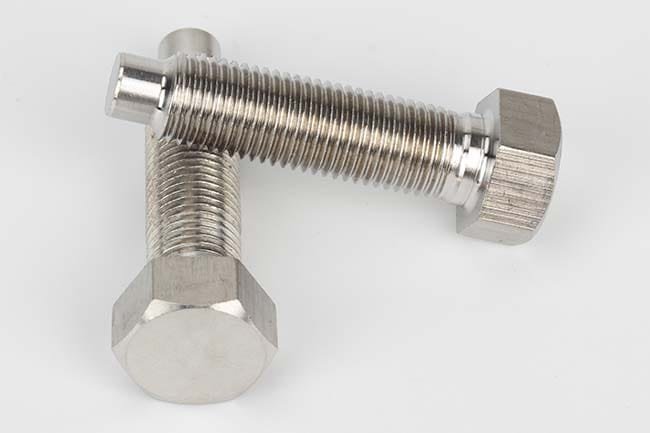
This distinction is especially important for valves, wellhead equipment, gas-processing systems, compressors, pumps, pressure-containing equipment, and other assemblies where environmentally assisted cracking can create a sudden failure risk. Buyers should identify the applicable sour-service standard first and then verify the complete fastener condition against that standard rather than requesting generic “NACE fasteners.”
Why Nickel Alloy Fasteners Are Considered for Sour Gas
Wet H2S service can create cracking mechanisms that differ from ordinary atmospheric or aqueous corrosion. Depending on the alloy family and environment, engineering review may need to consider sulfide stress cracking, stress corrosion cracking, hydrogen-related damage, and galvanically induced hydrogen stress cracking.
Nickel-based corrosion-resistant alloys are frequently evaluated where carbon steel, low-alloy steel, or conventional stainless steel does not provide the required environmental margin. Their higher alloy content can provide useful resistance in severe combinations of H2S, chlorides, temperature, process chemicals, and mechanical loading.
However, the phrase H2S resistant fasteners should not be interpreted as a universal material category. Two fasteners made from the same nominal nickel alloy can have different sour-service acceptability if their heat treatment, hardness, cold work, product condition, or manufacturing history differs.
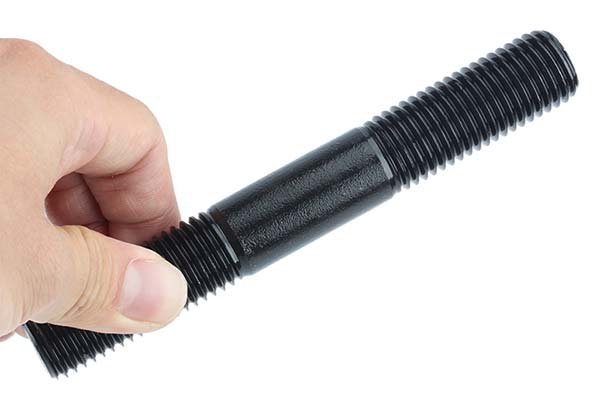
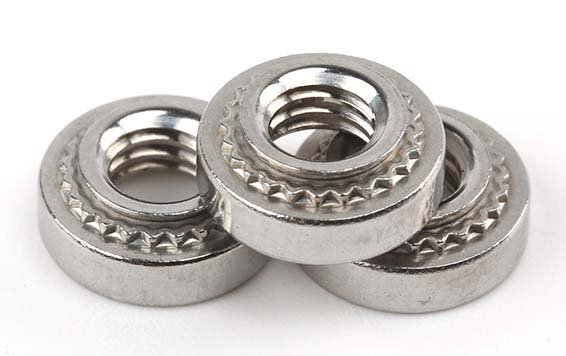
Flybear’s nickel-based alloy fastener range includes several special-alloy product families. The final alloy and condition should always be specified from the governing project documents.
ISO 15156 / NACE MR0175: Start with the Actual Scope
NACE MR0175 and ISO 15156 are commonly referenced together when selecting metallic materials for H2S-containing oil and natural gas production environments. ISO 15156 establishes principles and material requirements intended to reduce H2S-related cracking risks in oil and gas production and natural-gas treatment equipment.
For corrosion-resistant alloys and other special alloys, ISO 15156-3 is particularly relevant. It addresses material selection and qualification in relation to cracking mechanisms such as sulfide stress cracking, stress corrosion cracking, and galvanically induced hydrogen stress cracking.
An important limitation is that ISO 15156-3 is focused on cracking resistance. It does not establish that an alloy is protected from every form of general corrosion, pitting, or crevice corrosion. A nickel alloy can therefore meet the sour-service cracking requirements for a defined condition while still requiring a separate corrosion assessment for the process fluid.
Oil and Gas Production Is Not the Same as Refining
Another common sourcing error is applying “MR0175” automatically to every refinery or petrochemical sour environment. ISO 15156 is primarily directed toward oil and gas production and natural-gas treatment. Sour petroleum refining and related processing can instead involve ISO 17945 / MR0103 requirements.
The purchase order should therefore identify the exact sour-service standard rather than simply stating “NACE compliant.” The correct standard depends on the equipment, process location, service environment, owner specification, and governing design documents.
For wider refinery, gas-processing, valve, and pressure-equipment applications, buyers can review Flybear’s petrochemical fastener solutions.
Nickel Alloy Name Alone Does Not Establish Sour-Service Suitability
Nickel-alloy families can include solid-solution alloys, precipitation-hardened alloys, nickel-copper alloys, nickel-chromium-molybdenum alloys, and other compositions. Their behavior in wet H2S service is not identical.
A sour-service specification may control several variables at once:
- Exact UNS or other material designation
- Solution-annealed, cold-worked, aged, or other permitted condition
- Maximum hardness where applicable
- Strength or cold-work limits where applicable
- Temperature range
- H2S partial pressure
- Chloride concentration
- In-situ pH
- Elemental sulfur or other process constituents
- Specific component application or product form
For that reason, a certificate showing the correct alloy chemistry does not by itself prove that the finished bolt is acceptable for the intended sour environment.
Material Condition and Hardness Must Be Verified
Material condition is one of the most important variables in sour service nickel alloy bolts. Cold working and precipitation hardening can increase strength, but increasing strength or hardness can also affect susceptibility to environmentally assisted cracking in some alloy and service combinations.
The permitted condition is alloy-specific. Some materials may be accepted only in defined annealed or solution-treated conditions, while others can be used in controlled cold-worked or aged conditions within specified limits. Buyers should therefore avoid imposing a single generic hardness value on every nickel alloy.
The proper workflow is to identify the alloy and product condition first, then confirm the corresponding requirements in the governing sour-service standard and project specification.
This same principle applies to alloy-steel sour-service bolting. Flybear’s guide to ASTM A193 B7 vs B7M explains why controlled hardness is relevant to many H2S bolting specifications, while also showing why a grade designation alone is not proof of universal sour-service suitability.
Environmental Limits Must Match the Real Process
Material qualification is meaningful only when compared with the actual environment. “Contains H2S” is not enough information for a technical fastener review.
H2S Partial Pressure
The amount of H2S in the gas phase and the operating pressure can influence the severity of the sour environment. Buyers should provide H2S partial pressure directly when it is available rather than expecting the fastener supplier to calculate it from incomplete process information.
Temperature
Temperature can change both cracking susceptibility and general corrosion behavior. The maximum operating temperature, minimum operating temperature, startup and shutdown conditions, and any abnormal design condition should be considered where the project specification requires them.
pH and Chlorides
Produced water and process fluids can contain chlorides while also having an acidic pH. These variables can influence the environmental limits for certain corrosion-resistant alloys. They can also increase pitting and crevice-corrosion concerns independently of sour-service cracking qualification.
Elemental Sulfur and Other Constituents
Elemental sulfur, CO2, organic acids, brines, oxygen ingress, and other process constituents can change the corrosion environment. If these are relevant to the project, include them in the material-selection review rather than using H2S concentration as the only environmental parameter.
Cracking Resistance and Corrosion Resistance Are Different Requirements
This distinction is especially important for nickel alloys. ISO 15156 qualification addresses defined H2S-related cracking concerns, but a fastener also needs acceptable resistance to the actual corrosion mechanisms present in the equipment.
For example, threaded fasteners naturally contain crevice locations at thread roots, beneath bolt heads, under nuts and washers, and inside blind tapped holes. Chloride-containing fluids can become trapped in these locations. An alloy that satisfies a sour-service cracking requirement can still require evaluation for localized corrosion in these geometries.
Material selection should therefore answer two separate questions:
- Is the alloy and its condition acceptable for H2S-related cracking under the specified sour-service standard?
- Is the alloy sufficiently corrosion resistant to the actual process chemistry and joint geometry?
Both answers must be satisfactory before the material can be considered technically suitable.
Product Standard and Material Standard Are Not the Same Thing
A nickel-alloy bar specification can establish chemistry, heat treatment, and mechanical requirements for raw material, but it may not fully define a finished threaded fastener.
A complete purchase specification may also need to define:
- Bolt, screw, stud, or nut product standard
- Nominal diameter and length
- Thread series, pitch, and tolerance
- Head or nut geometry
- Required finished mechanical properties
- Material condition after manufacturing
- Surface condition or coating
- Marking and traceability
- Required inspection and certificates
This is particularly important for custom corrosion resistant bolting machined from nickel-alloy bar. Correct raw material does not automatically prove that the final part satisfies all product and sour-service requirements.
Manufacturing Can Affect the Final Material Condition
Special-alloy fasteners may be produced by CNC machining, hot forging, and appropriate thread-production methods depending on the alloy, size, geometry, quantity, and specification. Manufacturing operations can change the material condition and therefore need to be reviewed against the sour-service requirements.
Cold working can increase hardness and strength. Heat treatment can change microstructure and mechanical condition. Machining can leave localized residual stresses, while subsequent finishing or coating can introduce additional process variables.
For custom fasteners, the engineering drawing should identify the final required condition rather than defining only the incoming raw material. When hardness limits apply, verification should be performed on the relevant finished condition according to the ordered inspection requirements.
Coatings Do Not Make an Unsuitable Alloy NACE Compliant
A protective coating can provide useful atmospheric or process corrosion protection, modify thread friction, or support installation. It does not automatically make a base material acceptable for H2S-related cracking.
The coating process itself may also require review. Surface preparation, electrochemical processing, heat exposure, coating thickness, and lubrication can affect the finished fastener or the installation procedure.
When coating is required, specify:
- Exact coating or surface-treatment system
- Applicable coating standard
- Thickness where controlled
- Thread allowance
- Lubrication condition
- Any project restrictions on processing
- Required coating inspection
Do not add a coating late in procurement without confirming compatibility with the selected alloy, sour-service requirement, and tightening procedure.
Inspection and Documentation for NACE Fasteners
NACE fasteners is a useful purchasing phrase, but acceptance should be tied to measurable requirements. Depending on the project, buyers may request material certification, alloy verification, hardness testing, mechanical testing, dimensional inspection, thread gauging, heat-treatment records, and full heat or lot traceability.
For special nickel alloys, positive material identification or spectrometer analysis may be useful when alloy mix-up presents significant risk. Hardness testing is particularly important where the applicable sour-service requirement establishes a maximum or condition-specific limit.
Flybear’s fastener quality inspection capabilities include material analysis, hardness and tensile testing, dimensional inspection, thread gauging, metallographic examination, and other order-defined checks. The exact test methods, sampling plan, acceptance criteria, reports, and witness requirements should be stated in the RFQ.
Common Sour-Gas Fastener Procurement Mistakes
- Ordering “NACE bolts” without naming the standard: MR0175/ISO 15156 and refinery sour-service requirements do not have identical scopes.
- Specifying only the nickel alloy: condition, hardness, strength, and environmental limits can still remain undefined.
- Assuming a CRA is immune to H2S cracking: suitability depends on alloy-specific restrictions and service conditions.
- Ignoring pH, chlorides, and temperature: H2S content alone does not completely define the environment.
- Confusing cracking resistance with general corrosion resistance: both requirements must be evaluated.
- Using a raw-material certificate as complete fastener approval: finished-product condition and dimensions still require verification.
- Changing heat treatment or cold work without review: the change can affect hardness and sour-service qualification.
- Adding a coating and assuming it creates compliance: coating cannot compensate for a nonconforming base material condition.
What to Include in a Nickel Alloy Sour-Service RFQ
For an accurate quotation and technical review, provide:
- Governing sour-service standard and required edition
- Equipment and application: production, gas treatment, refinery, valve, pump, compressor, or other service
- Exact alloy designation and applicable material specification
- Required solution-treated, annealed, cold-worked, aged, or other material condition
- Hardness or strength restrictions specified by the project
- H2S partial pressure or available H2S/process data
- Operating and design temperature
- pH and chloride concentration where applicable
- Elemental sulfur or other significant process constituents
- Product type, diameter, thread, length, and dimensional standard or drawing
- Nut and washer requirements
- Coating, finish, and lubricant
- Quantity
- Required material certificates, PMI, hardness testing, inspection reports, and traceability
FAQ: Nickel Alloy Fasteners for Sour Gas
Are all nickel alloy bolts suitable for H2S service?
No. Nickel content or general corrosion resistance does not establish sour-service suitability. The exact alloy, material condition, hardness, strength, environmental limits, component type, and governing standard must be verified.
Does NACE compliance mean a nickel alloy cannot corrode?
No. Sour-service standards focus on specified cracking mechanisms. General corrosion, pitting, crevice corrosion, erosion-corrosion, and other damage mechanisms can require a separate process-corrosion review.
Is ISO 15156 always the correct standard for a refinery?
Not necessarily. ISO 15156 is directed primarily toward H2S-containing oil and gas production and natural-gas treatment environments. Sour petroleum refining and related processing may instead use ISO 17945 / MR0103 or an owner-specific refinery material specification.
What is the most important information to send with a sour-service fastener inquiry?
Send the governing sour-service standard, exact alloy, material condition and hardness requirements, H2S/environmental data, temperature, product dimensions and thread, coating, and required certification. Without these details, a supplier cannot reliably determine whether the requested fastener condition matches the project.
Send the Sour-Service Standard and Environment for Review
When requesting nickel alloy fasteners for sour gas, send Flybear the governing H2S-service specification, actual environmental conditions, exact alloy designation, material condition, hardness or strength requirements, product standard, size and thread, coating, quantity, and required certificates. Use the Flybear contact page to submit drawings and project requirements. Flybear can review standard and custom nickel-alloy fasteners where supported by the product range, with CNC machining, hot forging, thread production, material verification, dimensional inspection, and order-defined documentation considered according to the specified product and project requirements.
Follow Me!