316 vs 316L Stainless Steel Fasteners for Welded and Corrosive Assemblies
316 vs 316L stainless steel fasteners are often compared as if 316L were simply a more corrosion-resistant version of 316. The actual difference is more specific. Both belong to the molybdenum-bearing austenitic stainless steel family, while 316L has a lower carbon limit. That lower carbon content becomes particularly important when the material is exposed to welding or another thermal cycle that could increase susceptibility to sensitization and intergranular corrosion.
For industrial buyers, the correct choice therefore depends on more than whether the equipment is described as “corrosive.” You need to know whether the fastener itself or an attached component will be welded, whether the assembly will experience relevant fabrication heat, which fastener standard governs the product, what mechanical properties are required, and what chemicals, chlorides, moisture, or marine exposure will be present in service.
316 vs 316L Stainless Steel Fasteners: The Main Difference
Type 316 and Type 316L are closely related chromium-nickel-molybdenum austenitic stainless steels. Under commonly used ASTM chemistry designations, Type 316 corresponds to UNS S31600 and Type 316L to UNS S31603. The “L” identifies the lower-carbon version.
In common ASTM material definitions, 316 permits a higher maximum carbon content than 316L. A frequently encountered limit is 0.08% maximum carbon for 316 and 0.03% maximum for 316L, although buyers should always use the chemical requirements of the actual governing material or fastener specification rather than applying a generic chemistry table to every product.
| Selection Factor | 316 Stainless Steel Fasteners | 316L Stainless Steel Fasteners |
|---|---|---|
| UNS designation | S31600 | S31603 |
| Material family | Austenitic Cr-Ni-Mo stainless steel | Austenitic Cr-Ni-Mo stainless steel |
| Key distinction | Standard carbon version | Lower-carbon version |
| Welding-related selection | May be suitable depending on fabrication method, section, heat exposure and specification | Often preferred when welded material must reduce susceptibility to sensitization and intergranular corrosion |
| General corrosion selection | Evaluate against actual process and environmental conditions | Evaluate against the same actual process and environmental conditions; “L” is not a universal corrosion upgrade |
| Mechanical requirements | Must follow the applicable finished-fastener standard and condition | Must follow the applicable finished-fastener standard and condition |
| Automatic substitution? | No. Verify chemistry, mechanical properties, product specification, documentation and project approval. | |
Why Low Carbon Matters in Welded Stainless Assemblies
The main engineering reason for specifying 316L is its reduced susceptibility to sensitization during welding or similar thermal exposure. When conventional austenitic stainless steel is exposed to an unfavorable thermal cycle, chromium carbides can precipitate at grain boundaries. This can reduce the chromium available in nearby regions and make those areas more vulnerable to intergranular corrosion in certain environments.
Lower carbon reduces the amount of carbon available for this carbide formation. For welded process equipment, fabricated brackets, weld studs, weld nuts, welded attachments, and components that may later require weld repair, this can be an important material-selection advantage.
However, procurement teams should distinguish between a welded assembly and a fastener installed in a welded assembly. If a removable bolt is installed only after all welding has been completed and the bolt itself never experiences the weld thermal cycle, choosing 316L solely because nearby structural components were welded may not provide the expected benefit. The governing material specification and service environment still need to justify the choice.
Flybear’s stainless steel fastener range includes standard and drawing-based products that can be reviewed according to the required grade, product form and assembly conditions.
Does 316L Have Better Corrosion Resistance Than 316?
Not automatically. The general corrosion and localized corrosion behavior of 316 and 316L is strongly influenced by their chromium, nickel and molybdenum content, surface condition, fabrication history, temperature, chloride concentration, chemistry of the process fluid, crevices, deposits and interaction with other materials.
Because 316 and 316L belong to closely related alloy families, their corrosion behavior in unaffected base material can be similar. The important advantage of 316L appears when lower carbon helps preserve resistance to intergranular corrosion after relevant welding exposure.
This means “316L is always more corrosion resistant” is too broad a procurement rule. In an unwelded fastener operating in a particular chloride environment, changing only the carbon designation may not solve pitting, crevice corrosion or stress-corrosion concerns. A more highly alloyed stainless, duplex stainless, nickel alloy, titanium or another material may need to be evaluated depending on the actual service conditions.
For seawater, coastal and offshore projects, buyers can review Flybear’s marine and offshore fastener solutions, while still verifying the final material against the project’s corrosion assessment.
When 316L Bolts and Fasteners Make the Most Sense
Fasteners or Components That Will Be Welded
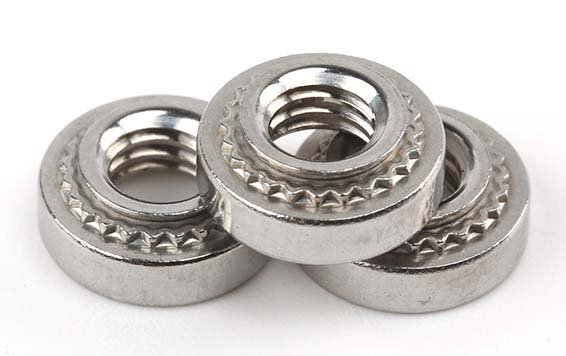
316L is particularly relevant for products that become part of a welded fabrication. Examples can include weld studs, weld nuts, threaded attachments, fabricated fastener assemblies and custom machined components that subsequently receive welding operations.
The purchaser should tell the fastener manufacturer that welding will occur. Simply ordering “316 stainless” without describing the downstream fabrication route can hide a material requirement that becomes important only after the part leaves the fastener factory.
Equipment That May Receive Future Weld Repair
Chemical-processing equipment, piping components, tanks, valve assemblies and industrial machinery may undergo modification or repair during their service life. If a threaded component or attached fastener will potentially be exposed to welding during maintenance, a low-carbon material may be considered during the initial design.
Projects That Explicitly Require UNS S31603 or 316L
If a drawing, bill of materials, pressure-equipment specification or customer standard calls for UNS S31603 or 316L, procurement should preserve that designation. Do not simplify the order to “316 SS” on the assumption that both grades are close enough.
When Standard 316 May Still Be the Correct Choice
316 remains a widely used corrosion-resistant stainless material. If the fastener will not be welded or thermally exposed in a way that creates a sensitization concern, and the governing fastener specification, corrosion assessment and mechanical design call for 316, changing to 316L may offer no meaningful project advantage.
This is especially important when a product standard establishes different mechanical-property requirements or manufacturing conditions. The raw-material grade alone does not determine finished-fastener performance. Cold working, forming route, product diameter, thread manufacture and the applicable specification can all influence the required properties.
The purchasing decision should therefore be “which grade satisfies this fastener specification and this service condition?” rather than “which stainless grade sounds more premium?”
Fastener Standards Can Change the 316 vs 316L Decision
ASTM F593 and F594
ASTM F593 covers specified stainless steel bolts, hex cap screws and studs for general corrosion-resistant service within its scope, while ASTM F594 covers stainless steel nuts. Current versions of these standards include both 316 and 316L within the same general austenitic alloy group.
That does not mean an RFQ should simply state “Group 2 stainless.” The purchaser should specify the alloy required when the distinction matters, together with the mechanical condition, size, thread, dimensional standard and any supplementary requirements.
ASTM A193 Pressure Bolting
Pressure bolting requires another level of caution. ASTM A193 uses its own stainless bolting grade and class system for high-temperature, high-pressure and other special-purpose applications. A designation such as ASTM A193 B8M is not interchangeable with a generic request for a 316L bolt merely because the materials are related to the 316 stainless family.
For piping, valves and flange applications, use the exact ASTM grade and class required by the project. Buyers can review ASTM A193 B8 vs B8M for the pressure-bolting selection context.
ISO A4 Is Not Automatically a 316L Certificate
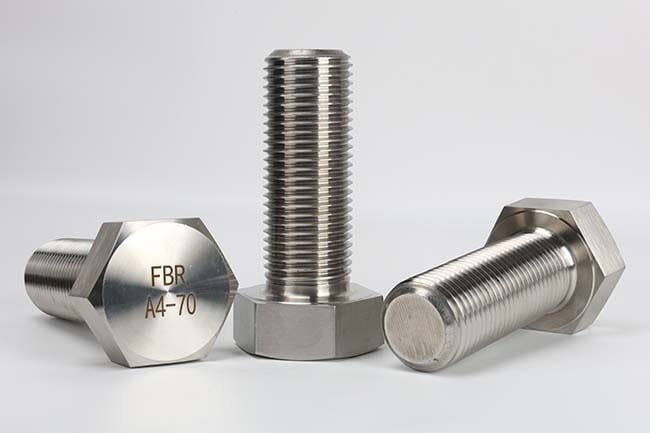
ISO 3506 designations such as A4-70 and A4-80 combine a stainless fastener grade with a mechanical property class. They should not be treated as direct substitutes for UNS S31603. If a project specifically requires low-carbon 316L chemistry, the purchase documents should state the required material designation and applicable standard rather than relying only on “A4.”
316/316L Dual Certification: What Buyers Should Check
Industrial stainless material is sometimes supplied as 316/316L dual-certified material. In principle, this means the reported material satisfies the applicable requirements for both designations under the stated material specification.
Dual certification can be useful, but the words “316/316L” on a quotation are not enough by themselves for a controlled project. Buyers should review the material certificate and confirm the specification, grade designation, heat identity, reported chemistry and any applicable mechanical requirements.
For finished fasteners, material certification also does not replace finished-product verification. A bolt can start from conforming material and still need mechanical, dimensional, thread, marking or processing checks under the governing fastener specification.
Strength: Do Not Assume 316 Is Stronger or 316L Is Weaker
Lower carbon can affect the material-property framework used by some standards, but it is unsafe to apply a universal strength ranking to finished fasteners. Stainless bolt strength depends heavily on the applicable standard, material condition, cold work, diameter and manufacturing route.
A cold-worked 316L fastener produced to a defined property requirement can have very different mechanical characteristics from solution-annealed bar of the same nominal alloy. Likewise, a pressure-bolting product manufactured to ASTM A193 follows a different property system from a general-purpose bolt produced to ASTM F593 or an ISO 3506 property class.
Therefore, do not specify a 316 or 316L bolt by alloy alone when tensile, proof, yield or hardness requirements matter. State the finished-fastener standard and required property designation.
Manufacturing Considerations for Low Carbon Stainless Fasteners
Depending on size, geometry, quantity and required properties, 316 and 316L fasteners may be produced through cold heading, hot forging, CNC machining, thread rolling or other suitable processes. The selected route should support the material, dimensional and mechanical requirements of the order.
Cold forming can change the mechanical condition of austenitic stainless steel, while machining is often selected for lower-volume or complex drawing-based parts. Thread rolling can provide a formed thread where applicable, while some custom geometries require machined threads. Buyers should specify the finished requirement rather than prescribing a manufacturing method unless the drawing or standard makes that method mandatory.
Surface condition also needs attention. Passivation, cleaning, polishing or other specified finishing operations can be important for corrosion-sensitive equipment, but no surface process converts an unsuitable alloy into a universally corrosion-resistant material.
Galling, Threads and Mating Components
Both 316 and 316L are austenitic stainless steels, so threaded assemblies may require attention to galling. Material pairing, thread quality, surface finish, lubrication, tightening speed and installation procedure can influence the tendency for adhesive thread damage or seizure.
Changing from 316 to 316L should not be viewed as a galling-control strategy by itself. If the joint is torque-controlled, any lubricant or anti-seize compound should also be considered in the tightening procedure because changing thread friction can alter the preload produced by a given torque.
Mating nuts, washers, tapped components and connected materials should be included in the engineering review. Dissimilar-metal contact can also affect corrosion behavior when an electrolyte is present.
Inspection and Traceability for 316 and 316L Fasteners
Where the low-carbon distinction is important, material identity and traceability deserve specific attention. An RFQ may require material certificates, heat or lot traceability, chemical verification, mechanical testing, dimensional inspection, thread gauging and surface-condition inspection depending on the governing specification and project requirements.
For 316L in particular, buyers should ensure that the required grade is demonstrated by the agreed documentation rather than inferred from a generic “316 stainless steel” description. For dual-certified material, the certification should clearly support the requested designation.
Flybear can support order-defined inspection and material verification for applicable fastener projects. Buyers can review the fastener quality inspection page when defining dimensional, thread, material and documentation requirements.
Common Procurement Mistakes with 316 and 316L Fasteners
- Assuming 316L is always better: its low-carbon advantage is particularly relevant to welding-related sensitization, not every corrosion mechanism.
- Ordering “316 stainless” when the drawing says 316L: the low-carbon requirement can be lost during sourcing.
- Choosing 316L because the surrounding structure is welded: first determine whether the fastener itself experiences the relevant thermal cycle.
- Treating A4 as automatic proof of 316L: ISO fastener designations and UNS alloy designations are not one-to-one purchasing substitutes.
- Treating ASTM A193 B8M as a generic 316L callout: pressure bolting must follow its specified ASTM grade and class.
- Ignoring finished-fastener strength: alloy chemistry alone does not define the mechanical properties of the bolt or stud.
- Assuming dual certification without checking documents: verify the material certificate and applicable product specification.
- Ignoring galling and installation friction: stainless threaded assemblies require appropriate installation planning.
What to Include in a 316 or 316L Fastener RFQ
For an accurate technical review and quotation, provide:
- Required material designation: 316, 316L, UNS S31600, UNS S31603 or the exact project callout
- Applicable fastener or material standard and edition if project-controlled
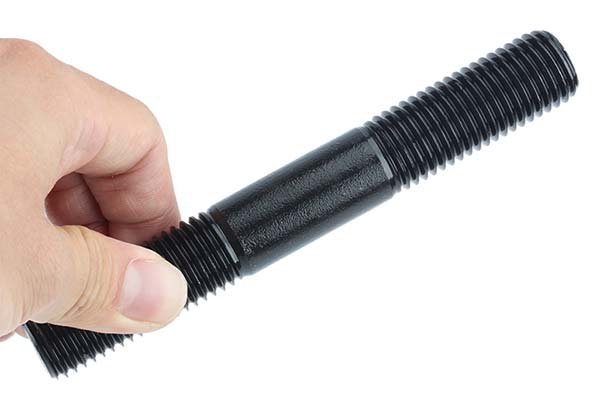
- Product type: bolt, screw, stud, threaded rod, nut, washer, weld stud or custom component
- Required mechanical grade, class or property class
- Diameter, thread system, pitch, length and thread length
- Dimensional standard or controlled drawing and revision
- Whether the fastener or attached component will be welded
- Any fabrication heat exposure or post-fabrication processing
- Operating environment, including relevant chlorides, chemicals, moisture or marine exposure
- Mating materials and mating fastener requirements
- Surface finish, passivation, lubrication or cleanliness requirement
- Quantity and required packaging or material segregation
- Material certificates, traceability, testing and inspection documentation
FAQ: 316 vs 316L Stainless Steel Fasteners
Is 316L more corrosion resistant than 316?
Not in every situation. Their general alloy families are closely related. The important advantage of 316L is its lower carbon content, which can reduce susceptibility to sensitization and intergranular corrosion after relevant welding exposure. Other corrosion mechanisms still depend on the complete environment.
Should every welded stainless assembly use 316L bolts?
No. Determine whether the fastener itself will be welded or exposed to the relevant thermal cycle. A removable bolt installed after fabrication may not gain the same welding-related benefit from a low-carbon grade. The project material specification remains controlling.
Is A4-80 the same as a 316L bolt?
No. A4-80 is an ISO 3506 stainless fastener designation containing a material grade and property class. It should not automatically be converted to UNS S31603 or a generic 316L designation without checking the applicable chemistry and project specification.
Can 316/316L dual-certified material be used for fasteners?
It may be acceptable when the material and finished fastener satisfy all requirements of the governing specifications and the purchaser accepts the certification basis. Review the actual material certificate, mechanical requirements, fastener standard and project documentation rather than relying only on a commercial dual-grade description.
Send the Material Designation and Welding Conditions for Review
When requesting 316 or 316L fasteners, send Flybear the exact material designation, applicable fastener standard, product form, diameter, thread, length, required mechanical properties, welding exposure, service environment, finish, quantity and certificate requirements. Use the Flybear contact page to submit drawings and specifications. Defining both the fabrication route and corrosion environment allows the fastener requirement to be reviewed without assuming that 316L is always necessary—or that standard 316 is automatically sufficient.
Follow Me!