NF E 25-411 Lock Nuts: Complete Guide to Dual Slotted Self-Locking Nuts
NF E 25-411 lock nuts are high-performance all-metal self-locking fasteners designed to prevent loosening under vibration and dynamic loads. Unlike nylon insert lock nuts, these dual slotted lock nuts rely entirely on metal deformation to create prevailing torque, making them suitable for high-temperature and heavy-duty applications.
In modern fastening systems, choosing the right locking mechanism is critical. At Flybear Fastener, we often recommend NF E 25-411 dual slotted lock nuts for industrial environments where durability and reusability are essential.
What Are NF E 25-411 Lock Nuts?
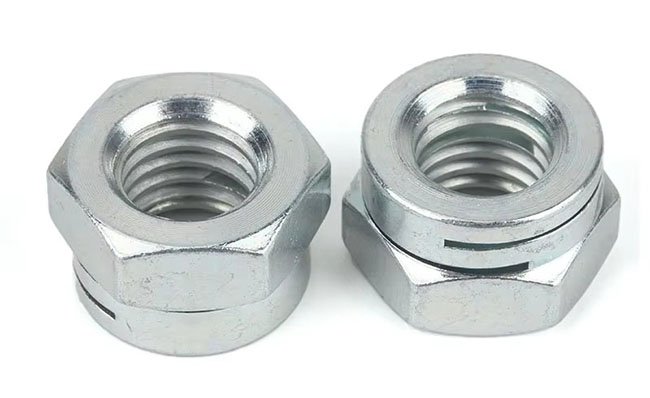
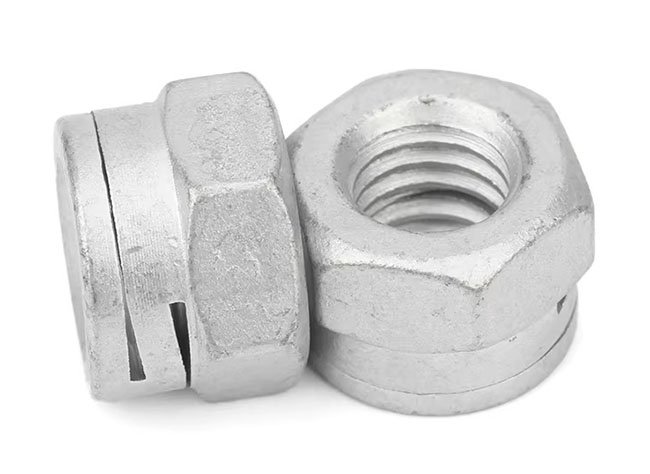
NF E 25-411 lock nuts are hexagonal nuts manufactured according to the French standard NF E 25-411. They feature two slots (dual slotted design) at the top of the nut, which create controlled deformation when tightened onto a bolt. This deformation generates a consistent prevailing torque that resists loosening.
These nuts are also known as:
- Dual slotted lock nuts
- All-metal prevailing torque nuts
- Slotted self-locking hex nuts
How Dual Slotted Lock Nuts Work
The locking mechanism of NF E 25-411 nuts is based on elastic deformation. When the nut is threaded onto a bolt, the slotted sections compress slightly, creating friction against the threads.
This design ensures:
- Consistent locking performance
- No reliance on non-metal components
- Resistance to high temperatures
Unlike nylon insert nuts, these lock nuts maintain performance even in extreme environments.
NF E 25-411 Lock Nuts for High Vibration Applications
NF E 25-411 lock nuts are widely used in applications where vibration is a major concern. Their all-metal construction ensures long-term reliability without degradation.
Common applications include:
- Railway systems
- Heavy machinery
- Industrial equipment
- Automotive assemblies
Because of their robust design, they are often preferred over traditional locking methods in safety-critical systems.
Materials Used in NF E 25-411 Lock Nuts
Material selection plays a crucial role in performance. The most common materials include:
- Carbon Steel – Cost-effective and strong, suitable for general industrial use

- Stainless Steel (A2-70 / A4-80) – Excellent corrosion resistance for outdoor and marine environments
- Alloy Steel – Higher strength for demanding applications
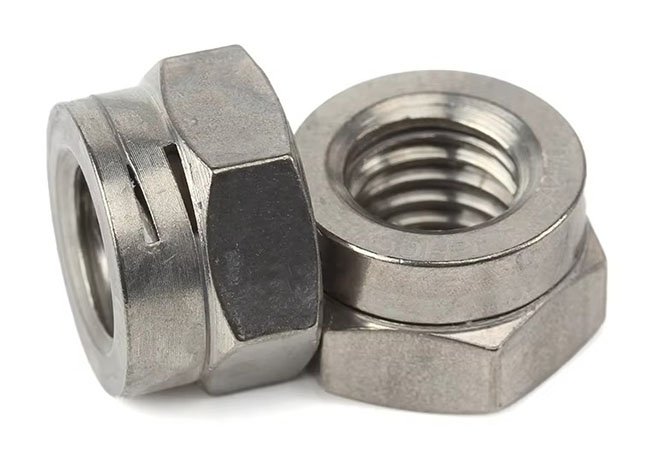
Stainless steel lock nuts are particularly popular in environments exposed to moisture or chemicals.
Surface Finishes and Coatings
Surface treatment enhances corrosion resistance and durability. Common finishes include:
- Zinc Plated (Blue White Zinc)
- Hot-Dip Galvanized (HDG)
- Black Oxide
- Zinc Flake Coating
Zinc plating is the most widely used due to its balance between cost and corrosion protection.
Sizes and Thread Specifications
NF E 25-411 lock nuts are available in metric thread sizes, typically ranging from M3 to M39. The threads conform to ISO metric standards, ensuring compatibility with standard bolts and studs.
Common sizes include:
- M6
- M8
- M10
- M12
- M16
- M20
These sizes cover the majority of industrial fastening requirements.
Advantages Over Other Locking Nuts
Compared to other locking solutions, NF E 25-411 dual slotted lock nuts offer several advantages:
- No temperature limitations (unlike nylon insert nuts)
- Reusable without significant performance loss
- Reliable locking under vibration
- No additional components required
This makes them a preferred choice in demanding engineering applications.
Selection Guide for NF E 25-411 Lock Nuts
When selecting these lock nuts, consider the following factors:
- Load requirements
- Environmental conditions
- Material compatibility
- Corrosion resistance needs
- Thread size and fit
For corrosive environments, stainless steel is recommended, while carbon steel is suitable for general industrial use.
Conclusion
NF E 25-411 lock nuts are a reliable and efficient solution for preventing loosening in threaded connections. Their dual slotted design and all-metal construction make them ideal for high-performance applications.
Understanding their materials, sizes, and applications will help you select the right fastening solution for your project.
Follow Me!