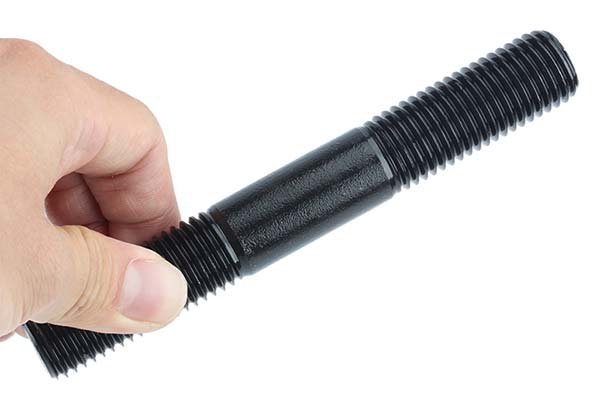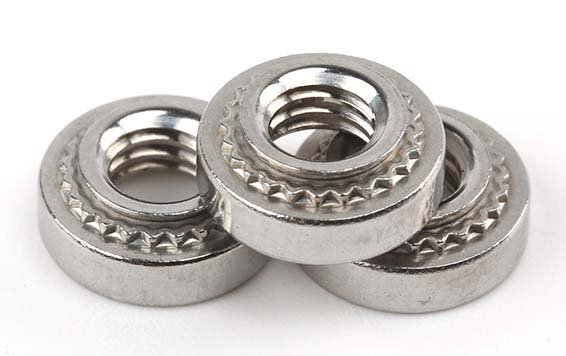
DIN 976 Threaded Rod Grade Selection for Machinery and Structural Assemblies
DIN 976 threaded rod grade selection requires more than choosing a diameter and length. Threaded rods and all-thread studs are used in machinery, supports, equipment frames, installation systems, and industrial structures where the correct combination of material, property class, thread, coating, nut compatibility, and application load is essential. A threaded rod that fits mechanically may still be unsuitable if the material grade, strength requirement, corrosion protection, or installation condition does not match the design.
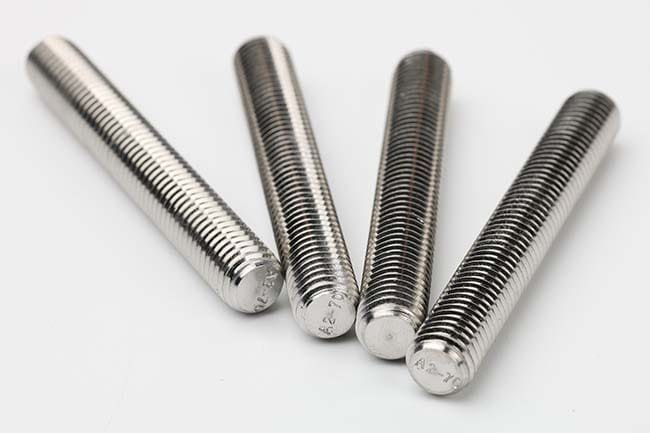
For OEM engineers, distributors, and procurement teams, the RFQ should clearly define whether the requirement is a DIN 976 threaded rod, a current ISO-related product, or a drawing-controlled custom stud. The specification should also identify the required steel grade or property class, nominal diameter, thread pitch, length, surface treatment, nut requirement, inspection scope, and required certificates.
Flybear supplies carbon- and alloy-steel fasteners including studs and threaded rods. Buyers can review the carbon and alloy steel fastener range when preparing a project specification.
What Is DIN 976 Threaded Rod?
DIN 976 is a widely recognized designation associated with metric threaded rods and studs. In industrial purchasing, the term is often used to describe fully threaded rod products supplied in long lengths and cut into required pieces for assembly applications.
Threaded rods differ from conventional hex bolts because the product has continuous external threading rather than a fixed head and shank geometry. This provides flexibility for applications where the fastener length, support arrangement, or installation method requires customization.
Typical applications include:
- Equipment supports and frames
- Machinery installation and alignment systems
- Pipe and cable support assemblies
- Industrial construction connections
- Mounting systems and fabricated structures
- Custom studs and tie-rod applications
However, the term “DIN 976 threaded rod” alone does not fully define the mechanical performance. Buyers must still specify the required material, property class, dimensions, finish, and acceptance requirements.
DIN 976 Threaded Rod Grade Selection Starts with the Application
The correct threaded rod grade depends on how the component will be used. A support rod carrying a static load, a machinery tie rod exposed to vibration, and an outdoor structural assembly may require completely different material and coating decisions.
| Application Requirement | Selection Consideration | Buyer Information Required |
|---|---|---|
| General machinery assembly | Carbon steel threaded rod may be suitable when strength and environment requirements are moderate | Load, thread size, length, nut requirement, and finish |
| Higher load industrial support | Higher-strength carbon or alloy steel may be evaluated | Required property class, diameter, safety requirements, and installation method |
| Outdoor structural use | Material and corrosion protection become equally important | Exposure conditions, coating system, maintenance environment, and structural requirements |
| Dynamic machinery application | Fatigue, vibration, preload retention, and thread engagement require review | Operating cycle, vibration level, joint design, and tightening procedure |
| Custom OEM assembly | Drawing-controlled production may be required | Drawing revision, tolerances, material, inspection, and documentation |
Carbon Steel DIN 976 Threaded Rod Selection
Carbon steel threaded rods are commonly selected for general industrial applications where the required mechanical performance can be achieved economically. They may be used in machinery supports, brackets, installation systems, equipment frames, and other assemblies.
However, “carbon steel” is not a complete specification. Different carbon-steel grades and processing conditions can provide different strength levels, hardness, ductility, and manufacturing characteristics.
The RFQ should identify:
- Required material standard
- Required property class or mechanical requirement
- Diameter and thread pitch
- Length
- Surface finish or coating
- Nut compatibility
- Required testing and certificates
For metric steel fasteners, property class and material requirements should be treated separately. A threaded rod’s steel chemistry does not automatically define its finished mechanical grade.
Alloy Steel Threaded Rod Selection for Higher Requirements
Alloy steel studs and threaded rods are often considered when higher strength, improved hardenability, or more demanding mechanical requirements are needed. Alloying elements can help a steel achieve required properties through heat treatment, especially in larger sections.
However, alloy steel should not be selected only because it sounds stronger. The correct choice depends on the finished product requirement, diameter, heat-treatment condition, application load, and applicable standard.
Important questions include:
- What tensile or proof requirement does the assembly need?
- Is the threaded rod loaded in tension, shear, or both?
- Does the rod experience vibration or cyclic loading?
- Is the diameter large enough that through-section properties matter?
- Does the environment require a special coating?
- What nut grade is required?
Flybear can support carbon- and alloy-steel threaded rods, studs, bolts, nuts, and related components through applicable manufacturing processes including hot forging, cold heading, CNC machining, thread rolling, heat-treatment coordination, surface treatment, and inspection.
Property Class and Material Grade Are Different Decisions
One of the most common threaded-rod purchasing mistakes is mixing material grade and strength class concepts.
The material identifies the steel type and chemical requirements. The property class identifies the mechanical performance requirements under the applicable fastener standard. These two concepts are related but not interchangeable.
For example, a buyer should not assume that:
- One steel grade automatically equals one property class
- A higher alloy content always means a higher strength class
- A threaded rod from one standard can automatically replace another standard with the same nominal strength
When converting between DIN, ISO, ASTM, or other systems, verify the complete specification rather than comparing only one mechanical value.
Thread Diameter, Pitch and Length Must Be Clearly Defined
Threaded rods are often supplied in long lengths and cut to customer requirements. Because of this, dimensional information is especially important.
A complete callout should include:
- Nominal diameter
- Metric thread pitch
- Thread tolerance where required
- Total length
- Cut-length tolerance
- Chamfer or end condition if specified
- Right-hand or left-hand thread where applicable
For example, “M16 threaded rod” is incomplete for controlled procurement. The supplier still needs to know whether the requirement is coarse pitch, fine pitch, a specific length, a special tolerance, or a drawing-controlled product.
Nut Compatibility Is Critical for Threaded Rod Assemblies
A threaded rod is only one part of the connection. The nut, washer, tapped component, or anchor system must be compatible with the selected rod.
Check:
- Thread system and pitch
- Nut material
- Nut property class
- Required engagement length
- Load direction
- Corrosion compatibility
- Coating compatibility
Using a high-strength threaded rod with an unsuitable nut can shift the failure point from the rod to the internal thread. For critical assemblies, the complete fastener system should be reviewed rather than purchasing the rod separately.
Coating Selection for DIN 976 Threaded Rods
Carbon and alloy steel threaded rods often require surface protection because the base steel may not provide sufficient corrosion resistance for outdoor or industrial environments.
Common coating considerations include:
- Zinc-based coatings
- Zinc-flake systems
- Hot-dip galvanizing where applicable
- Phosphate or black oxide finishes
- Project-specific protective systems
The coating should be selected together with thread tolerance, nut compatibility, installation requirements, and environmental exposure.
Changing coating after approval can affect:
- Thread fit
- Installation torque
- Friction behavior
- Corrosion performance
- Dimensional acceptance
For this reason, coating should be included in the original RFQ rather than treated as a late purchasing adjustment.
DIN 976 vs Other Threaded Rod Standards
Industrial buyers may encounter DIN, ISO, ASTM, and customer-specific threaded rod requirements. These standards may differ in product scope, material requirements, dimensions, testing, and acceptance criteria.
A DIN 976 threaded rod should not automatically be replaced by an ASTM or ISO product simply because the diameter and thread appear similar.
Before approving a substitution, compare:
- Standard scope
- Material grade
- Mechanical requirements
- Thread dimensions
- Length tolerance
- Surface treatment
- Inspection requirements
Buyers requiring ASTM-based products can also review Flybear’s ASTM fastener range.
Manufacturing Considerations for Threaded Rods
The manufacturing route depends on material, diameter, quantity, and required geometry.
Cold Heading and Thread Rolling
Cold heading and thread rolling can be suitable for high-volume threaded products where material condition and geometry allow. Thread rolling may provide a formed thread profile and requires control of material behavior, tooling, and dimensions.
Hot Forging
Hot forging may be considered for larger sizes or special configurations where forming requirements exceed practical cold-forming limits.
CNC Machining
CNC machining can support custom threaded components, special lengths, shoulders, reduced sections, and drawing-controlled features.
The selected manufacturing route should support the final specification. The process itself should not replace verification of the required mechanical and dimensional requirements.
Inspection Requirements for DIN 976 Threaded Rod
Inspection requirements should match the application risk and purchase specification.
Depending on the order, inspection may include:
- Dimensional inspection
- Thread gauging
- Material verification
- Hardness testing
- Tensile testing where specified
- Coating thickness measurement
- Surface condition inspection
- Certificate review and traceability
Flybear’s fastener quality inspection capabilities support order-defined dimensional, thread, material, mechanical, and coating verification where applicable.
Common DIN 976 Threaded Rod Purchasing Mistakes
- Ordering only “metric all thread rod”: diameter, pitch, material, length, and grade remain unclear.
- Assuming threaded rod strength from diameter alone: material and property requirements determine performance.
- Ignoring nut compatibility: the rod and nut must form a matched assembly.
- Choosing alloy steel without defining the required condition: heat treatment and processing affect final properties.
- Changing coating after approval: surface treatment can affect thread fit and installation.
- Equating DIN and ISO or ASTM standards without verification: standards may differ in scope and requirements.
- Ignoring application loading: static, vibration, fatigue, and structural loads require different evaluations.
- Requesting certificates without defining them: inspection scope should match the project requirement.
What to Include in a DIN 976 Threaded Rod RFQ
For an accurate quotation and technical review, provide:
- DIN 976 requirement or approved alternative standard
- Material grade or property class
- Diameter and thread pitch
- Total length
- Cut-length tolerance if required
- Nut and washer requirements
- Coating or surface treatment
- Application and loading condition
- Operating environment
- Quantity
- Drawing or specification revision
- Required material certificates, inspection reports, and traceability documents
FAQ: DIN 976 Threaded Rod Grade Selection
What is DIN 976 threaded rod used for?
DIN 976 threaded rod is commonly used for machinery supports, equipment frames, industrial construction, mounting systems, and custom fastening assemblies where a fully threaded rod configuration is required.
Is DIN 976 a strength grade?
No. DIN 976 identifies a threaded-rod product standard. The required material, mechanical properties, and property class must be specified separately according to the applicable requirements.
Are alloy steel threaded rods always better than carbon steel rods?
No. Alloy steel may provide advantages in certain high-strength or large-section applications, but the correct choice depends on the actual load, environment, size, processing, and specification.
Can I use any nut with DIN 976 threaded rod?
No. The nut must match the thread system, material requirements, strength requirements, coating, and application conditions. A compatible thread fit alone does not guarantee a suitable assembly.
Send the DIN/ISO Requirement and Complete Assembly Details
When requesting DIN 976 threaded rods, send Flybear the required standard, material or property class, diameter and pitch, length, coating, nut grade, application environment, quantity, and required certificates. Use the Flybear contact page to submit your RFQ. Defining the complete threaded-rod assembly allows the correct material, manufacturing route, surface treatment, and inspection requirements to be reviewed before production.
Follow Me!