ISO 3506 Stainless Steel Fastener Grades and Property Classes Explained
ISO 3506 stainless steel fastener grades combine material identification with mechanical property requirements, and industrial buyers need to read both parts of the designation correctly. A callout such as A2-70 or A4-80 does not describe only the alloy. The letter-number group before the hyphen identifies the stainless steel grade or material family, while the number after the hyphen identifies the property class required for the finished fastener. Treating those two elements as interchangeable is a common source of purchasing errors.
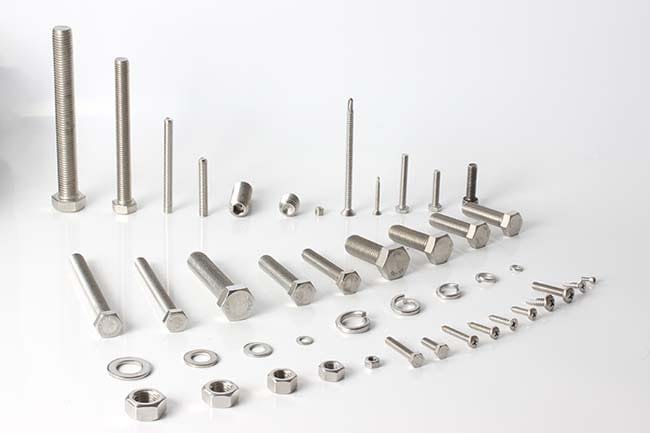
ISO 3506 is also a series rather than a single universal fastener table. Different parts address bolts, screws, studs, nuts, set screws, tapping screws, special high-temperature fasteners, material-selection guidance, and flat washers. For OEMs, distributors, marine buyers, and mechanical engineers, the correct approach is to specify the relevant ISO 3506 part together with the product type, stainless grade, property class, dimensions, thread, finish, service environment, and inspection requirements.
What Does ISO 3506 Cover?
ISO 3506 defines mechanical and physical requirements for corrosion-resistant stainless steel fasteners. The applicable part depends on the product being purchased. For tensile-loaded bolts, screws, and studs, ISO 3506-1 is the key reference. Nuts are covered by ISO 3506-2. Other parts of the series address products that behave differently in service and therefore should not be ordered by copying a bolt designation onto every component.
| ISO 3506 Part | Primary Product Scope | Buyer Relevance |
|---|---|---|
| ISO 3506-1 | Bolts, screws and studs with specified grades and property classes | Use for the mechanical-property designation of tensile-loaded externally threaded fasteners |
| ISO 3506-2 | Nuts with specified grades and property classes | Use when defining a compatible stainless nut rather than assuming any A2 or A4 nut is acceptable |
| ISO 3506-3 | Set screws and similar fasteners not under tensile stress | Uses grade and hardness-class concepts appropriate to this product type |
| ISO 3506-4 | Tapping screws | Applies product-specific grade and hardness requirements |
| ISO 3506-5 | Special fasteners, including certain nickel-alloy fasteners, for high-temperature applications | Relevant when normal ambient-temperature property classes are not an adequate selection basis |
| ISO 3506-6 | General rules for selection of stainless steels and nickel alloys for fasteners | Supports material selection and interpretation of corrosion-related considerations |
| ISO 3506-7 | Flat washers with specified grades and property classes | Allows washers to be specified as engineered components of the stainless bolted joint |
How to Read an ISO 3506 Designation
The most important purchasing rule is to separate material grade from property class. Consider the two common examples ISO 3506 A2-70 and ISO 3506 A4-80.
| Designation Element | What It Tells the Buyer | What It Does Not Tell the Buyer |
|---|---|---|
| A2 | Austenitic stainless fastener grade/material group | It does not by itself define the final mechanical property class |
| 70 | Specified mechanical property class for the finished fastener | It does not define corrosion resistance or alloy chemistry |
| A4 | A different austenitic stainless grade/material group, commonly selected where a molybdenum-bearing stainless family is required | It is not a universal guarantee for seawater, chlorides, acids, or every corrosive environment |
| 80 | A higher specified property-class level than 70 within the applicable ISO 3506 requirements | It does not mean the fastener is automatically more corrosion resistant |
This distinction prevents a frequent sourcing mistake: assuming A4-80 is simply a “better” version of A2-70. The comparison changes two variables at the same time. A2 versus A4 changes the stainless material designation, while 70 versus 80 changes the mechanical property class. Corrosion selection and strength selection therefore need to be evaluated separately and then combined into one purchase specification.
A2 and A4 Fastener Grades: Material Comes First
A2 Stainless Fasteners
A2 is a commonly specified austenitic stainless fastener grade for general industrial equipment, machinery, enclosures, food-equipment components, and many outdoor applications where the actual environment is compatible with the selected stainless family. Commercially, A2 is often compared with the general 304 stainless family, but buyers should avoid treating the two descriptions as automatically interchangeable across standards.
An ISO fastener designation controls finished-fastener requirements that a generic raw-material name does not communicate. If a drawing calls for A2-70, replacing it with a purchase description such as “304 stainless bolt” can remove the required property class and leave mechanical testing, marking, and conformity requirements unclear.
A4 Stainless Fasteners
A4 is also an austenitic stainless fastener grade and is commonly associated with a molybdenum-bearing stainless family. It is frequently considered where improved resistance to localized corrosion is needed compared with a general A2 selection. This is why A4 fasteners appear in marine-adjacent equipment, chemical systems, water-related equipment, and outdoor assemblies.
However, A4 should not be described as universally corrosion-proof or automatically suitable for continuous seawater exposure. Chloride concentration, temperature, deposits, crevices, wet-dry cycling, cleaning chemicals, dissimilar metals, and exposure duration can change corrosion performance. Buyers sourcing for coastal or offshore projects should review the actual environment and can use Flybear’s marine and offshore fastener solutions as application context rather than relying on the label “marine grade” alone.
Stainless Bolt Property Classes: What 70 and 80 Actually Change
In designations such as A2-70 and A4-80, the suffix is a property class for the finished fastener. It communicates a mechanical-performance requirement under the applicable part of ISO 3506. It is not a percentage of alloy content and it is not a corrosion rating.
The selected property class affects the manufacturing and verification route. Stainless steel can develop different mechanical properties depending on material condition and cold work. For this reason, a supplier should not assume that two fasteners made from the same general stainless alloy family will satisfy the same property class. Product diameter, geometry, manufacturing process, and the applicable standard requirements all need to be reviewed.
For custom parts, cold heading, hot forging, CNC machining, and thread rolling may be considered depending on size, geometry, and required properties. The manufacturing route must still achieve the ordered ISO 3506 designation and dimensional requirements.
ISO 3506 A2-70 vs ISO 3506 A4-80
These two designations are often compared because both are widely encountered in stainless fastener sourcing. The correct comparison is not “standard stainless versus high-strength stainless.” It is a two-axis comparison involving both material selection and mechanical property class.
| Selection Factor | ISO 3506 A2-70 | ISO 3506 A4-80 |
|---|---|---|
| Material designation | A2 austenitic stainless grade | A4 austenitic stainless grade |
| Property class | 70 | 80 |
| Corrosion decision | Evaluate suitability for the actual atmosphere, fluid, cleaning process, and mating materials | Often considered where the A4 material family is preferred for more demanding corrosion conditions, but service suitability still requires review |
| Strength decision | Verify that property class 70 meets the joint design | Verify that property class 80 is required and achievable for the ordered product and size |
| Automatic substitution? | No. Changing from A2-70 to A4-80 changes both material grade and property class and should follow the applicable engineering approval process | |
Buyers can review Flybear’s stainless steel fastener range when sourcing bolts, screws, studs, nuts, and related stainless components. The final RFQ should still identify the exact ISO designation rather than only the general material family.
ISO 3506 Is Not the Same as ASTM Stainless Bolting
International buyers often encounter ISO, ASTM, EN, and material-trade names in the same project. These systems should not be converted by a simple “A2 equals X” or “A4 equals Y” chart. A broad alloy-family comparison may help during engineering discussion, but it does not prove that two finished fasteners have identical chemical, mechanical, heat-treatment, dimensional, test, or marking requirements.
For example, ASTM A193 B8 and B8M are bolting grades used in high-temperature, high-pressure, and other special-purpose applications under a different specification system. B8 and B8M also use class requirements that should not be confused with ISO 3506 property classes. Buyers working across both systems can review ASTM A193 B8 vs B8M stainless bolting for the ASTM-specific selection logic.
If a drawing specifies ISO 3506 A4-80, do not replace it with an ASTM B8M callout solely because both are associated commercially with molybdenum-bearing austenitic stainless families. A cross-standard substitution should be reviewed against the governing design, product geometry, mechanical requirements, material requirements, and inspection documentation.
Bolts, Nuts and Washers Must Be Specified as an Assembly
A stainless bolted joint is not fully defined by the bolt grade. The mating nut needs its own applicable product and mechanical specification, and washers may also have defined requirements. ISO 3506-2 provides the framework for stainless nuts with specified grades and property classes, while ISO 3506-7 addresses flat washers within the series.
For procurement, confirm the bolt or screw designation, nut designation, thread diameter, pitch, tolerance, washer requirement, surface condition, and any anti-galling or lubrication strategy together. Austenitic stainless threaded assemblies can be susceptible to galling, so changes in surface finish or lubricant should be reviewed against the installation method rather than added after the torque procedure has been established.
Dimensions, Threads and Product Standards Are Separate Decisions
ISO 3506 establishes mechanical and material-related requirements, but the buyer must also identify the dimensional standard or drawing that defines the fastener geometry. Head style, shank length, thread length, drive, nut dimensions, and washer geometry can be governed by separate ISO or customer standards.
A complete order therefore needs more than “A4-80 M12 bolt.” It should identify the product standard or drawing, nominal diameter, pitch, length, thread tolerance where required, head or drive type, finish, and any special geometry. For custom OEM components, drawing revision and critical tolerances should be controlled before manufacturing begins.
Corrosion Resistance Depends on the Environment, Not the Label
Stainless fasteners are selected because the alloy can form a protective passive surface under suitable conditions, but no A2 or A4 designation guarantees unlimited corrosion resistance. Localized corrosion can develop where the environment becomes more aggressive, especially in shielded threads, crevices, deposits, stagnant moisture, or chloride-containing service.
Finish requirements should also be stated explicitly. Stainless fasteners may be supplied with a specified surface condition or finishing process depending on the order. Surface finishing can influence cleanliness, appearance, friction, and corrosion-related performance, but it does not turn an unsuitable base grade into a universally suitable material.
Quality Inspection and Material Verification
Inspection should confirm the requirements that actually apply to the ordered ISO 3506 fastener. Depending on the product and purchase specification, the inspection plan may address material identity, mechanical properties, dimensions, thread conformity, surface condition, marking, and traceability documentation.
For custom stainless fasteners, dimensional inspection becomes especially important because a correct material designation cannot compensate for an incorrect thread, head geometry, shoulder length, or drawing tolerance. Buyers can review Flybear’s fastener quality inspection information when defining the required inspection scope.
Flybear supports standard and custom stainless-steel fasteners and drawing-based production. Depending on the product and order requirements, applicable manufacturing routes can include cold heading, hot forging, CNC machining, and thread rolling, together with surface finishing, dimensional inspection, and material verification. The required standard, test plan, acceptance criteria, and documentation should be agreed in the order rather than assumed from a general product description.
Common Purchasing Mistakes with ISO 3506 Fasteners
- Specifying only A2 or A4: the property class remains undefined.
- Specifying only “70” or “80”: the stainless material grade remains undefined.
- Assuming A4-80 is always better than A2-70: material and mechanical requirements are different decisions.
- Treating A2 as an exact ASTM or EN equivalent: cross-standard equivalence must be verified against the finished-fastener requirements.
- Calling A4 universally seawater-proof: actual corrosion performance depends on service conditions.
- Ignoring the nut and washer: mating components need compatible specifications and dimensions.
- Omitting the dimensional standard or drawing: ISO 3506 designation alone does not fully define fastener geometry.
- Changing finish or lubricant without review: surface condition can affect installation behavior and thread performance.
What to Include in an ISO 3506 Fastener RFQ
A well-defined RFQ helps the supplier review material, manufacturing, inspection, and commercial requirements without guessing. Include:
- Applicable ISO 3506 part and required designation, such as A2-70 or A4-80
- Product type: bolt, screw, stud, nut, washer, set screw, or tapping screw
- Nominal diameter, thread pitch, length, thread length, and required tolerance
- Dimensional standard or controlled drawing and revision
- Required stainless grade and property class
- Mating fastener and washer requirements
- Service environment, including relevant chemicals, chlorides, humidity, or marine exposure
- Operating temperature where it affects material selection
- Surface condition, passivation, coating, lubrication, or cleanliness requirement
- Quantity and packaging or segregation requirements
- Required inspection, material verification, traceability, certificates, and reporting
FAQ: ISO 3506 Stainless Steel Fastener Grades
Is A2-70 the same as 304 stainless steel?
A2 is commonly associated with the general 304 austenitic stainless family, but A2-70 is an ISO fastener designation that also includes a property class. A generic 304 material callout should not automatically replace A2-70 without checking the applicable product and mechanical requirements.
Is A4-80 the same as 316 stainless steel?
A4 is commonly associated with a molybdenum-bearing austenitic stainless family often compared with 316, but A4-80 is not simply a raw-material name. The ISO fastener designation includes the required property class and finished-product requirements, so direct substitution should be verified.
Is A4-80 more corrosion resistant because it has a higher number?
No. The “80” is a mechanical property class, not a corrosion rating. Corrosion selection comes from the stainless grade and the actual service environment. A4 and A2 should be compared for material suitability separately from the 80 and 70 property-class comparison.
Does ISO 3506 cover stainless steel washers?
Yes. The ISO 3506 series now includes a dedicated part for flat washers with specified grades and property classes. Buyers should still verify the washer geometry, dimensions, mating fasteners, and complete joint requirements.
Send the Complete ISO Designation for Quotation
For an accurate quotation or technical review, send Flybear the ISO designation, product type, diameter, thread and length, property class, dimensional standard or drawing, service environment, finish, quantity, and required inspection or traceability documents. Use the Flybear contact page to submit your RFQ. Providing the complete callout at the inquiry stage helps keep material grade, mechanical property class, dimensions, and inspection requirements aligned before production.
Follow Me!