Galling and Lubrication of Nickel Alloy Fasteners
Nickel alloy fastener galling can turn a correctly specified high-performance bolt and nut into a seized assembly before the intended preload is reached. Nickel-copper, nickel-chromium-molybdenum, and other corrosion-resistant alloys are selected for demanding chemical, marine, valve, pump, and high-temperature equipment, but corrosion resistance does not automatically provide low thread friction or immunity to adhesive wear.
For industrial buyers, galling prevention should be treated as part of the complete bolted-joint specification. The bolt alloy, nut alloy, material condition, hardness, thread form, surface finish, lubricant or coating, assembly speed, tightening method, operating temperature, and process environment can all affect the risk. There is no universal lubricant or torque value that is correct for every nickel-alloy threaded assembly.
What Is Nickel Alloy Fastener Galling?
Galling is severe adhesive wear that develops when loaded metallic surfaces slide against each other. In a threaded joint, microscopic contact points on the bolt and nut threads can adhere under pressure. Continued rotation may tear material from one surface and transfer it to the other, increasing roughness and friction.
Once this process accelerates, installation torque can rise rapidly. The nut may become difficult to turn, threads can be damaged, and the assembly may eventually seize. This is sometimes described as cold welding, although the actual behavior depends on material, surface condition, load, and sliding conditions.
A critical purchasing point is that high torque during a galling event does not prove that the required bolt preload has been achieved. A substantial portion of the input torque may be consumed by abnormal thread friction rather than converted into useful clamping force.
Why Nickel Alloy Threads Can Gall
There is no single “nickel alloy galling factor.” Different alloys and conditions behave differently, but several characteristics of corrosion-resistant alloys can make threaded assemblies sensitive to surface adhesion.
- Protective surface films can be locally disrupted during sliding contact.
- High contact stress develops on thread flanks during tightening.
- Similar bolt and nut materials can have similar surface and deformation behavior.
- Rough or damaged threads create concentrated contact points.
- Rapid installation can increase frictional heating.
- Dry assembly can increase metal-to-metal contact in some material pairs.
- Incorrect thread fit can increase interference or localized loading.
- Repeated assembly can damage previously smooth thread surfaces.
The practical lesson is that anti galling fasteners are not created simply by choosing an expensive alloy. Galling performance comes from the interaction between two threaded components and the way they are manufactured and installed.
Monel Bolt Galling: Material Pairing Still Matters
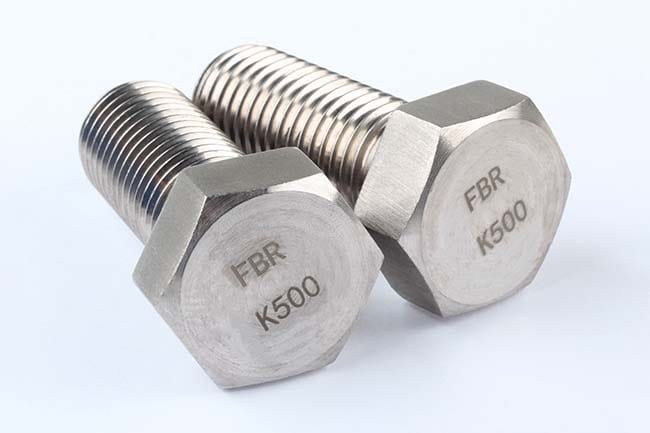
Monel bolt galling should be considered when nickel-copper bolts and nuts are assembled under substantial preload, particularly where disassembly will later be required. Alloy 400 and precipitation-hardened K-500, for example, have different mechanical conditions even though both belong to the nickel-copper family.
A K-500 bolt should not automatically be paired with any available nickel-copper nut simply because the corrosion family appears compatible. The nut must provide the required thread strength, material condition, corrosion performance, dimensional fit, and project compliance.
Where engineering specifications permit, a difference in mating-material hardness or condition may help reduce adhesive wear. However, changing one component solely to prevent galling can introduce new problems involving galvanic behavior, corrosion resistance, proof capability, temperature performance, or sour-service requirements.
Buyers working with Monel and related products can review Flybear’s nickel-based alloy fastener range when defining the bolt-and-nut combination.
Hastelloy Thread Seizure in Chemical Equipment
Hastelloy thread seizure can be particularly disruptive in valves, pumps, reactors, scrubbers, and process equipment because the fastener may have been selected specifically for an aggressive chemical environment. Substituting a standard lubricant or different nut material in the field can compromise the original corrosion-control strategy.
Nickel-chromium-molybdenum alloys such as C-276 and C-22 can be used in demanding corrosion service when specified, but the same corrosion-resistant alloy on both sides of a highly loaded threaded interface can still require an installation strategy for galling control.
The process fluid is important when selecting that strategy. A lubricant acceptable on external structural hardware may be unsuitable inside chemical-processing equipment because of contamination, chemical compatibility, purity, temperature, or process restrictions.
For special alloys used in corrosive and hot environments, buyers can also review Flybear’s high-temperature and corrosion-resistant alloy fasteners.
Thread Surface Finish Can Change Galling Risk
Thread geometry and surface quality are among the most controllable factors in galling prevention. Burrs, torn material, damaged crests, embedded particles, machining marks, and contaminated threads can increase local contact stress and make smooth engagement less likely.
Thread rolling can provide a smooth formed surface where it is appropriate for the alloy, product geometry, size, and specification. Machined threads may be required for special fasteners, low production quantities, large diameters, or drawing-controlled geometries. A machined thread is not automatically unacceptable, but surface finish and dimensional control become especially important.
Industrial buyers should specify the required thread standard and tolerance rather than requesting an intentionally loose fit as a generic anti-galling measure. Excessive clearance can reduce thread engagement or create other mechanical problems.
Keep Nickel Alloy Threads Clean Before Assembly
Even carefully manufactured threads can become galling-prone after poor handling. Metal chips, abrasive dust, sand, dirty grease, corrosion products, or packaging debris can become trapped between mating thread surfaces.
For critical assemblies, nuts should normally engage smoothly during initial hand assembly. Unexpected resistance before significant preload develops should be investigated instead of overcome immediately with an impact wrench or longer lever.
Thread and dimensional verification can be included in the purchasing inspection plan. Flybear’s fastener quality inspection capabilities can support order-defined thread gauging, dimensional inspection, material verification, and related checks.
Choose a Nickel Alloy Lubricant for the Actual Service
A suitable nickel alloy lubricant can reduce direct surface interaction and provide more predictable friction during tightening. Depending on the service, engineers may evaluate oils, greases, anti-seize compounds, dry-film systems, or other specified lubricating treatments.
Lubricant selection should answer several questions:
- Is it chemically compatible with the bolt and nut alloys?
- Is it compatible with the process fluid?
- Can it tolerate the operating and installation temperatures?
- Are metallic solids or other ingredients restricted by the project?
- Can lubricant contamination affect valves, instruments, catalysts, oxygen service, or product purity?
- Will it remain effective after storage before installation?
- Is the lubricant included in the validated torque or preload procedure?
Because these requirements differ between chemical plants, marine equipment, valves, and high-temperature machinery, Flybear should not recommend one universal anti-seize compound for all nickel-alloy fasteners.
Lubrication Changes Torque and Preload
This is one of the most important consequences of lubrication. Tightening torque is not converted entirely into bolt tension. A large portion is consumed by friction in the threads and beneath the rotating bearing surface.
If lubrication significantly reduces friction, applying the same torque used for a dry assembly can produce substantially different bolt tension. Conversely, a dry or contaminated thread system may consume more torque in friction and produce less preload than expected.
Therefore:
- Do not transfer dry torque values directly to a lubricated nickel-alloy assembly.
- Do not assume two anti-seize products have identical friction behavior.
- Do not apply a stainless-steel torque chart automatically to Monel or Hastelloy bolting.
- Do not treat a coating change as separate from the tightening procedure.
For critical equipment, the torque-preload relationship should be established for the actual bolt alloy, nut alloy, thread condition, lubricant or coating, and joint configuration.
Assembly Speed Can Influence Thread Seizure
Rapid tightening can aggravate galling because sliding speed and frictional heating increase at the thread interface. High-speed impact tools may therefore require additional qualification when used with galling-sensitive special-alloy fasteners.
A controlled assembly method can reduce variation and make abnormal thread behavior easier to detect. There is no universal maximum RPM for nickel-alloy fasteners because the appropriate installation speed depends on diameter, thread pitch, alloy pair, lubrication, tool type, preload target, and joint design.
For valve, pump, and petrochemical assemblies, the tightening procedure should be established as part of the equipment process rather than decided only at final installation. Flybear’s petrochemical fastener solutions provide additional context for specification-controlled bolting used in demanding process equipment.
Can Coatings Prevent Nickel Alloy Galling?
Surface coatings or solid-lubricant systems may be considered where the project permits them. A coating can separate mating metallic surfaces and modify friction, but it must remain compatible with the underlying nickel alloy, operating environment, thread fit, temperature, and required corrosion performance.
A successful coating system needs more than a generic “anti-galling” label. Buyers should define the coating type, required process standard, thickness where relevant, thread allowances, friction requirements, inspection, and any restrictions created by process chemistry.
Coating durability during tightening also matters. Thread surfaces experience substantial sliding contact, so a surface system should be evaluated in the assembled condition rather than only as an undisturbed coated coupon.
High-Temperature Nickel Alloy Assemblies Need Extra Review
High temperature can complicate galling control because both the alloy surface and the lubricant can change during service. Lubricants may oxidize, volatilize, decompose, or lose their designed friction behavior. Oxide scale on exposed threads can also affect later disassembly.
The alloy’s high-temperature mechanical suitability must be reviewed separately from galling. A material may have strong oxidation or corrosion resistance while the lubricant is unsuitable for the operating temperature. Similarly, a lubricant rated for high temperature does not prove that the bolt itself has adequate creep, relaxation, or preload-retention performance.
For equipment that will be periodically dismantled, maintenance procedures should consider the condition of threads after thermal exposure instead of assuming that the original installation friction remains unchanged.
What to Do When a Nickel Alloy Nut Starts to Seize
An unexpected increase in tightening resistance should be treated as a warning. Continuing to apply more torque can increase adhesive damage, transfer more material between the threads, and make removal more difficult.
For a controlled industrial assembly, the correct response depends on the equipment procedure, but possible checks include:
- Stop tightening before complete seizure where safe to do so.
- Inspect for dirt, thread damage, or incorrect components.
- Verify that the bolt and nut thread specifications match.
- Check whether the specified lubricant or coating was actually applied.
- Inspect removed components for transferred material or torn thread surfaces.
- Replace damaged fasteners when required by the project acceptance criteria.
- Investigate recurring failures before continuing production assembly.
A seized nut should not automatically be accepted simply because it feels “tight.” Galling can create high friction without generating the intended clamp load.
Galling Prevention Checklist for Nickel Alloy Fasteners
| Control Point | What to Verify |
|---|---|
| Alloy pair | Exact bolt and nut alloy, condition, hardness or mechanical requirements, and corrosion compatibility |
| Threads | Diameter, pitch, tolerance, surface quality, cleanliness, and manufacturing condition |
| Lubricant | Specified product or system, process compatibility, temperature capability, and controlled application |
| Coating | Type, thickness where applicable, thread allowance, environmental compatibility, and friction behavior |
| Installation | Tool, assembly speed, tightening sequence, torque or preload method, and reuse policy |
| Operating environment | Chemicals, seawater, temperature, pressure, contamination restrictions, and maintenance conditions |
| Inspection | Material identity, dimensions, threads, surface condition, and order-defined documentation |
Common Nickel Alloy Galling Procurement Mistakes
- Ordering a bolt and nut only by alloy family: exact grades, conditions, thread requirements, and compatibility remain undefined.
- Assuming corrosion-resistant alloys do not gall: corrosion performance and adhesive-wear behavior are separate considerations.
- Using a universal anti-seize compound: lubricant chemistry and temperature suitability depend on the actual process.
- Reusing a dry torque value after lubrication: reduced friction can materially change preload.
- Using high-speed installation without qualification: increased sliding speed may contribute to seizure risk.
- Ignoring thread finish and contamination: roughness, damage, and debris can create localized contact points.
- Changing the nut alloy only to prevent galling: mechanical, corrosion, galvanic, and project requirements still apply.
- Forcing a partially seized nut: abnormal torque may represent friction and surface damage rather than useful clamp load.
What to Include in a Nickel Alloy Fastener RFQ
For a quotation or galling review, provide:
- Exact bolt or stud alloy and material condition
- Exact nut alloy and material condition
- Applicable material and finished-fastener specifications
- Diameter, thread series, pitch, tolerance, and length
- Required mechanical properties where specified
- Thread production or finish requirement if drawing-controlled
- Lubricant, anti-seize, coating, or dry-assembly requirement
- Installation tool, tightening method, and target preload or torque procedure where controlled
- Operating temperature
- Chemical, marine, sour-gas, or other relevant environment
- Process contamination restrictions
- Quantity and drawing revision
- Required material verification, dimensional inspection, thread inspection, and documentation
FAQ: Nickel Alloy Fastener Galling
Do Monel bolts gall?
Monel and other nickel-copper threaded assemblies can experience galling under unfavorable material, surface, load, and installation conditions. The actual risk depends on the bolt-and-nut pair, material condition, thread quality, lubrication, and tightening procedure.
Can Hastelloy bolts seize during tightening?
Nickel-chromium-molybdenum alloy threads can experience adhesive wear and seizure. High corrosion resistance does not guarantee low friction. Thread condition, mating alloy, lubricant or coating, assembly speed, and preload procedure should all be reviewed.
What is the best lubricant for nickel alloy fasteners?
There is no universal best lubricant. Selection must consider the exact alloys, operating temperature, process fluid, contamination restrictions, required friction characteristics, and equipment specification. The tightening procedure should then be established for that actual lubricated condition.
Can lubrication change bolt preload?
Yes. Lubrication changes thread and bearing friction, so the same applied torque can produce a different bolt tension. A dry torque value should not automatically be used after adding lubricant or changing the coating system.
Send the Complete Threaded Assembly for Galling Review
When requesting nickel-alloy bolts, studs, or nuts, send Flybear the exact alloy pair, material condition, thread size and tolerance, surface condition, lubricant or coating, installation procedure, operating temperature, process environment, quantity, drawing, and required inspection documentation. Use the Flybear contact page to submit your RFQ. Flybear can review custom and standard nickel-alloy fasteners where supported by the product range, with CNC machining, hot forging and thread production where applicable, together with material verification, dimensional inspection, and order-defined documentation.
Follow Me!