How to Specify Nickel-Alloy Fasteners on Engineering Drawings and RFQs
A complete nickel alloy fastener specification must define much more than a trade name such as “Hastelloy bolt,” “Monel stud,” or “Incoloy nut.” For chemical-processing, marine, valve, pump, and high-temperature equipment, buyers should identify the exact alloy designation, governing material and product standards, material condition, dimensions, threads, finish, inspection requirements, and traceability. Missing any of these details can result in quotations that appear comparable commercially but describe technically different fasteners.
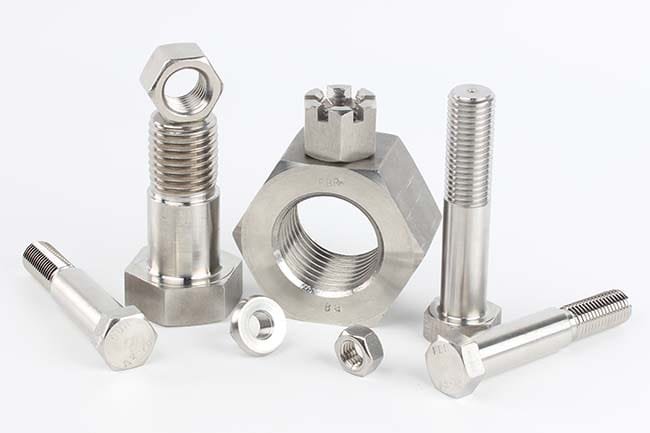
The safest approach is to treat the engineering drawing and RFQ as complementary documents. The drawing controls geometry and critical characteristics, while the purchase specification defines material, condition, testing, documentation, service requirements, and any project-specific restrictions. Flybear’s nickel-based alloy fastener range provides examples of special-alloy products, but the final order should always use the exact project callout.
What a Nickel Alloy Fastener Specification Must Define
A useful specification should allow the supplier, inspector, and buyer to answer the same questions without interpretation. At minimum, the drawing or RFQ should address the following information.
| Specification Item | What to Define | Common Problem When Omitted |
|---|---|---|
| Product type | Bolt, stud, screw, nut, threaded rod, flange bolt, special machined part, or other product | Supplier quotes a different geometry or manufacturing route |
| Exact alloy | UNS, EN, or other unambiguous material designation | Trade-name family is interpreted as several possible alloys |
| Material standard | Applicable ASTM, AMS, EN, or project material specification | Correct nominal chemistry but wrong product form or condition |
| Material condition | Solution-treated, annealed, aged, cold-worked, or another specified condition where applicable | Mechanical properties and environmental behavior remain unclear |
| Dimensions | Diameter, length, head, grip, shoulder, point, thread length, and special geometry | Quotations are based on different dimensional assumptions |
| Threads | System, pitch or TPI, tolerance/class, handedness, engagement, and special thread details | Parts do not fit the nut or tapped component |
| Surface condition | Plain condition, cleaning, coating, lubricant, or other specified treatment | Corrosion, galling, or torque behavior differs from the approved design |
| Inspection | Material, dimensional, thread, mechanical, surface, and project-specific testing | Supplier and buyer assume different acceptance requirements |
| Traceability | Required heat, lot, certificate, marking, and reporting level | Material identity cannot be linked reliably to the finished fastener |
1. Start with the Exact Alloy Designation
A nickel alloy bolt drawing should avoid generic descriptions such as “nickel alloy,” “Hastelloy,” or “Monel” when a particular grade is required. These descriptions identify broad commercial material families rather than one complete engineering requirement.
Examples of more precise alloy identification include UNS N10276 for C-276, UNS N06022 for C-22, UNS N05500 for K-500, or UNS N19909 for Alloy 909. The exact alloy required by the project should be preserved from engineering through quotation, production, inspection, and certification.
Do not use the word “equivalent” casually. A supplier offering another nickel alloy should identify the proposed material clearly and obtain approval when substitution is permitted. Similar corrosion reputation or nominal chemistry does not prove equivalent mechanical, corrosion, heat-treatment, or code performance.
2. Separate the Material Standard from the Fastener Standard
This is one of the most common specification errors in special-alloy sourcing. A material standard may define bar, rod, forging stock, or another raw-material product, while a finished-fastener standard defines requirements for bolts, studs, screws, or nuts.
For example, ASTM B574 covers specified nickel-chromium-molybdenum rod and bar alloys including UNS N10276 and N06022. ASTM B865 covers applicable UNS N05500 material forms. These can be relevant starting-material specifications, but neither should automatically be treated as the complete dimensional and mechanical callout for every finished fastener.
For certain nonferrous general-use fasteners, ASTM F468 covers bolts, cap screws, socket-head configurations, and studs within its defined scope, while ASTM F467 addresses applicable nuts. Metric projects may encounter the corresponding metric specifications. The buyer must verify that the exact alloy, product, size, and application fall within the selected standard.
Where a standard finished-fastener specification does not fully cover the requested special alloy or geometry, use the applicable material specification together with a controlled drawing and clearly stated mechanical, dimensional, thread, inspection, and acceptance requirements.
3. Specify the Material Condition and Heat Treatment
The material condition can be just as important as the alloy name. This is particularly true for precipitation-hardening nickel alloys such as K-500 and low-expansion Alloy 909, where aging condition has a strong influence on finished mechanical properties.
Other nickel alloys may require a specified solution-treated, annealed, cold-worked, or project-defined condition. Do not leave this decision to a generic supplier interpretation when the equipment design depends on mechanical strength, hardness, corrosion performance, high-temperature behavior, or sour-service qualification.
A drawing or RFQ should state the required condition using the terminology of the governing material or product specification. Avoid copying heat-treatment temperatures from a general datasheet unless the engineering specification explicitly requires that process.
4. Fully Define Fastener Geometry
A technically useful drawing should identify every dimension that affects fit, load transfer, assembly, or manufacturing acceptance.
- Nominal fastener diameter
- Overall length and the basis from which length is measured
- Head style and head dimensions
- Grip or unthreaded shank length
- Thread length
- Shoulder diameter and length
- Under-head radius or transition where critical
- Dog point, cone point, chamfer, or special tip geometry
- Flange dimensions for flange bolts or nuts
- Cross holes, safety-wire holes, slots, or special drives
- Critical concentricity, runout, or surface-finish requirements
For custom components, reference the drawing number and revision in the RFQ. This prevents an outdated revision from becoming the commercial basis for the order.
5. Make the Thread Callout Unambiguous
A special-alloy fastener can have the correct material and still be unusable if the thread is wrong. State whether the design uses Unified inch threads, ISO metric threads, or another specified thread system.
The callout should include nominal diameter, pitch or threads per inch, external or internal tolerance/class, and right- or left-hand direction where applicable. Also define thread length, thread runout, incomplete-thread restrictions, or special engagement requirements when they affect the equipment.
Do not prescribe rolled or machined threads automatically unless the manufacturing method is an engineering requirement. Nickel alloys vary significantly in formability, strength, geometry, and production volume. Where the governing standard permits multiple routes, controlling the finished thread dimensions and required performance can provide the manufacturer with a more practical production path.
6. State Finish, Coating and Lubrication Separately
Nickel-alloy selection does not eliminate the need to define the surface condition. Depending on the application, the fastener may require a specified cleaned condition, coating, dry-film lubricant, anti-seize system, or another order-defined surface treatment.
This is especially important when galling is a concern. Changing lubrication can change thread friction, which can alter the preload generated by a specified installation torque. Coating thickness can also affect thread fit.
Do not write only “corrosion-resistant coating” or “anti-galling finish.” Identify the approved system and applicable specification when the project controls it. If the fastener is used in chemical, oxygen-clean, high-temperature, or contamination-sensitive equipment, also state relevant process restrictions.
7. Include the Real Service Conditions in the RFQ
A drawing often defines the part but not why the material was selected. The RFQ should therefore communicate environmental information needed to review the specification.
Depending on the equipment, relevant data can include process fluid, acid or chloride concentration, H2S exposure, operating and design temperature, thermal cycling, seawater exposure, immersion versus splash conditions, mating materials, and applicable project or owner standards.
For refinery, chemical-processing, valve, and pressure-equipment applications, Flybear’s petrochemical fastener solutions provide additional application context. Buyers can also review the broader high-temperature and corrosion-resistant alloy fastener range when comparing material families.
Providing service information does not authorize a supplier to replace the specified alloy. It allows technical inconsistencies to be identified before production rather than after material has been purchased.
8. Define Inspection and Traceability Before Quotation
Special-alloy quotations can differ significantly depending on the required inspection package. The RFQ should therefore state inspection and certification requirements before suppliers price the order.
Depending on the project, requirements may include:
- Material test reports or certificates
- Heat or lot traceability
- Chemical composition verification or PMI where specified
- Tensile or other mechanical testing required by the governing specification
- Hardness testing where applicable
- Dimensional inspection reports
- Thread ring or plug gauge inspection
- Surface or coating verification
- Heat-treatment records
- Metallographic examination where project-defined
- Third-party witness or hold points where required
Do not request every possible test by default. Inspection should match the governing specification, component risk, and project quality plan. Flybear’s fastener quality inspection page can help buyers define order-specific material, dimensional, thread, mechanical, and surface checks.
Engineering Drawing Example: Weak vs Complete Callout
| Callout | Example | Why It Matters |
|---|---|---|
| Too vague | Hastelloy bolt, M16 × 80 | Exact alloy, condition, pitch, tolerance, product standard, finish, and inspection remain undefined |
| Better structure | Hex bolt, M16 × 2 × 80; material UNS N10276; applicable material standard; specified material condition; dimensional standard or controlled drawing; thread tolerance 6g; specified finish/lubricant; required inspection and traceability | Allows supplier and buyer to review the same technical package |
The second example is intentionally a specification structure rather than a universal product callout. The correct material standard, condition, dimensional standard, and inspection requirements must come from the actual project.
Hastelloy Fastener RFQ and Monel Bolt Specification Checklist
Whether preparing a Hastelloy fastener RFQ, a Monel bolt specification, or another special-alloy inquiry, purchasing teams can use the following checklist:
- Part name and drawing number/revision
- Exact UNS, EN, or other alloy designation
- Material specification and required edition if controlled
- Finished-fastener or product standard where applicable
- Material condition or heat-treatment requirement
- Diameter, length, head, grip, shoulder, and special dimensions
- Thread system, pitch/TPI, tolerance, handedness, and thread length
- Nut and washer requirements
- Surface finish, coating, or lubricant
- Operating environment and temperature
- Quantity
- Inspection and testing requirements
- Material certificates and traceability requirements
- Packaging or segregation requirements where project-controlled
Common Special Alloy Fastener Sourcing Mistakes
- Specifying only a trade name: “Hastelloy,” “Monel,” or “Incoloy” does not identify one complete material requirement.
- Using a bar specification as the complete bolt specification: finished dimensions, threads, mechanical requirements, and inspection still need definition.
- Omitting material condition: this can be critical for precipitation-hardened or cold-worked alloys.
- Leaving thread pitch to the supplier: nominal diameter alone does not establish thread compatibility.
- Adding coating after quotation: coating can affect price, thread fit, friction, inspection, and technical suitability.
- Requesting “full certification” without details: specify the actual certificates, tests, reports, and traceability required.
- Assuming corrosion resistance from alloy reputation: process chemistry and project requirements remain controlling.
- Comparing quotations with different technical bases: normalize alloy, condition, geometry, inspection, and documentation before comparing price.
FAQ: Nickel Alloy Fastener Specifications
Is the alloy name enough to specify a nickel-alloy bolt?
No. A complete nickel alloy fastener specification should identify the exact alloy designation, material and product standards where applicable, condition, dimensions, threads, finish, inspection, and documentation requirements.
Can I specify a nickel-alloy bolt only to a raw-material ASTM standard?
A raw-material standard may define the material used to manufacture the fastener, but it may not establish all finished bolt requirements. The purchase package may also need a fastener standard or drawing, thread requirements, mechanical properties, inspection, marking, and acceptance criteria.
Should the manufacturing method be shown on the drawing?
Only when the method is an engineering requirement. If hot forging, machining, thread rolling, or another process is specifically required by the project, state it. Otherwise, defining the required finished geometry, properties, material condition, and inspection can allow the manufacturer to select an appropriate compliant route.
What should buyers send first for a custom nickel-alloy quotation?
Send the controlled drawing, exact alloy designation, material and product specifications, condition, dimensions and threads, quantity, finish, service information, and inspection/certification requirements. This gives the supplier enough information to review both manufacturability and technical compliance.
Send a Complete Drawing and RFQ Package for Review
For special alloy fastener sourcing, send Flybear the drawing and revision, exact alloy designation, governing material and product standards, material condition, size and thread, finish, quantity, operating environment, inspection requirements, and required certificates. Use the Flybear contact page to submit the package. Flybear can review standard and custom nickel-alloy fasteners where supported by the product range, with CNC machining, hot forging and thread production considered where applicable, together with material verification, dimensional inspection, and order-defined documentation.
Follow Me!