17-4PH vs 316 Stainless Steel Fasteners: Strength, Corrosion and Heat Treatment
17-4PH vs 316 fasteners is a comparison between two very different stainless-steel design strategies. Type 316 is a molybdenum-bearing austenitic stainless steel commonly selected for corrosion resistance and fabrication flexibility, while 17-4PH is a precipitation-hardening stainless steel that can develop substantially higher strength and hardness through controlled solution treatment and aging. Neither material is universally superior. The correct choice depends on required mechanical properties, heat-treatment condition, chloride exposure, joint design, product standard, size, manufacturing route, and inspection requirements.
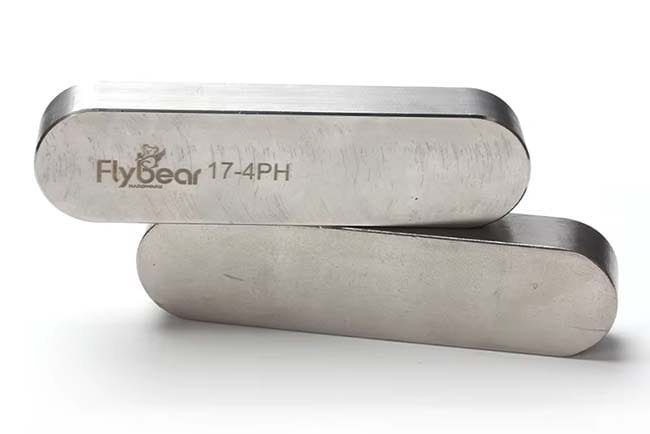
For valves, machinery, marine equipment, shafts, highly loaded assemblies, and custom OEM components, the decision often becomes a tradeoff between mechanical strength and corrosion margin. Buyers should therefore avoid specifying simply “high-strength stainless” or “corrosion-resistant stainless.” The RFQ should identify the exact alloy, required condition or fastener grade, mechanical properties, dimensions, surface finish, environment, and governing standard.
17-4PH vs 316 Fasteners: Key Differences
| Selection Factor | 17-4PH Stainless Fasteners | 316 Stainless Fasteners |
|---|---|---|
| Common designation | Type 630 / UNS S17400 | Type 316 / UNS S31600 |
| Metallurgical family | Precipitation-hardening stainless steel | Austenitic stainless steel |
| Strength development | Properties depend strongly on solution treatment and aging condition | Fastener strength is commonly developed through cold working or other specification-defined processing rather than precipitation aging |
| Primary advantage | High strength and hardness combined with useful corrosion resistance | Broad corrosion resistance, particularly where a molybdenum-bearing austenitic grade is suitable |
| Chloride environments | Requires careful review of heat-treatment condition, stress and actual exposure | Often preferred over 17-4PH where localized chloride corrosion is the dominant selection concern, but is not universally seawater-proof |
| Heat-treatment callout | Critical; conditions such as H900, H1025, H1100 or H1150 can produce different properties | Does not use the same precipitation-hardening condition system |
| Typical selection direction | Highly loaded mechanical components, valve parts and high-strength stainless assemblies | Corrosion-focused industrial, chemical, marine-adjacent and general stainless assemblies |
| Automatic substitution? | No. Changing between 17-4PH and 316 changes metallurgy, mechanical properties, corrosion behavior and manufacturing requirements. | |
What Is 17-4PH Stainless Steel?
17-4PH, also known as Type 630 or UNS S17400, is a chromium-nickel-copper precipitation-hardening stainless steel. Its major engineering advantage is the ability to develop high mechanical strength through an aging treatment after solution treatment.
This characteristic makes 17-4PH attractive for components where conventional austenitic stainless steel may not provide enough strength without significant cold working or changes in component dimensions. Applications can include valve stems, highly loaded bolts, shafts, pins, rotating-equipment components, machinery, and custom precision parts.
However, “17-4PH” alone is not a complete mechanical specification. A purchaser must also know the required heat-treatment condition or finished-fastener requirement. Different aging conditions can produce significantly different combinations of tensile strength, hardness, ductility, toughness and stress-corrosion behavior.
Buyers sourcing either alloy can review Flybear’s stainless steel fastener range before defining the exact grade, condition, dimensions and product requirements.
What Is 316 Stainless Steel?
Type 316, commonly designated UNS S31600, is an austenitic chromium-nickel stainless steel containing molybdenum. The molybdenum addition is an important reason 316 is widely considered for industrial environments where localized corrosion resistance is more demanding than for general 304-type stainless steel.
316 stainless bolts, screws, studs, nuts and washers are widely used in chemical equipment, water systems, machinery, marine-adjacent assemblies, food-processing equipment, valves and outdoor installations. Its austenitic structure also gives it a different manufacturing and mechanical-property path from 17-4PH.
For example, ASTM F593-24 places 316 and 316L in its austenitic Group 2 and identifies the condition as cold worked for the applicable products, while Type 630 is placed in Group 7 as an age-hardened precipitation-hardening alloy. This distinction shows why a simple comparison of raw-material chemistry is insufficient for finished fasteners.
Strength: Why 17-4PH Is Often Selected
Strength is usually the main reason engineers investigate 17-4PH bolts instead of conventional 316 stainless bolts. Precipitation hardening allows 17-4PH to achieve high strength and hardness while retaining useful corrosion resistance.
However, buyers should not assign one universal tensile-strength value to all 17-4PH fasteners. Mechanical properties depend on the applicable material or fastener specification, diameter, product form, heat-treatment condition, manufacturing history and test requirements.
A 17-4PH component in one aging condition can have different properties from the same alloy in another condition. Likewise, a finished threaded fastener should not automatically be assigned the mechanical properties shown on a generic 17-4PH bar datasheet.
316 can also achieve increased fastener strength through controlled cold working under applicable fastener specifications. Therefore, engineers should compare the actual specified finished-fastener properties rather than assuming every 17-4PH bolt is stronger than every 316 bolt.
17-4PH Heat Treatment: H900, H1025, H1100 and H1150
Precipitation hardening fasteners require particularly careful heat-treatment specification. 17-4PH can be solution treated and subsequently aged at controlled temperatures to develop different property combinations. Common industry designations include H900, H1025, H1075, H1100 and H1150, among others permitted by applicable material specifications.
Lower-Temperature Aging and Higher Strength
Conditions toward the lower-temperature end of the commonly used aging range, such as H900, are associated with high strength and hardness. That does not mean H900 should automatically be specified for every high-load fastener. Toughness, stress-corrosion resistance, environment and project requirements also need to be considered.
Higher Aging Temperatures and Property Tradeoffs
Higher aging conditions generally move the material toward a different balance of strength, hardness, ductility and toughness. In some service environments, an overaged condition may be selected because maximum strength is not the only design objective.
The correct heat-treatment condition should therefore appear on the engineering drawing or purchase specification. Ordering only “17-4PH bolt” leaves a critical mechanical variable undefined.
Corrosion Resistance: Why 316 May Be the Better Choice
17-4PH provides useful corrosion resistance, but its primary design advantage is the combination of corrosion resistance with high strength. Type 316 follows a different selection path and is frequently chosen when corrosion behavior carries more weight than maximum mechanical strength.
In many chloride-bearing environments, the molybdenum-containing 316 family can provide a more suitable localized-corrosion profile than 17-4PH. This becomes important around threads, washers, deposits, stagnant moisture and other crevice locations.
However, neither grade should be described as universally suitable for seawater or every chemical environment. Chloride concentration, temperature, pH, wet-dry cycling, immersion, oxygen availability, deposits, cleaning chemicals and crevice geometry can all influence performance.
For coastal, marine and offshore equipment, review the actual service conditions rather than selecting from a material nickname. Flybear’s marine and offshore fastener solutions provide additional application context for preparing a corrosion-resistant fastener specification.
17-4PH Is Not Simply a “Stronger 316”
This is one of the most important procurement distinctions. 17-4PH and 316 are not two strength levels of the same stainless family.
17-4PH has a precipitation-hardening metallurgical structure and derives important mechanical properties from aging. Type 316 is an austenitic stainless steel whose finished-fastener strength can depend on cold working and the applicable specification. Their alloy chemistry, microstructure, heat-treatment response, magnetic behavior and corrosion characteristics differ.
Replacing 316 with 17-4PH because a design needs more strength may introduce a corrosion tradeoff. Replacing 17-4PH with 316 because the application needs greater corrosion margin may reduce the available mechanical strength unless the joint is redesigned or an appropriate finished-fastener condition is specified.
The material change should therefore be treated as an engineering substitution rather than a purchasing upgrade.
ASTM F593 Provides a Useful Fastener Comparison
For general corrosion-resistant inch-series bolts, hex cap screws and studs within its scope, ASTM F593 is particularly useful because the same fastener specification includes both material families.
ASTM F593-24 identifies 316 and 316L in Group 2 as austenitic alloys and Type 630 in Group 7 as a precipitation-hardening alloy. The corresponding ASTM F594 specification covers stainless steel nuts and similarly separates 316/316L and Type 630 into different alloy groups.
This means a buyer should not mix a 17-4PH external fastener with a generic 316 nut solely because the threads fit. The nut must satisfy the mechanical and material compatibility requirements of the governing specification and project.
Pressure bolting is a separate specification path. Projects involving ASTM A193 austenitic stainless bolting should use the applicable A193 grade and class rather than translating directly from a generic 316 fastener designation. See Flybear’s guide to ASTM A193 B8 vs B8M stainless bolting when the application involves pressure flanges, valves or other A193-controlled joints.
Manufacturing 17-4PH and 316 Fasteners
Manufacturing route can influence both technical compliance and cost. Depending on product geometry, diameter, quantity and specification, stainless fasteners may be produced by cold heading, hot forging, CNC machining and thread rolling.
For 17-4PH, the heat-treatment sequence must be coordinated with forming, machining, threading and final inspection. An engineering drawing that requires a particular aged condition should communicate that requirement before production begins.
For 316 fasteners, cold work can be important to the required mechanical condition under certain specifications. Therefore, a supplier should not assume that a machined fastener from solution-treated bar automatically has the same properties as a cold-worked fastener with the same alloy chemistry.
For custom components, dimensions such as reduced shanks, shoulders, cross holes, special thread lengths and tight geometric tolerances should be reviewed together with the material and mechanical requirements.
Inspection and Material Verification
Because 17-4PH and 316 fasteners can appear similar after manufacturing, material traceability is more reliable than visual identification. Inspection requirements should be defined according to the governing specification and risk of the application.
Depending on the order, requirements may include chemical composition verification, hardness testing, tensile testing, dimensional inspection, thread gauging, surface examination, metallographic review or specified traceability documentation.
Heat-treatment records can be particularly important for 17-4PH when a specific aging condition is required. For 316, buyers may need to verify the specified alloy, finished mechanical condition and surface requirements. Flybear’s fastener quality inspection page outlines available inspection methods that can be defined as part of an order-specific quality plan.
Common Procurement Mistakes
- Ordering only “17-4PH”: the required heat-treatment condition or finished mechanical properties may remain undefined.
- Assuming 17-4PH is automatically better than 316: higher strength does not guarantee better corrosion resistance.
- Assuming 316 is always suitable for seawater: localized corrosion can still occur in aggressive chloride and crevice conditions.
- Copying bar properties onto finished bolts: fastener strength must follow the applicable product specification, size and manufacturing condition.
- Mixing nut materials without checking compatibility: thread fit alone does not establish mechanical compatibility.
- Changing the 17-4PH aging condition after design approval: the condition can materially change mechanical behavior.
- Using ASTM, ISO and EN descriptions as automatic equivalents: verify the exact material and finished-product requirements.
- Ignoring surface condition and installation: passivation, lubrication, coatings and thread friction may affect the final assembly.
What to Include in a 17-4PH or 316 Fastener RFQ
For technical review and quotation, provide:
- Exact material grade, such as Type 630 / UNS S17400 or Type 316 / UNS S31600
- Required 17-4PH heat-treatment condition, if applicable
- Required finished mechanical properties or fastener grade
- Applicable ASTM, ISO, EN, DIN or project specification
- Product type: bolt, screw, stud, threaded rod, nut, washer or custom component
- Diameter, thread series, pitch, length and thread length
- Dimensional standard or controlled drawing and revision
- Service environment, including chloride, chemical, moisture or marine exposure
- Operating temperature where relevant to material selection
- Mating material and mating fastener requirements
- Surface finish, passivation, coating or lubrication requirement
- Quantity and packaging requirements
- Required mechanical testing, material verification, inspection and traceability documentation
FAQ: 17-4PH vs 316 Fasteners
Are 17-4PH fasteners stronger than 316 fasteners?
17-4PH can achieve substantially higher strength through precipitation hardening, which is one of its main advantages. However, the comparison must use the actual heat-treatment condition, fastener specification, size and finished mechanical requirements rather than generic material values.
Is 316 more corrosion resistant than 17-4PH?
316 is often the preferred selection when resistance to localized corrosion in many chloride-bearing environments is the dominant requirement. However, corrosion performance depends on the actual environment and material condition, so neither grade should receive a universal corrosion ranking.
Which 17-4PH heat-treatment condition should I specify?
The correct condition depends on the required balance of strength, hardness, toughness, stress-corrosion behavior and governing specification. Conditions such as H900 and H1150 produce different property combinations, so the condition should come from engineering requirements rather than purchasing preference.
Can I replace a 316 bolt with a 17-4PH bolt to increase strength?
Not without technical review. The change introduces a different alloy family, heat-treatment route, mechanical condition and corrosion profile. Verify the environment, joint design, nut compatibility, finished-fastener standard and required properties before approving the substitution.
Send the Required Strength, Condition and Environment for Review
When requesting 17-4PH or 316 stainless fasteners, send Flybear the exact material grade and condition, required mechanical properties, product standard or drawing, diameter, thread, length, service environment, finish, mating components, quantity and inspection requirements. Use the Flybear contact page to submit the RFQ. Defining both mechanical and corrosion requirements at the inquiry stage allows the fastener specification to be reviewed without assuming that maximum strength or maximum corrosion resistance should control every application.
Follow Me!